Towel and Linen Storage: 7 Practical Ideas Without a Closet
If you’ve ever opened a bathroom door only to find towels stacked precariously on the toilet tank or sheets crammed into a random dresser drawer, you already know the struggle of managing towel and linen storage without a proper closet. Plenty of homes, especially apartments, older houses, and small rentals, simply weren’t built with a dedicated linen closet in mind. Fortunately, you don’t need one to keep your towels, sheets, and blankets organized, accessible, and looking tidy. With a bit of creativity and the right furniture or accessories, you can turn awkward corners, unused wall space, or even the back of a door into functional storage.
1. Install Open Shelving for Easy Bathroom Towel Storage: Towel and linen storage
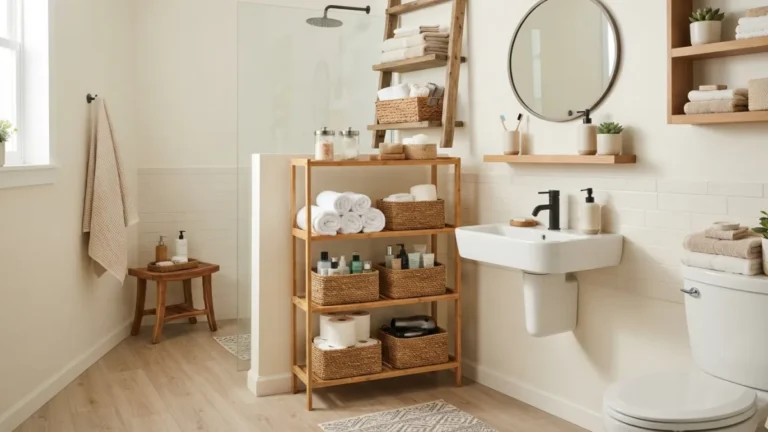
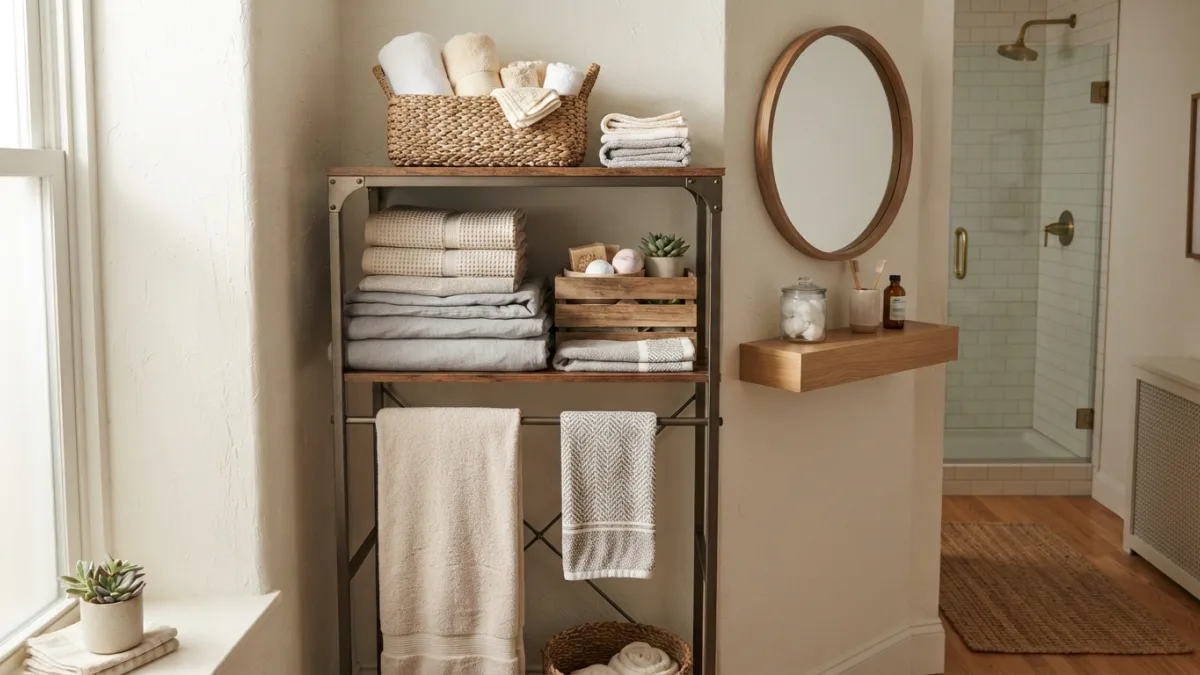
Open shelving storage is one of the simplest fixes for a bathroom that lacks built-in cabinets. A few floating shelves mounted above the toilet or beside the shower give you instant space to stack folded towels, roll washcloths, or display baskets of extra soap and toilet paper. This approach also solves the common problem of bathroom towel storage in tight spaces, since shelves take up almost no floor space and can be installed at any height that suits your room. Choose shelves made of moisture-resistant materials like sealed wood, metal, or treated MDF, since bathrooms deal with humidity that can warp untreated surfaces over time. If you want to dig deeper, our guide on Small Bathroom Storage Ideas: 7 Practical Tips (No Cabinets) covers this in more detail.
The visual side of open shelving matters too. Rolling towels instead of folding them flat creates a spa-like look and makes it easier to grab exactly what you need without disturbing the rest of the stack. If your bathroom feels cluttered, keep only your everyday towels on display and store the rest elsewhere, which keeps the shelves looking curated rather than crowded.
2. Corral Everything with Linen Storage Baskets
Baskets are one of the most underrated tools for organizing a home that has no dedicated storage room. Linen storage baskets can sit on open shelves, slide under furniture, or stack in a closet you’re already using for something else, like a hallway coat closet or an entryway cabinet. Woven baskets with handles are especially practical because you can pull the whole thing out, grab what you need, and slide it back without digging through a messy pile. Label each basket by category, such as bath towels, hand towels, or spare sheets, so everyone in the household knows exactly where things belong and clutter doesn’t creep back in within a few weeks.
3. Maximize Under Sink Storage in the Bathroom
The cabinet beneath a bathroom sink often gets treated as a junk drawer, but with a little planning it becomes valuable real estate for towels and linens. Under sink storage works best when you add stackable bins or a small rolling cart that fits around the pipes, letting you use the full height of the cabinet instead of just the floor. Keep in mind that bathrooms are prone to moisture, so it helps to check the area periodically for dampness before storing fabric items there. The Environmental Protection Agency’s guidance on mold and moisture notes that damp, poorly ventilated spaces can encourage mold growth, so a small dehumidifying packet or occasional airing out of the cabinet is a smart precaution when storing linens close to plumbing. This connects closely with another common issue — see Under-Bed Storage Ideas: 9 Easy Ways to Save Space for more on that.
4. Try Wall-Mounted or Ladder Towel Storage Solutions
When floor and cabinet space run out, look up and consider the walls. A wall-mounted rack, a series of hooks, or a leaning ladder shelf can hold rolled towels, blankets, or even folded sheets while adding a decorative touch to the room. These towel storage solutions work particularly well in small bathrooms or laundry areas where every square foot counts. A ladder shelf leaned against an empty wall costs little, requires no drilling, and can be moved easily if you rearrange the room later. For a slightly more permanent option, a row of Shaker pegs or hooks near the shower keeps daily-use towels within arm’s reach without taking up any cabinet space at all.
5. Repurpose Furniture for Storage Without a Closet
You don’t need a built-in linen closet to get closet-like function. An old dresser, a bookshelf with bins, or a hutch found secondhand can all be repurposed for storage without a closet, giving you drawers and shelves specifically for folded towels, sheet sets, and extra blankets. Placing a piece of furniture like this in a hallway, bedroom corner, or even a large bathroom instantly creates a mini linen station. If you go this route with a tall or top-heavy piece, take the extra step of securing it to the wall. The Consumer Product Safety Commission’s Anchor It campaign offers straightforward guidance on preventing furniture tip-overs, which is especially important in homes with kids or pets who might climb or lean on repurposed storage pieces.
6. Think Vertically for Small Space Linen Storage
Small space linen storage almost always comes down to using vertical space that would otherwise sit empty. Over-the-door organizers, stackable bins on top of a wardrobe, or a slim rolling cart tucked between the wall and a piece of furniture can all hold a surprising amount of linen without eating into your living area. A few practical options to consider include: You might also find our article on 15 Storage Ideas for Small Apartments helpful here.
- Over-the-door pocket organizers for washcloths and hand towels
- Vacuum-sealed bags for out-of-season blankets or extra sheet sets
- Stackable fabric bins on top of a wardrobe or armoire
- A narrow rolling cart squeezed into a gap beside the dryer
These small adjustments add up quickly, and they mean you can keep your everyday towels accessible while pushing bulkier, less-used items into corners that would otherwise be wasted.
7. Build a No Closet Organization System That Works Long-Term
Good no closet organization isn’t just about finding places to stash things, it’s about creating a system you’ll actually stick with. Start by sorting your linens into categories: everyday towels, guest towels, bed sheets by size, and seasonal extras. Once you know what you actually own, assign each category a specific spot, whether that’s a basket, a shelf, or a drawer in repurposed furniture. This kind of consistent, low-maintenance system is similar in spirit to the traditional linen closet, just spread across a few smaller spots instead of one central cabinet. Revisit the system every few months, get rid of worn-out towels, and you’ll avoid the slow slide back into clutter that tends to happen once storage spots fill up.
None of these ideas require a renovation or a big budget. A few shelves, some well-chosen baskets, and a bit of vertical thinking can replace a missing linen closet almost entirely. The key is matching the solution to your space, whether that means an under-sink bin system, a repurposed dresser, or a simple ladder shelf leaning against the wall. Once you settle on a setup that fits your home and your habits, keeping towels and linens organized stops feeling like a daily chore and becomes second nature. For a related walkthrough, check out Vertical Storage Hacks: 7 Easy Ideas for Tiny Bedrooms.
Frequently Asked Questions
What is the best way to store towels without a linen closet?
Open shelving, wall-mounted racks, and baskets are usually the easiest starting points. They require little installation and let you keep everyday towels visible and within reach, while bulkier items can move into baskets or bins elsewhere in the room.
Can I store towels under the bathroom sink safely?
Yes, as long as the cabinet stays reasonably dry and ventilated. Check periodically for leaks or condensation, and consider stackable bins to keep fabric off the cabinet floor where moisture tends to collect.
How do I organize linens in a small apartment with no storage room?
Focus on vertical space. Over-the-door organizers, stacked baskets on top of furniture, and slim rolling carts squeezed into narrow gaps all help you make use of areas that would otherwise sit empty.
Are fabric baskets or bins better for storing linens?
Fabric baskets tend to breathe better, which helps prevent musty smells, while plastic bins offer more protection against moisture. Many households use a mix, choosing plastic for damp spots like under the sink and fabric baskets for shelves and closets.
Is it safe to repurpose old furniture for linen storage?
It usually is, but tall or top-heavy pieces should be anchored to the wall to prevent tipping, especially in homes with children or pets. A simple anti-tip strap is inexpensive and takes only a few minutes to install.

Ghani Mejber — Founder & Lead Editor
Ghani Mejber is the founder of DIY Homes Hub. After years of living in compact rentals with strict lease rules and limited storage, I started sharing practical, damage-free home upgrades and basic repair guides built for real budgets. Every project I publish focuses on simple tools, accessible materials, and reversible solutions that protect your security deposit.