Cover Ugly Rental Floors: 7 Easy Damage-Free Ideas
Nobody signs a lease because they love the flooring, and yet that stained carpet or scratched-up laminate is often the first thing you see every time you walk through the door. If you’re renting, you probably can’t rip it out and start fresh, but you can still cover ugly rental floors without losing your security deposit or annoying your landlord. Fortunately, today’s flooring market is full of temporary, removable products designed exactly for this situation, so you don’t have to choose between living with an eyesore and risking damage you’ll pay for later.
What to Know Before You Cover Ugly Rental Floors
Before you buy anything, take a few minutes to check your lease agreement. Some landlords have specific rules about what you can and can’t install, even temporarily, so it pays to ask before you start. Most rental-friendly flooring solutions rely on pressure-sensitive adhesive, interlocking edges, or simple gravity instead of nails, staples, or permanent glue, which means they can come up cleanly when you move out. It’s also smart to photograph the existing floor condition before you cover anything, so you have proof of the original state. This small step protects you if there’s ever a dispute about damage. Once you’ve confirmed you’re in the clear, you can start comparing the seven options below based on your budget, your flooring type, and how long you plan to stay in the unit. If you want to dig deeper, our guide on Update a Rental Bathroom: 7 Easy Tips for a Budget Makeover covers this in more detail.
7 Damage-Free Ideas to Cover Ugly Rental Floors
1. Peel-and-Stick Vinyl Tiles
Peel-and-stick vinyl tiles are one of the easiest floor covering ideas for renters because they require no tools beyond scissors and a tape measure. You simply peel the backing off and press the tile into place, and many brands are designed to lift cleanly without pulling up paint or finish underneath. They come in wood-look, stone-look, and patterned designs, so you can genuinely upgrade the appearance of a room rather than just hide the problem. The key is choosing a low-tack, removable adhesive formula rather than a permanent one, since some cheaper products bond too aggressively over time. Vinyl tiles also hold up well in kitchens and bathrooms where moisture is a concern, making them one of the more versatile removable flooring options available right now.
2. Area Rugs and Rug Pads
Sometimes the simplest solution is still the best one. A large area rug paired with a non-slip rug pad can cover a huge portion of ugly flooring while adding warmth, color, and texture to a room. Rugs require zero installation, so there’s no adhesive residue or risk of damage at all, and you can take them with you to your next apartment. Look for a rug pad specifically labeled safe for your floor type, since some pads can discolor certain finishes if left in place for a long time. This option works especially well over damaged hardwood or scuffed laminate, and it’s an easy way to define separate living spaces in an open-plan rental without any commitment.
3. Interlocking Foam or Carpet Tiles
Interlocking tiles snap together like puzzle pieces, which means there’s no adhesive touching your actual floor at all. Foam tiles are popular in home gyms and playrooms because they’re soft and forgiving, while interlocking carpet tiles give a softer, more finished look that works in living rooms and bedrooms. Both types can be lifted, rearranged, or replaced individually if one section gets stained or damaged, which is a real advantage over a single large rug. They’re also lightweight enough to install without help, and most brands are designed for exactly this kind of temporary flooring solution. If you’re covering a large area, interlocking tiles tend to be more budget-friendly than a full vinyl plank installation. This connects closely with another common issue — see Removable Wallpaper: 7 Easy Steps to Avoid Mistakes for more on that.
4. Temporary Laminate or Vinyl Plank Flooring
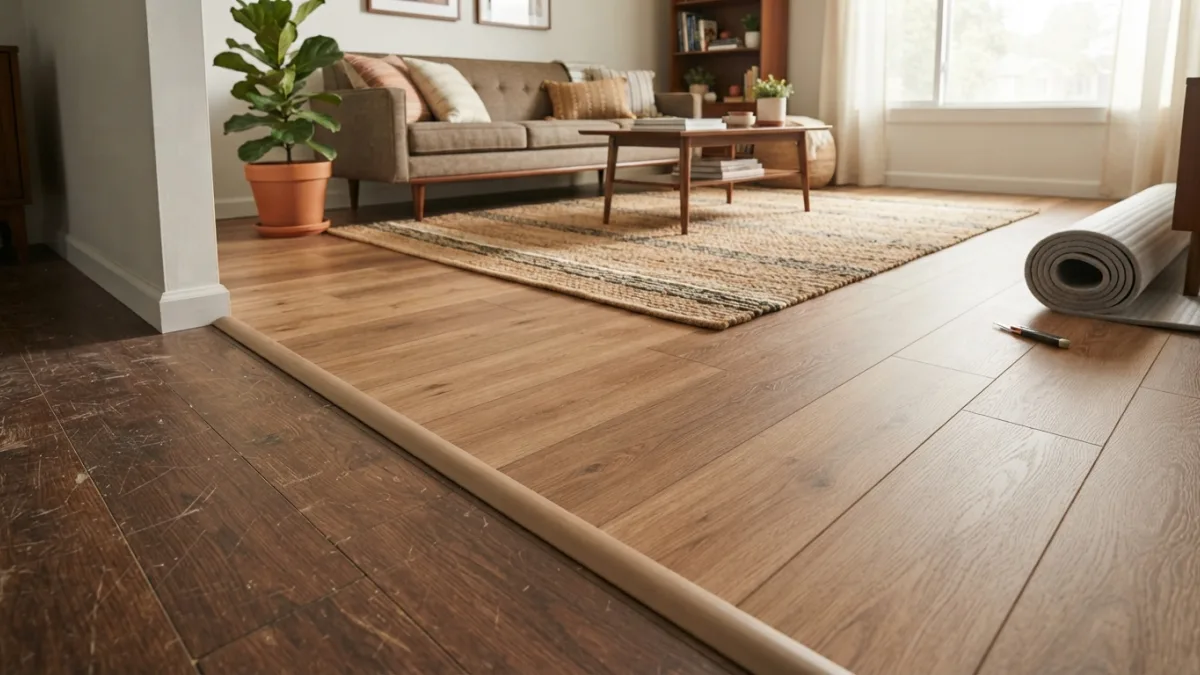
If you want something closer to a real flooring upgrade, floating floors are worth considering. These planks click together using a tongue-and-groove system and simply rest on top of the existing floor rather than being glued or nailed down, which is why the concept is sometimes called a floating floor. Because the whole surface is one connected unit resting freely, it can be lifted in sections and reused elsewhere when you move. This option costs more upfront than tiles or rugs, but it gives a polished, cohesive look across an entire room. Just be sure to check the manufacturer’s guidelines, since some floating floors require a thin foam underlayment to protect the surface below and reduce noise.
5. Low-Tack Carpet Tiles With Removable Adhesive Strips
Carpet tile manufacturers now make special adhesive strips designed specifically for renters, and they’re worth seeking out if you want carpet without any permanent commitment. These strips hold the tiles firmly enough to prevent shifting or curling at the edges, but they release cleanly from most hard flooring surfaces, including vinyl, laminate, and sealed wood. This method is a good middle ground between loose interlocking tiles and glued-down carpet, since it offers more stability while still qualifying as damage-free flooring for renters. It’s particularly useful in hallways or high-traffic areas where loose tiles might shift underfoot. Just avoid using these strips directly on unsealed hardwood, since prolonged adhesive contact can occasionally affect the finish.
6. Painted Floor Cloths or Canvas Rugs
For a more creative and budget-friendly approach, a painted canvas floor cloth can completely transform a room without touching the floor underneath. These are essentially heavy-duty canvas mats sealed with a protective coating, and they function just like a rug but with a custom painted design. You can buy them ready-made or create your own with floor-safe paint and a few coats of sealant. Because they’re just placed on top of the floor, there’s no adhesive and no risk of damage at all. This option works particularly well in dining rooms, entryways, or under a coffee table, where you want a statement piece rather than a full-room covering. You might also find our article on Small Bathroom Storage Ideas: 7 Practical Tips (No Cabinets) helpful here.
7. Contact Paper or Adhesive Floor Decals
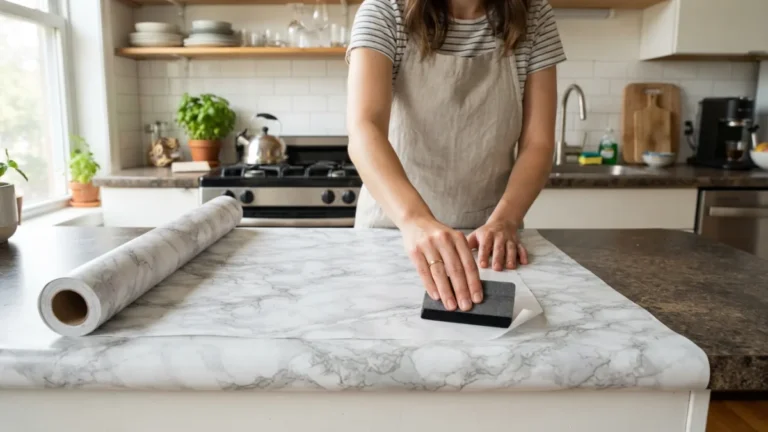
Contact paper isn’t just for shelves and drawers anymore. Textured, floor-rated adhesive vinyl sheets can be cut to size and applied directly over small problem areas, like a single damaged tile or a discolored patch of linoleum. It’s one of the cheapest ways to cover ugly rental floors, and it’s ideal for renters who only need to address a small section rather than an entire room. The removable backing is designed to peel away without leaving residue, though it’s a good idea to test a small hidden corner first to confirm compatibility with your specific floor finish. This option won’t hold up to heavy foot traffic as well as vinyl tiles, but for accent spots it’s hard to beat the price and simplicity.
Comparing Your Options
Since every rental situation is different, it helps to see these seven ideas side by side. The table below compares cost, installation effort, and how well each option holds up over time, so you can match a solution to your budget and how long you plan to stay in your current place.
| Option | Approximate Cost | Installation Effort | Best For |
|---|---|---|---|
| Peel-and-stick vinyl tiles | Low to moderate | Easy | Kitchens, bathrooms, whole rooms |
| Area rugs and rug pads | Low to high, varies widely | Very easy | Living rooms, bedrooms, quick fixes |
| Interlocking foam or carpet tiles | Low to moderate | Easy | Play areas, home gyms, large rooms |
| Floating laminate or vinyl plank | Moderate to high | Moderate | Full-room upgrades, longer stays |
| Low-tack carpet tiles | Moderate | Easy to moderate | Hallways, high-traffic zones |
| Painted floor cloths | Low | Easy (or DIY) | Entryways, accent spaces |
| Contact paper or decals | Very low | Very easy | Small damaged spots, accents |
Tips for Choosing the Best Option for Your Space
Think first about how long you’ll be in the unit, since a short-term lease favors quick, low-cost options like rugs or contact paper, while a longer stay might justify investing in floating vinyl plank flooring. Consider foot traffic too. High-traffic areas like entryways and hallways need something more durable than a delicate floor cloth. Moisture matters as well, since bathrooms and kitchens require water-resistant materials rather than fabric-based coverings. According to general guidance on indoor materials from the EPA’s indoor air quality resources, it’s also worth choosing low-VOC products when covering large areas of your living space, since some adhesives and vinyl products can release fumes, especially in poorly ventilated rooms. Finally, always keep your original flooring in mind and choose a method that leaves it exactly as you found it. For a related walkthrough, check out DIY Floating Shelves: 7 Easy Ideas for Any Room You Love.
Covering an ugly rental floor doesn’t have to mean choosing between style and your security deposit. With so many removable, renter-friendly products now available, you can genuinely transform the look and feel of a room without picking up a hammer or leaving a single mark behind. Start with the option that best matches your budget, your lease terms, and how long you plan to stay, and don’t be afraid to combine methods, like pairing a rug with vinyl tiles in an adjoining kitchen. Whatever you choose, a little planning now means you’ll get your deposit back later, and you’ll actually enjoy walking across your own floor in the meantime.
Frequently Asked Questions
Will peel-and-stick tiles damage my landlord’s floor when I remove them?
Most quality peel-and-stick products are designed to release cleanly when removed slowly and at room temperature. Always test a small, hidden area first, and avoid leaving them down for several years, since some adhesives can bond more strongly over extended periods.
What’s the cheapest way to cover ugly rental floors?
Area rugs and contact paper are generally the least expensive options. Rugs require no installation at all, while contact paper works well for small damaged spots rather than entire rooms.
Can I put a floating floor over carpet?
It depends on the product and the carpet’s thickness. Thin, low-pile carpet can sometimes work as a base, but thick or plush carpet usually needs to be temporarily pulled back or removed for a stable, level installation.
Do I need my landlord’s permission before covering the floor?
It’s always a good idea to check your lease and ask first, even for removable products. Some landlords have specific restrictions, and getting approval in writing protects you if any questions come up later.
How do I protect hardwood floors specifically?
Stick to rugs with breathable, felt-based pads, or use low-tack products explicitly labeled safe for sealed wood. Avoid strong adhesives directly on hardwood, since they can interact with the finish over time.

Ghani Mejber — Founder & Lead Editor
Ghani Mejber is the founder of DIY Homes Hub. After years of living in compact rentals with strict lease rules and limited storage, I started sharing practical, damage-free home upgrades and basic repair guides built for real budgets. Every project I publish focuses on simple tools, accessible materials, and reversible solutions that protect your security deposit.