Small Bedroom Makeover: 7 Easy Steps to Save Under $100
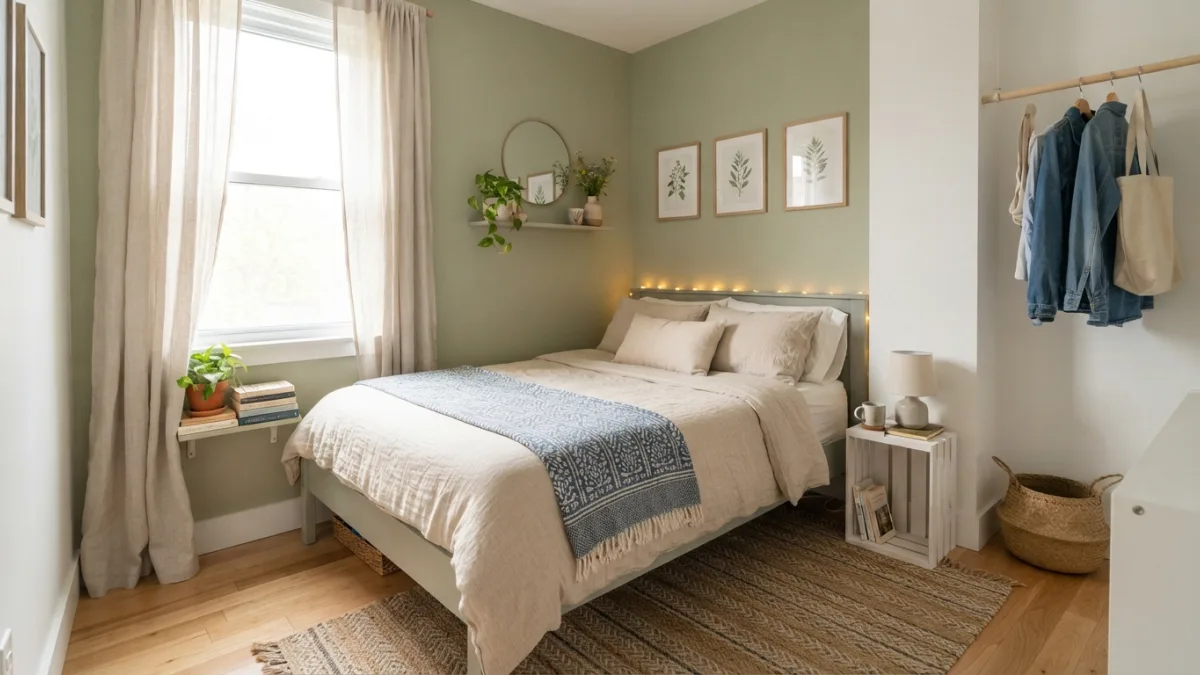
Staring at four walls that feel smaller every year? A small bedroom makeover doesn’t require a designer budget or a demolition crew. With some planning, a little elbow grease, and under $100, you can turn a cramped, cluttered room into a space that actually feels calm and put-together. The trick is knowing where to spend your money and where to skip it entirely.
Small rooms come with big challenges: limited floor space, awkward corners, and not much room for furniture. But they also come with an advantage most people overlook. Smaller spaces need less material to transform them. A gallon of paint that barely covers one wall in a large room might cover three walls in a tiny bedroom. This guide breaks the process into seven manageable steps, each one designed to keep your spending low while making a real visual difference. If you want to dig deeper, our guide on Budget Living Room Makeover: 7 Easy Ideas for a Rich Look covers this in more detail.
Step 1: Set a Realistic Budget Plan
Before buying a single item, sit down and map out exactly where your $100 will go. This is the step most people skip, and it’s the reason budget makeovers often spiral out of control. Split your total into rough categories like paint, textiles, lighting, and decor, then stick to those limits as closely as possible. Having a written plan also stops impulse purchases at the store, which is where budgets usually get blown. Think of this step as the foundation of your entire bedroom makeover on a budget. A simple spreadsheet or even a notes app list works fine. The goal isn’t perfection here, it’s control, so you don’t end up $40 over budget before you’ve even picked out curtains.
Sample Budget Breakdown
Here’s one way to divide $100 across the essentials, though you can adjust based on what your room actually needs.
| Category | Suggested Budget | Notes |
|---|---|---|
| Paint or accent wall supplies | $25–$35 | Sample-size cans often cover one wall |
| Bedding and textiles | $25–$30 | Thrift stores or clearance racks |
| Lighting | $15–$20 | String lights or a single lamp |
| Decor and finishing touches | $15–$20 | Mirrors, art, plants |
Step 2: Declutter and Maximize Storage
You can’t makeover a room that’s buried under stuff. Before you decorate anything, clear out what you don’t use. Go through drawers, the closet, and any surface that’s collected random items over the months. Sell what has value, donate what’s still usable, and toss what’s genuinely worn out. This step costs nothing but time, and it often makes the biggest visual difference of all seven steps. A decluttered room instantly looks bigger and calmer, even before you’ve spent a cent on decor. Research on decluttering and organization consistently points to reduced visual clutter as one of the simplest ways to make small spaces feel more open. Once the clutter is gone, look at what storage you already own. A repositioned bookshelf or an under-bed bin might solve half your storage problems for free. This connects closely with another common issue — see Update a Rental Bathroom: 7 Easy Tips for a Budget Makeover for more on that.
Step 3: Paint for Maximum Impact
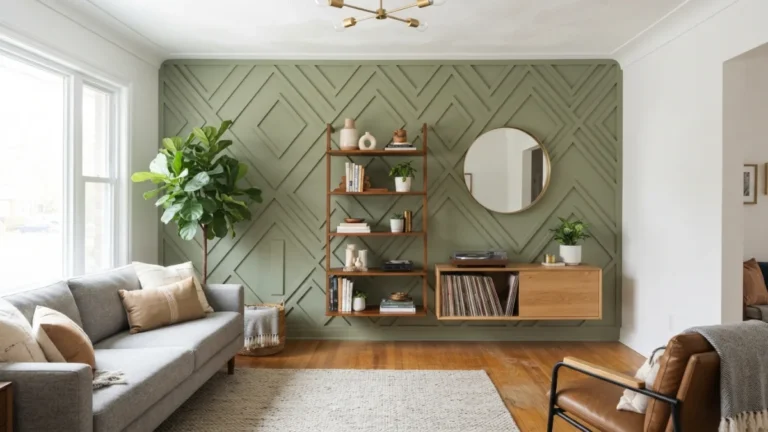
Paint delivers more visual change per dollar than almost anything else on this list. You don’t need to paint the whole room. One accent wall, painted in a color that contrasts with the others, can completely shift how a small bedroom feels. Lighter shades like soft gray, pale blue, or warm white tend to make small rooms look larger, while a deeper accent color adds personality without overwhelming the space. Sample-size paint cans, usually priced between $5 and $10, are often enough to cover a single wall in a small room. If you’re concerned about fumes or air quality while painting, the EPA’s guidance on volatile organic compounds is worth a quick read, especially if you’re painting a room you’ll be sleeping in soon after. Low-VOC paints cost a little more but ventilate faster.
Step 4: Refresh Bedding and Textiles
Your bed usually takes up the most visual real estate in a small bedroom, so updating it changes the whole room’s mood. A new duvet cover, a couple of throw pillows, or a textured blanket can make an old mattress and frame look brand new. Thrift stores, clearance sections, and end-of-season sales are your best friends here. Look for solid colors or simple patterns rather than busy prints, since bold patterns tend to make small spaces feel more cramped. Curtains matter too. Swapping out heavy, dark drapes for lighter fabric panels lets more natural light in, which makes a small room feel noticeably bigger. This step usually falls right around $25 to $30 if you shop carefully, and it touches almost every part of the room you actually interact with daily.
Step 5: Upgrade Lighting on a Budget
Bad lighting makes even a well-decorated bedroom feel flat and uninviting. Most small bedrooms rely on a single overhead fixture, which casts harsh, uneven light. Adding a secondary light source, like a small lamp on a nightstand or a string of warm-toned LED lights along a wall, softens the room instantly. LED options are worth prioritizing since they use less energy and last far longer than older bulb types, something confirmed by ENERGY STAR’s guidance on light bulb efficiency. A budget lamp from a discount store or secondhand shop often costs less than $15, and string lights rarely run more than $10. Together, these small lighting changes can shift a room from feeling like a storage closet to something that actually feels lived-in and warm. You might also find our article on How to Refresh a Room for Under 0 helpful here.
Step 6: Add DIY and Thrifted Decor
This is where DIY bedroom decor really earns its place in a budget plan. Instead of buying new wall art, try framing fabric scraps, old postcards, or printed photos in cheap frames from a dollar store. A gallery wall built from mismatched frames costs very little but adds serious personality. Secondhand shops are goldmines for small furniture pieces too, like a nightstand or a small stool that just needs a coat of paint to look fresh. If you’re handy with a sewing machine, no-sew pillow covers or simple curtain hems can stretch your textile budget even further. These small, personal touches are usually what make a room feel like yours rather than a generic hotel room, and they rarely cost more than $15 to $20 total when sourced secondhand.
Step 7: Style with Plants and Final Touches
The last step ties everything together. A single plant, real or artificial, adds life and softens hard edges in a small room. If natural light is limited, a low-maintenance option like a pothos or snake plant works well and costs very little at most garden centers. Mirrors are another underrated tool for small bedrooms, since they bounce light around the room and create an illusion of extra depth. A secondhand mirror, cleaned up and hung at eye level, can do more for a small space than an expensive piece of art. Finish by stepping back and looking at the room as a whole rather than piece by piece. Small adjustments, like moving a lamp six inches or swapping a pillow, often make the final difference between a room that looks decorated and one that looks finished.
Making Your Small Bedroom Makeover Last
Once everything is in place, a few habits keep the room looking fresh without spending more money. Rotate seasonal decor instead of buying new pieces every few months, and keep a small basket nearby for quick clutter pickups before it builds back up. If you picked neutral bedding and paint, you can refresh the whole look later with just one or two new pillows or a different throw blanket. Many of these small bedroom ideas work because they focus on light, space, and personal touches rather than expensive furniture, which means the room stays adaptable as your taste changes. A budget makeover isn’t a one-time event so much as a foundation you can keep building on with small, cheap updates over time. For a related walkthrough, check out Peel and Stick Backsplash: 5 Easy Before-and-After Tips.
Pulling off a full room transformation for under $100 comes down to sequencing more than sacrifice. Declutter first, paint second, then layer in textiles, lighting, and personal touches in that order. Skipping steps or buying decor before clearing clutter usually leads to overspending on things that don’t fit the space anyway. Stick to the plan, shop secondhand where you can, and treat this as a project you can revisit anytime your budget allows a little more. These cheap bedroom decorating ideas prove that a tight budget doesn’t have to mean a boring or unfinished room. With patience and a bit of creativity, your small bedroom can look and feel like a much bigger investment than it actually was.
Frequently Asked Questions
How much does an average small bedroom makeover cost without a budget plan?
Without a plan, costs can easily climb past $300 to $500, since impulse purchases on furniture and decor add up fast. A written budget plan is what keeps a project under $100.
What’s the single best upgrade for a small bedroom on a tight budget?
Paint usually gives the best return for the least money. A single accent wall changes the mood of the entire room for around $10 to $15.
Can I really redecorate a bedroom without buying new furniture?
Yes, in most cases. Cleaning, repositioning, and adding a coat of paint to existing furniture often works better than buying new pieces, and it costs almost nothing.
Where can I find cheap decor items for a small bedroom makeover?
Thrift stores, clearance sections, dollar stores, and online marketplaces for secondhand goods are all reliable sources for low-cost frames, textiles, and small furniture pieces.
How do I make a small bedroom look bigger without spending money?
Decluttering is free and highly effective. Beyond that, keeping surfaces clear, using light-colored bedding, and letting in more natural light all help a small room feel larger.

Ghani Mejber — Founder & Lead Editor
Ghani Mejber is the founder of DIY Homes Hub. After years of living in compact rentals with strict lease rules and limited storage, I started sharing practical, damage-free home upgrades and basic repair guides built for real budgets. Every project I publish focuses on simple tools, accessible materials, and reversible solutions that protect your security deposit.