Shoe Storage Ideas: 7 Easy Solutions for Small Entryways
A pile of sneakers by the front door doesn’t have to be your family’s welcome mat. If your foyer is more shoebox than showroom, smart shoe storage ideas can turn chaos into calm without demanding a single extra square foot. Whether you’re renting a studio apartment or squeezed into a narrow city rowhouse, the right combination of racks, benches, and vertical solutions can keep footwear off the floor and out of sight. This guide walks through seven realistic, budget-friendly shoe storage ideas that work even when your entryway is barely wider than the door itself.
Tiny Hallway Organization Starts With the Right Plan
Before you buy anything, measure the actual footprint you have to work with. Tiny hallway organization succeeds when you plan around real dimensions instead of guessing, because even a few extra inches can mean the difference between a slim rack fitting flush against the wall and it blocking the door swing. Take stock of how many pairs your household actually wears in a given week, since seasonal boots and rarely used dress shoes can live elsewhere. Many homes built decades ago include a small transitional space near the entrance sometimes called a mudroom, and borrowing that concept, even in miniature, helps separate outdoor grime from the rest of the house. A quick sketch of your entryway, including door swing and outlet placement, saves wasted trips and returns later. If you want to dig deeper, our guide on Small Bathroom Storage Ideas: 7 Practical Tips (No Cabinets) covers this in more detail.
| Solution | Best For | Space Needed | Typical Cost |
|---|---|---|---|
| Entryway shoe rack | Daily rotation of a few pairs | Low | Low |
| Shoe cabinet | Hiding clutter completely | Medium | Medium to High |
| Slim shelving unit | Narrow corridors | Low | Low to Medium |
| DIY organizer | Custom budgets and odd spaces | Varies | Low |
| Behind-door pocket organizer | Apartments with no floor space | None | Low |
| Shoe bench | Sitting while putting on shoes | Medium | Medium |
| Vertical wall storage | Large collections in tight rooms | Low floor, high wall | Medium |
1. Entryway Shoe Rack for Grab-and-Go Mornings
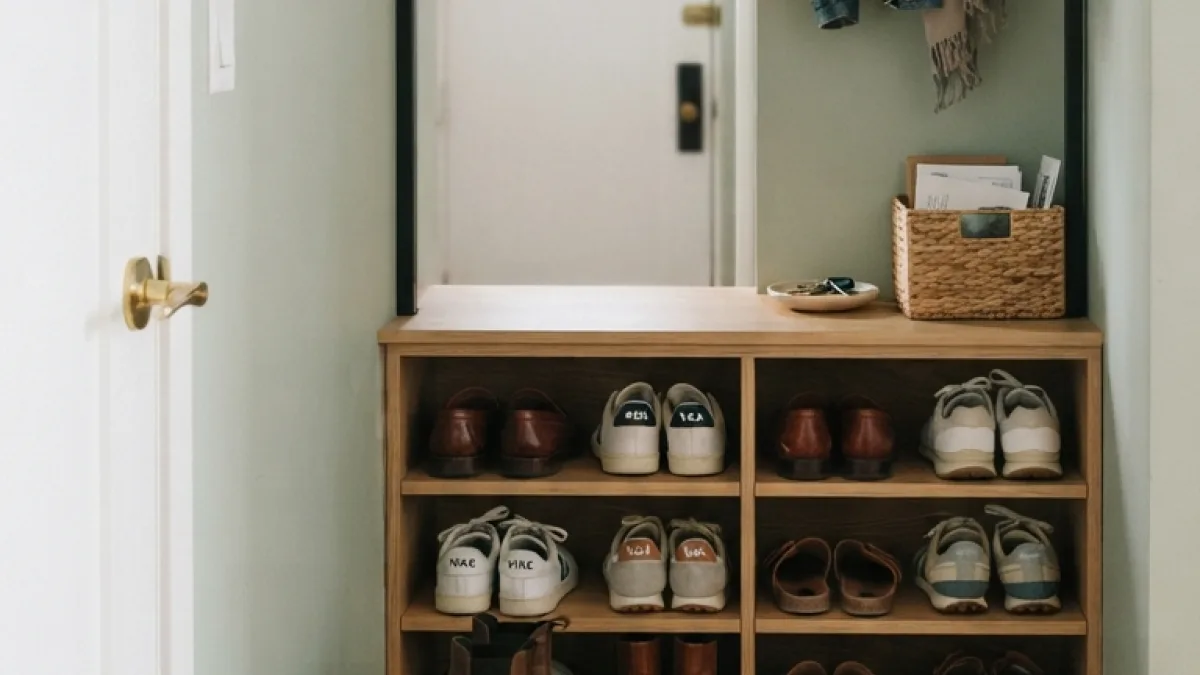
An entryway shoe rack remains the simplest fix for most small homes because it requires almost no assembly and slides neatly against a wall or under a coat hook. Choose a low, open-tier design rather than a tall unit if your hallway is narrow, since a wide base can catch on foot traffic and become a tripping hazard. Look for angled shelves that let shoes drain and air out, which also helps them last longer. A two- or three-tier metal rack costs very little and can be tucked beside the door frame, leaving the center of the entryway clear. For households with kids, adding a small basket on top for gloves or leashes keeps everything grabbed in one motion on the way out.
2. Shoe Cabinet Solutions That Hide the Mess Completely
When you want a tidier look than an open rack allows, shoe cabinet solutions with closed doors are worth the extra cost. These cabinets stack shoes vertically behind a flat front, so from across the room the entryway looks like a simple piece of furniture rather than a shoe pile. Some models include fold-down doors that double as a small shelf for keys or mail, which is handy in a space where every surface counts. Slimline cabinets, often only eight to ten inches deep, fit against walls that a standard dresser never could. If you’re choosing between finishes, a light color can make a cramped hallway feel less closed in than a heavy dark wood piece would. This connects closely with another common issue — see Vertical Storage Hacks: 7 Easy Ideas for Tiny Bedrooms for more on that.
3. Narrow Entryway Storage With Slim Shelving
Narrow entryway storage doesn’t have to mean sacrificing capacity, even when your hallway measures less than three feet across. Floating shelves mounted at staggered heights use vertical wall space instead of floor space, and because they attach directly to the wall, there’s no bulky frame eating into your walkway. A row of three or four shallow shelves, each holding one or two pairs, can store a surprising number of shoes without ever blocking the door. Pairing this with a thin runner rug underneath also protects flooring from dirt and water. If you rent and can’t drill holes, adhesive-mounted shelving rated for the weight of shoes offers a similar effect with no permanent damage.
4. DIY Shoe Organizer Projects for Odd-Shaped Spaces
A diy shoe organizer is often the best answer when your entryway has an awkward nook, a sloped ceiling, or a leftover gap beside a radiator that no store-bought unit fits. Simple wood crates stacked and secured together create custom cubbies sized exactly to your shoes, and a coat of paint matches them to your decor. Repurposed wine racks, gutter sections mounted sideways, or even a hanging shoe pocket sewn from canvas can all work as inexpensive weekend projects. The advantage of building your own is control over dimensions, so nothing is wasted on gaps too small for a pair of sneakers but too large to be useful. Basic tools and a few hours are usually all it takes. You might also find our article on 15 Storage Ideas for Small Apartments helpful here.
5. Behind Door Shoe Storage for Zero Floor Space
If your entryway has no spare floor space at all, behind door shoe storage solves the problem without touching the room’s layout. Fabric or vinyl pocket organizers hang over the door on sturdy hooks and hold anywhere from a dozen to twenty pairs, sorted into individual slots you can see at a glance. This option works especially well in apartments where drilling into walls isn’t allowed, since the hardware simply rests over the top of the door. The main downside is that shoes stored this way don’t get much airflow, so it suits shoes worn briefly rather than damp winter boots. Rotating pairs seasonally keeps the organizer from smelling musty.
6. Shoe Bench With Storage for Sitting and Stashing
A shoe bench with storage earns its keep in small entryways because it solves two problems at once: somewhere to sit while tying laces, and somewhere to hide the shoes themselves. Look for a bench with lift-up seating or drawers underneath rather than open cubbies if you want a cleaner look, though open designs make it easier to grab shoes quickly. Because the bench also functions as a landing spot for bags or mail, it earns its footprint even in a tiny space. Choosing one with a cushioned top adds comfort, and a bench that’s roughly seat height also doubles as extra seating when guests visit. Sturdy, well-built benches also reduce the trip and fall risks that loose shoes on the floor can create. For a related walkthrough, check out Under-Bed Storage Ideas: 9 Easy Ways to Save Space.
7. Vertical Shoe Storage to Maximize Every Inch of Wall
Vertical shoe storage makes sense once you accept that small entryways rarely have spare floor space but almost always have unused wall space above eye level. Tall, narrow cabinets that reach toward the ceiling can hold dozens of pairs while occupying a footprint no bigger than a single doormat. Over-the-door hooks combined with stacked bins, or a pegboard system with adjustable shelves, let you customize storage height as your collection grows or shrinks with the seasons. This approach works particularly well for households that own more shoes than closet space allows, since climbing upward rather than spreading outward keeps walkways clear. A step stool tucked nearby makes reaching the top shelves easy for shorter household members.
Choosing the Right Mix for Your Entryway
Most small entryways end up working best with a combination of two or three of these solutions rather than relying on just one. A family that goes through several pairs a day might pair an open entryway shoe rack for everyday sneakers with a closed cabinet for out-of-season boots, while a solo renter in a studio might rely entirely on a behind-door organizer and a couple of floating shelves. There’s no single correct formula, and the right shoe storage ideas for your home depend on how many people share the space, how many shoes they own, and how much they value quick access versus a hidden, tidy look. Testing one low-cost option first, like a simple rack, before investing in built-in cabinetry is a reasonable way to learn what actually gets used.
Final Thoughts on Small Entryway Shoe Storage
Small entryways force a bit of creativity, but that limitation often leads to smarter, more intentional storage than a large mudroom ever would. Combining vertical space, doors, and multi-purpose furniture like a bench means shoes stop piling up by the threshold and start living in a system that fits your daily routine. Revisit the setup every few months, since the shoe storage ideas that worked during a rainy winter with bulky boots may need tweaking once sandals and sneakers take over in summer. A small investment of time now, measuring, decluttering, and choosing the right pieces, pays off every single time you walk through the door without tripping over a stray shoe.
Frequently Asked
 Written & Reviewed By
Ghani Mejber — Founder & Lead Editor
Ghani Mejber is the founder of DIY Homes Hub. After years of living in compact rentals with strict lease rules and limited storage, I started sharing practical, damage-free home upgrades and basic repair guides built for real budgets. Every project I publish focuses on simple tools, accessible materials, and reversible solutions that protect your security deposit.

Ghani Mejber — Founder & Lead Editor
Ghani Mejber is the founder of DIY Homes Hub. After years of living in compact rentals with strict lease rules and limited storage, I started sharing practical, damage-free home upgrades and basic repair guides built for real budgets. Every project I publish focuses on simple tools, accessible materials, and reversible solutions that protect your security deposit.