Style a Studio Apartment: 7 Easy Tips to Feel Bigger
Standing in the middle of a 400-square-foot apartment, surrounded by boxes, it’s easy to panic about where everything will go. Fortunately, square footage isn’t the only thing that determines how a home feels. If you know how to style a studio apartment with the right layout, colors, and furniture choices, even the smallest floor plan can feel open, calm, and surprisingly spacious. It’s less about how much room you have and more about how smartly you use it.
Why Small Spaces Feel Cramped in the First Place
Before jumping into fixes, it helps to understand why studios often feel tight even when the square footage isn’t much smaller than a one-bedroom. A studio apartment combines the living room, bedroom, kitchen, and sometimes dining area into one open room, which means every piece of furniture and every wall does double or triple duty. Without clear zones or a plan for traffic flow, rooms can quickly feel cluttered and chaotic. Clutter, oversized furniture, dark colors, and poor lighting all contribute to that boxed-in feeling. Once you identify which of these culprits are working against you, it becomes much easier to reverse them one at a time. If you want to dig deeper, our guide on Small Apartment Layout Ideas: 7 Easy Fixes for Tight Spaces covers this in more detail.
7 Ways to Style a Studio Apartment to Feel Bigger
The following seven strategies focus on practical, budget-friendly changes rather than a full renovation. Each one plays with light, sightlines, or furniture choices to trick the eye into seeing more space than actually exists. You don’t need to apply all seven at once, but combining even three or four of them tends to make a noticeable difference. Think of this as a toolkit you can pull from depending on your budget, your landlord’s rules, and your personal style.
1. Choose Space-Saving Furniture That Works Double Duty
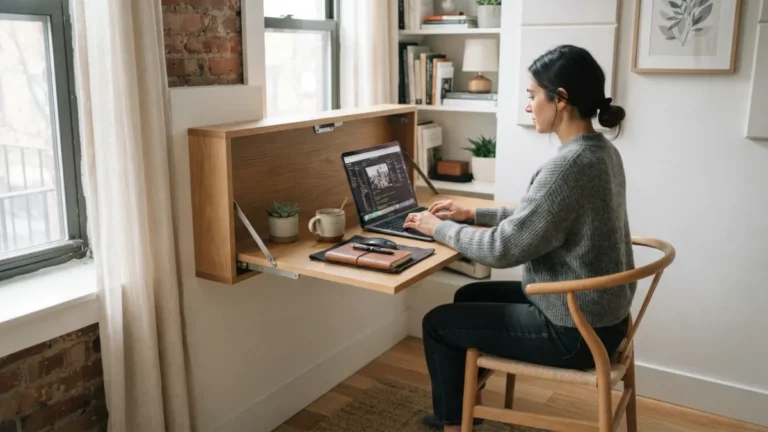
Every piece of furniture in a studio should earn its place. A coffee table with hidden storage, a bed with drawers underneath, or an ottoman that opens up to hold blankets all reduce the need for extra dressers and shelving units. Space-saving furniture like fold-down desks, wall-mounted tables, and sofa beds lets you host guests or work from home without dedicating a permanent zone to either activity. Before buying anything, measure your space carefully and consider how a piece will function during the day versus at night. Furniture that adapts to your schedule almost always beats furniture that only serves one purpose.
| Furniture Type | Best For | Space Saved |
|---|---|---|
| Murphy Bed | Studios needing a fully open floor during the day | High |
| Sofa Bed | Renters who host guests occasionally | Medium |
| Loft Bed | Tall ceilings and a desire for a workspace below | High |
| Storage Ottoman | Extra blankets, shoes, or small items | Low to Medium |
2. Stick to a Light, Cohesive Color Palette
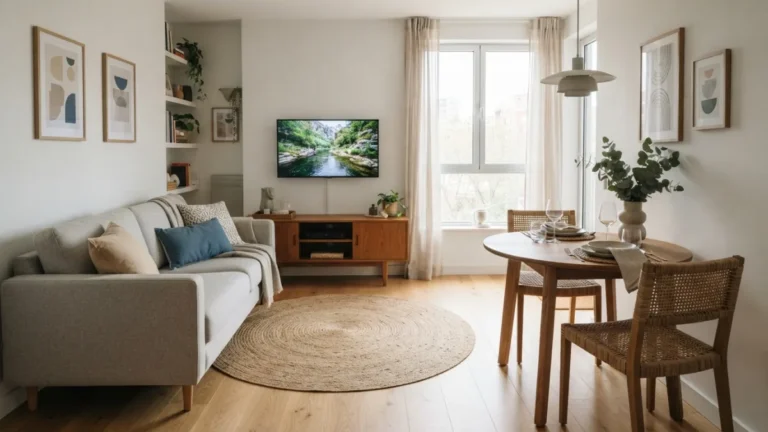
Dark walls can be dramatic in a large house, but in a studio they tend to visually shrink the room by absorbing light rather than bouncing it around. Sticking to soft whites, warm neutrals, or gentle pastels on your walls, and repeating similar tones in your furniture and textiles, creates a sense of flow that keeps the eye moving instead of stopping at every color change. This doesn’t mean your space has to feel sterile. You can add personality through a single accent wall, colorful artwork, or patterned pillows, as long as the overall palette stays connected. According to research on color psychology, lighter and cooler tones are generally perceived as more expansive than darker, warmer ones. This connects closely with another common issue — see 15 Storage Ideas for Small Apartments for more on that.
3. Use Mirrors to Bounce Light and Create Depth
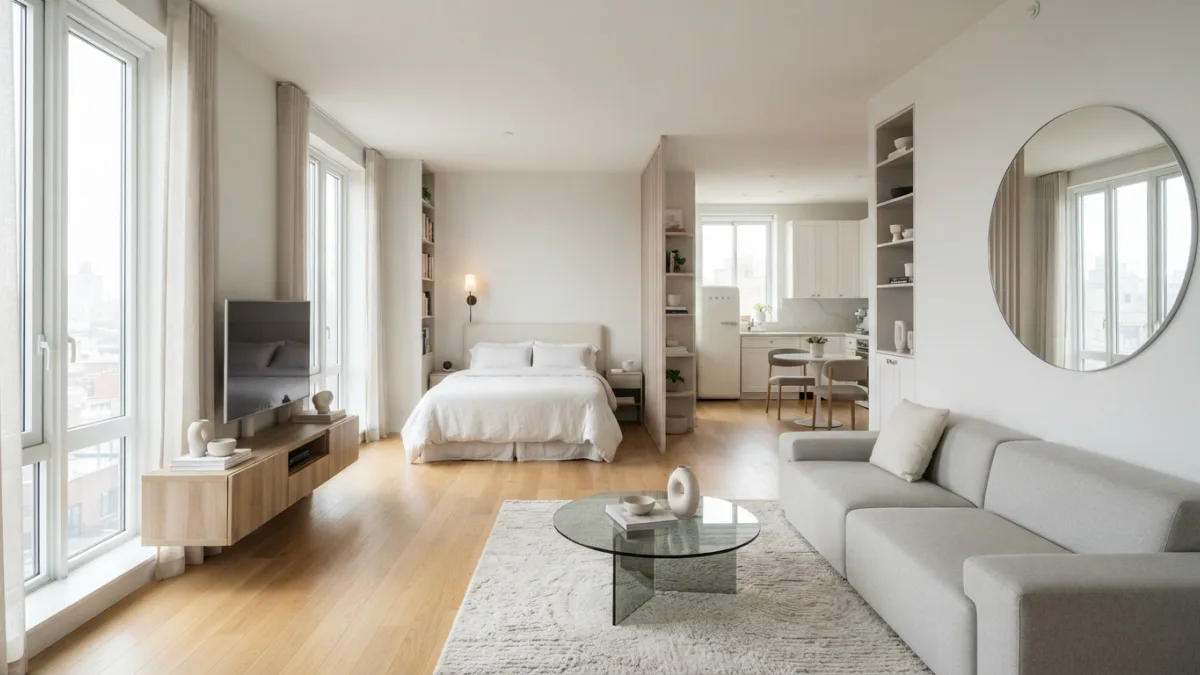
Mirrors are one of the oldest tricks in interior design, and for good reason. Placing a large mirror across from a window reflects natural light deeper into the room, while a mirror positioned along a narrow wall can make a hallway or corner feel like it extends further than it actually does. Leaning a floor mirror against the wall near your entry also adds a sense of openness the moment you walk in. This is one of the simplest visual tricks for small rooms because it requires no construction, no permission from a landlord, and very little cost compared to other design changes.
4. Let Natural Light Do the Heavy Lifting
Nothing makes a small room feel larger faster than good lighting, and natural light is the most flattering kind available. Keep window treatments minimal, choosing sheer curtains or blinds that can be fully raised during the day instead of heavy drapes that block the view. If privacy is a concern, frosted window film offers a middle ground. For evenings, layering several smaller light sources, like a floor lamp, a table lamp, and under-cabinet lighting, creates a softer glow than one harsh overhead fixture. The U.S. Department of Energy’s guide to lighting choices notes that thoughtful placement and bulb selection can also improve both comfort and energy efficiency, which is a nice bonus for renters watching their utility bills.
5. Define Zones Without Building Walls
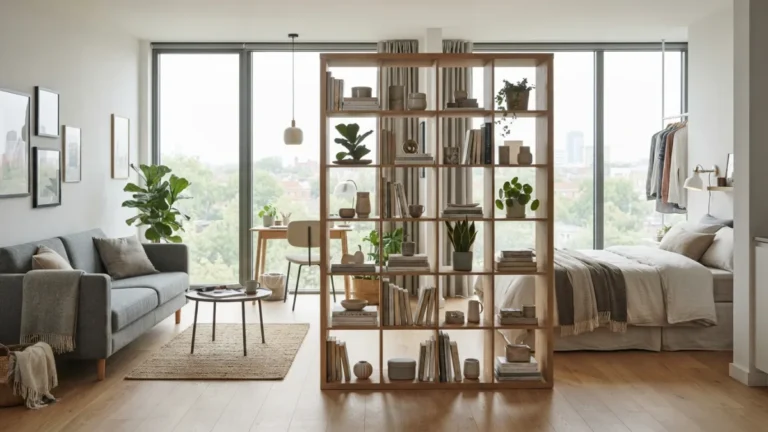
One of the trickiest parts of studio apartment layout is making a single room feel like it contains a bedroom, a living room, and sometimes an office, all without adding permanent walls. Area rugs are an easy solution. Placing one rug under your sofa and coffee table, and a different one under your bed, signals to the eye that these are two separate areas, even though there’s no physical divider. Open shelving units, a slim bookcase, or even a folding screen can serve the same purpose while still letting light pass through. The goal is to create visual boundaries that organize the space without making it feel chopped up or closed off. You might also find our article on Vertical Storage Hacks: 7 Easy Ideas for Tiny Bedrooms helpful here.
6. Get Serious About Vertical Storage
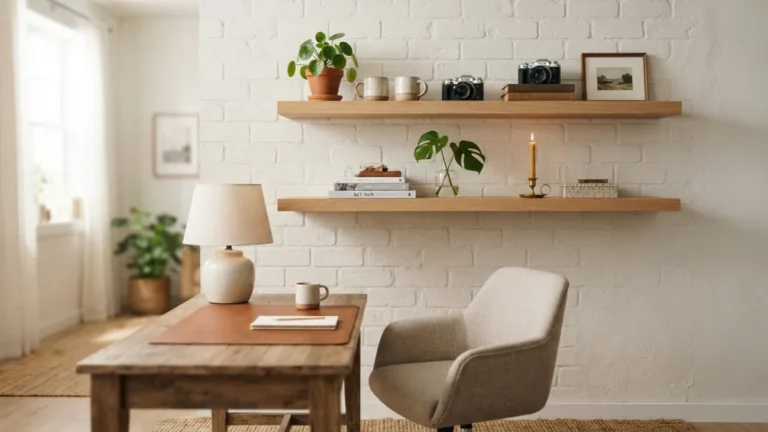
When floor space is limited, the walls become your best friend. Tall bookshelves, floating shelves near the ceiling, and hooks by the door all take advantage of vertical square footage that often goes unused. This approach is central to maximizing small spaces because it clears clutter from countertops and floors, which are the areas most responsible for making a room feel messy. Command hooks, over-the-door organizers, and stackable bins are inexpensive ways to start, and none of them require drilling if you’re renting. The less stuff sitting on the floor or on surfaces, the larger the room will appear at a glance.
7. Keep Sightlines Clear From the Front Door
The first impression of your apartment happens the moment you open the door, and that view sets the tone for how big or small the space feels. Try to avoid placing tall furniture or bulky items directly in the line of sight from the entrance. Instead, position your lowest furniture pieces, like a small sofa or a coffee table, so your eye travels across the room rather than hitting an obstacle right away. This single adjustment, more than almost any other tip on this list, can change how a guest perceives your home within the first few seconds of walking in.
Common Mistakes That Undo Your Progress
Even with the best intentions, a few habits can quietly cancel out all your hard work. Overcrowding a small entryway with shoes and coats, choosing furniture that’s too deep for the room, or hanging curtains that stop short of the ceiling are all common missteps. Another mistake is treating every wall as blank space that needs to be filled; sometimes leaving a wall mostly empty gives the eye a place to rest and actually makes the room feel calmer and larger. Reviewing your space every few months and removing anything that no longer serves a purpose keeps the momentum going instead of letting clutter creep back in. For a related walkthrough, check out Under-Bed Storage Ideas: 9 Easy Ways to Save Space.
Learning to style a studio apartment well is really about making intentional choices rather than following a strict formula. Some of these seven tips will matter more in your specific layout than others, and that’s completely normal. Start with the changes that cost the least, like rearranging furniture for better sightlines or adding a mirror, then work up to bigger investments like a Murphy bed or built-in shelving if your budget allows. Small space design rewards patience and small adjustments made over time, so don’t feel pressured to overhaul everything in a single weekend. With the right approach, a studio apartment can feel just as open and welcoming as a home with twice the square footage.
Frequently Asked Questions
What is the fastest way to make a studio apartment feel bigger?
Decluttering surfaces and floors gives the quickest visual result. Combine that with better lighting and a strategically placed mirror, and you’ll notice a difference within a single afternoon.
Should I use one rug or multiple rugs in a studio?
Multiple smaller rugs generally work better than one giant rug in a studio because they help define separate zones, like the sleeping area and the living area, without needing actual walls.
Is it better to use light or dark colors in a small studio?
Lighter, cooler tones tend to make rooms feel more open because they reflect light rather than absorb it. Dark colors can still work as accents, but covering large surfaces in dark shades usually makes a small room feel more enclosed.
What furniture should I avoid in a studio apartment?
Skip oversized sectionals, bulky bookshelves, and anything with a deep footprint that blocks walking paths. Choose slimmer profiles and pieces that serve more than one function whenever possible.
Do curtains really affect how big a room feels?
Yes. Hanging curtain rods closer to the ceiling and letting curtains extend beyond the window frame creates the illusion of taller ceilings and a wider window, both of which help a room feel more expansive.

Ghani Mejber — Founder & Lead Editor
Ghani Mejber is the founder of DIY Homes Hub. After years of living in compact rentals with strict lease rules and limited storage, I started sharing practical, damage-free home upgrades and basic repair guides built for real budgets. Every project I publish focuses on simple tools, accessible materials, and reversible solutions that protect your security deposit.