Soundproof a Rental Apartment: 7 Easy, Damage-Free Tips
The thump starts right when you sit down. Footsteps overhead, a slammed door in the hallway, a neighbor’s TV leaking through the wall. If that sounds like your evenings, you probably want to soundproof a rental apartment without risking your security deposit. Fortunately, you can cut a lot of noise with tools that peel off, plug in, or simply sit on the floor. Nothing here needs a drill, a hammer, or an awkward talk with your landlord about “just one small hole.” You won’t get a recording studio, and no honest guide will promise that. But a few smart changes can make evenings calmer, sleep deeper, and your home feel more like yours. First, let’s look at how sound actually gets in.
Know What You Can (and Can’t) Fix Before You Spend Money
Sound travels two ways: through the air and through the building itself. Voices and street noise slip through gaps around doors and windows. Footsteps and bass thump through floors, ceilings, and walls as vibration. Renters can handle the first path much better than the second. That’s why the biggest wins come from sealing gaps and adding soft, heavy materials. Engineers describe the basics as adding mass, absorbing sound, and stopping leaks, and the Wikipedia overview of soundproofing explains these ideas clearly. You can’t add real mass to a wall without construction, but you can still block neighbor noise a little by closing gaps and putting furniture to work. Aim for “noticeably quieter,” not “silent.” The seven steps below run roughly from simplest to most situational, so start at the top. If you want to dig deeper, our guide on Rental Kitchen Cabinets: 7 Easy Ways to Cover Without Paint covers this in more detail.
7 Ways to Soundproof a Rental Apartment Without Damage
1. Start With the Front Door
A soundproof apartment door starts with sealing gaps, not with buying a thicker door. Most doors leak sound along the bottom edge and around the frame. Stick-on foam or rubber weatherstripping closes the sides and top. A door sweep or a fabric draft stopper handles the bottom, and a draft stopper just slides under the door, so nothing is attached at all. Don’t forget the keyhole and any mail slot. For extra quiet, hang a heavy blanket on over-the-door hooks when you need peace. Here’s a quick test: turn on a bright flashlight in the hallway at night and look for light leaks from inside. Where light slips through, sound does too. Test any adhesive on a hidden spot first, and peel it off slowly when you move out.
2. Add Removable Window Soundproofing
Windows let in traffic, voices, and barking dogs, and thin glass does little to stop them. Start with the frame. Rope-style removable caulk presses into gaps and peels off later, and adhesive weatherstripping handles the moving parts. Next, look at window inserts. These are panels that press into the frame and sit over the glass, and some can come out for summer. Measure carefully, and check whether your lease limits changes to windows. If inserts don’t fit your budget, pair the sealed frame with heavy curtains. That combination matters most if you want to soundproof a rental apartment on a busy street. It won’t turn a loud avenue into silence, but it can take the sharp edge off the sound, which is often what keeps you awake.
3. Hang Soundproof Curtains for Renters
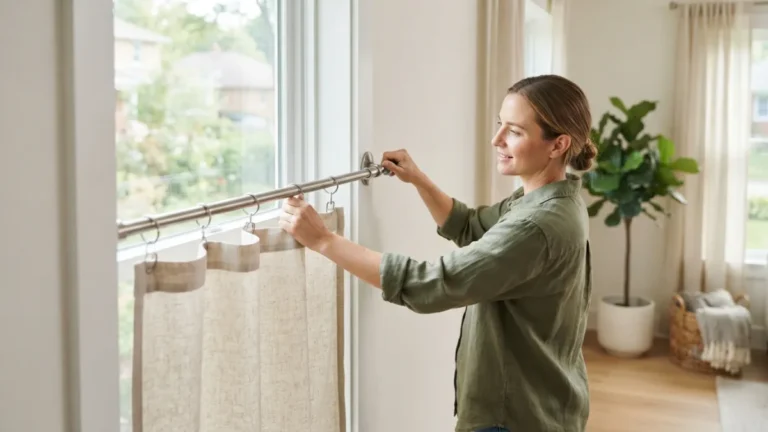
Thick curtains help in two ways. They add a little mass over the glass, and they soak up echo inside the room. Look for dense, lined, floor-length panels that are wider than the window, so the fabric can bunch up instead of hanging flat. Hang them on the rod that’s already there or on a sturdy tension rod, and let them overlap the frame by several inches. Some products carry a “soundproof” label, but the claim is loose, so judge by weight and fabric thickness. Two layers, such as a sheer panel plus a heavy drape, work too. You can also use the same idea over a glass balcony door. Be realistic: curtains soften outside noise rather than block it, and they work best after you’ve sealed the gaps. This connects closely with another common issue — see Removable Window Film: 7 Easy Steps to Apply and Peel Off for more on that.
4. Lay Down Area Rugs for Noise Control
Hard floors bounce sound around, so a bare room feels loud even when nobody is shouting. Area rugs for noise control fix part of that problem. Pick a thick rug and put a dense pad underneath, because the pad adds the cushioning a thin rug can’t. Cover as much floor as you can, especially walkways, the area by your sofa, and the spot under your desk chair. This quiets your own footsteps for the neighbor below and cuts echo for you. Add felt pads to chair and table legs, too. Rugs are one of the friendliest ways to soundproof a rental apartment because they leave no trace. Check the backing before you buy, since some rubber backings can mark certain floors.
5. Mount Removable Acoustic Panels
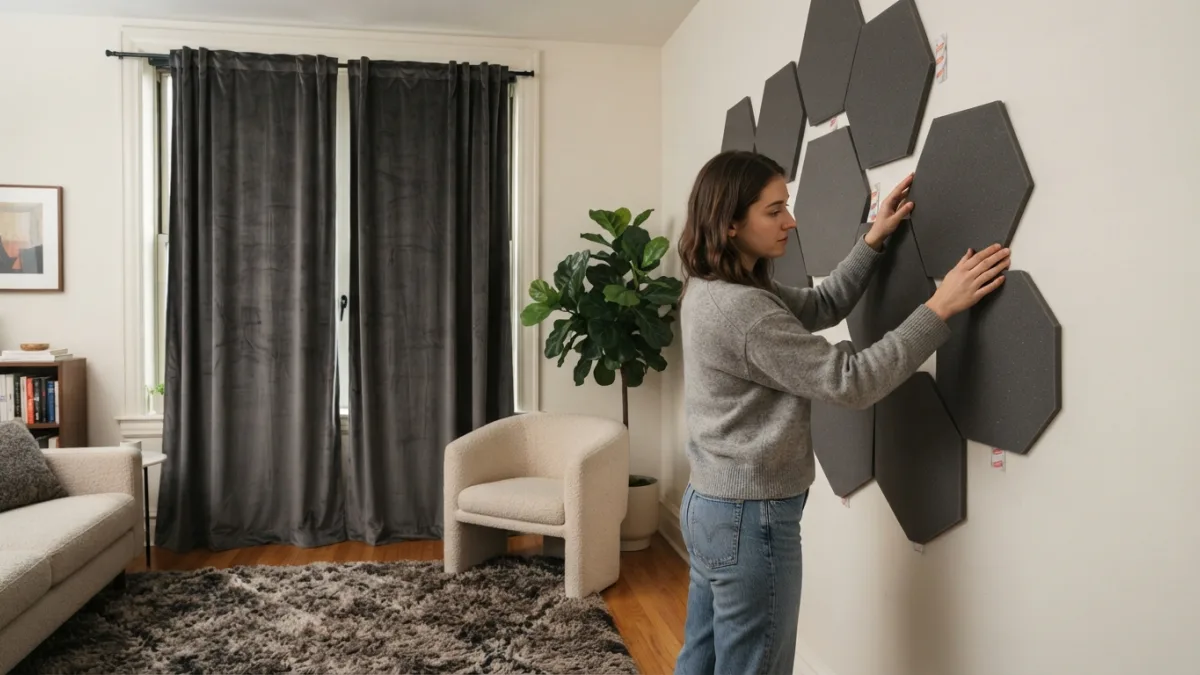
Removable acoustic panels tame echo inside your room, which makes voices, music, and TV sound clearer at a lower volume. They absorb sound; they don’t stop it from passing through a wall. Many renters lean freestanding panels against a wall, set them on a stand, or hang lightweight ones with removable adhesive strips rated for the weight. Always check the weight limit and test on a small, hidden spot first. For the shared wall, think mass. A tall bookcase packed with books can help block neighbor noise a little, and you may own one already. Keep tall furniture stable, though. If you can’t anchor it to the wall, choose a lower unit, or place it where it can’t tip onto anyone.
6. Reduce Upstairs Footstep Noise Without Touching the Ceiling
You can’t change the ceiling, so the plan looks different. Footsteps are impact noise. They travel through the building’s structure, and soft items in your room do very little against them. Start with a polite conversation. Many people don’t know how loud their floors sound below, and a rug, slippers, or felt pads can solve the problem fast. If the noise continues, write to your landlord or property manager and include dates and times. Written notes usually get a better response than angry texts. Meanwhile, move your bed or sofa away from the loudest spot and use masking sound at night. Earplugs can help you sleep. It’s not perfect, but a calm talk plus a few tweaks often beats any gadget. You might also find our article on Gallery Wall Without Nails: 7 Easy Steps for Renters helpful here.
7. Mask What’s Left With a White Noise Machine
A white noise machine doesn’t remove noise. It gives your brain a steady background hum, so sudden sounds stand out less. That’s the idea behind sound masking, and white noise is only one flavor of it. Place the device between you and the noise source, such as near the door or the shared wall, and keep the volume comfortable. Many people like a fan, soft rain, or deeper “brown” noise better, so try a few. Phone apps work in a pinch, but a small dedicated device lets your phone stay across the room. Masking helps most with murmuring voices and TV sounds. Heavy thumps may still break through, which is why it works best as the final layer.
Check Your Lease Before You Stick Anything
Before you soundproof a rental apartment, read your lease and any building rules. Most of the ideas above leave no marks, but adhesives can still pull paint, and some leases restrict window changes or require floor coverings in upper units. A few small habits protect your deposit. Ask your landlord in writing if you’re unsure; a short email creates a useful record.
- Test every adhesive strip or sticker on a hidden spot and wait a few days.
- Take dated photos of doors, walls, and windows before you start.
- Keep the packaging and instructions, especially for removal tips.
- Warm sticky strips gently with a hair dryer before peeling them off.
- Save original hardware, such as door sweeps or curtain rods, if you replace anything.
These steps take a few minutes and can save you an argument at move-out. For a related walkthrough, check out Hang Curtains Without Drilling: 7 Easy No-Damage Tips.
A Quieter Home Is Within Reach
You don’t need construction or a landlord’s blessing to make a real difference. Seal the gaps around your door and windows first, because that fix is cheap and effective. Then add soft layers like curtains and rugs, bring in panels or a full bookcase for the shared wall, and use masking sound for whatever still sneaks through. If you can soundproof a rental apartment even partly, the payoff shows up in small moments: a TV you can hear at lower volume, a bedroom that feels calmer, a phone call that doesn’t echo. Take it one step at a time, check your lease, and keep what works. When you move, everything comes with you.
FAQ: Soundproofing a Rental Apartment
Can I soundproof a rental apartment without losing my deposit?
Yes, if you stick to removable solutions. Draft stoppers, rugs, curtains, freestanding panels, and furniture leave no marks. Test adhesive products on a hidden spot first and read your lease for any rules about changes.
What is the cheapest first step?
Seal the gaps around your door and windows. Weatherstripping, a door sweep, or a fabric draft stopper costs little, and air leaks are one of the easiest ways for sound to get in.
Do thick curtains really block noise?
They help a little, but they don’t block it. Heavy, lined curtains reduce echo and soften outside sound. They work best together with sealed window gaps.
How can I reduce upstairs footstep noise as a renter?
Talk politely with your upstairs neighbor and suggest rugs or felt pads. If that fails, contact your landlord in writing. On your side, move your bed away from the loudest area and use masking sound or earplugs at night.
Does a white noise machine replace real soundproofing?
No. It hides noise by making it less noticeable, but it doesn’t stop sound from entering. Use it as the last layer after you’ve sealed gaps and added soft materials.

Ghani Mejber — Founder & Lead Editor
Ghani Mejber is the founder of DIY Homes Hub. After years of living in compact rentals with strict lease rules and limited storage, I started sharing practical, damage-free home upgrades and basic repair guides built for real budgets. Every project I publish focuses on simple tools, accessible materials, and reversible solutions that protect your security deposit.