Balcony Privacy Ideas: 7 Easy No-Drill Options for Renters
You step onto your balcony with a coffee in hand, and a neighbor across the way waves hello. Nice gesture, wrong moment. If you want a quieter morning, you need balcony privacy ideas that follow a renter’s rules: no drills, no screws, and no holes in the railing. Fortunately, plenty of options exist. Most take under an hour to set up. Many are light, simple, and easy to reverse. When your lease ends, you can roll them up, pack them in a box, and take them to your next place.
This guide covers seven renter-friendly fixes, from fabric and bamboo to plants and shade. Before you buy anything, take ten minutes to read your lease and any building rules. Some landlords limit what you can hang over a railing, and some ban certain materials or open flames on balconies. If you grill or use a heater out there, read the safety resources from the National Fire Protection Association and keep any screen well away from heat. Then look at your space. Note the wind, the sun, the height of your railing, and who can see in. A street-facing balcony on a low floor needs a different plan than a top-floor one facing a neighboring tower. If you want to dig deeper, our guide on Window Privacy Ideas: 7 Easy Renter-Friendly Options covers this in more detail.
What a No Drill Balcony Screen Needs to Do
A good screen does three jobs. It blocks sightlines, it stays put in the wind, and it leaves no damage behind. Most renters get the first part right and forget the other two. Use this short checklist before you shop, and your balcony privacy ideas will hold up much better in real life:
- Wind: Solid panels act like sails. Choose mesh, slats, or fabric that you can secure at several points.
- Weight: Check what your balcony can safely carry, especially if you plan to add planters with wet soil.
- Attachment: Rely on zip ties, clips, clamps, and tension. Skip nails, screws, and strong adhesives that can mark paint or concrete.
- Rules: If you are unsure, ask your landlord in writing before you install anything.
- Fire safety: Keep flammable materials away from grills, candles, and heaters.
7 Balcony Privacy Ideas You Can Set Up Without Drilling
Each option below solves a slightly different problem. Some block views from the side, some from above, and some work best in corners. Read them all, then mix two or three that suit your space.
1. Outdoor Balcony Curtains for Soft, Flexible Cover
Fabric is the fastest way to block a view, and it asks for the least commitment. Look for panels sold for outdoor use, since indoor curtains soak up rain and fade in the sun. Clip or tie them to your railing with curtain clips, carabiners, or strong cable ties. If your balcony has a ceiling or overhang with an existing hook or bar, hang the panels from there instead. Add a few clips along the bottom hem to stop flapping. Light colors keep the space bright, while darker ones feel cozier and hide dirt. You can also pull the curtains open when you want sun and fresh air. Take them down in storms, because wet fabric and strong gusts can strain your attachments.
2. Tension Rod Balcony Curtain for Covered Balconies
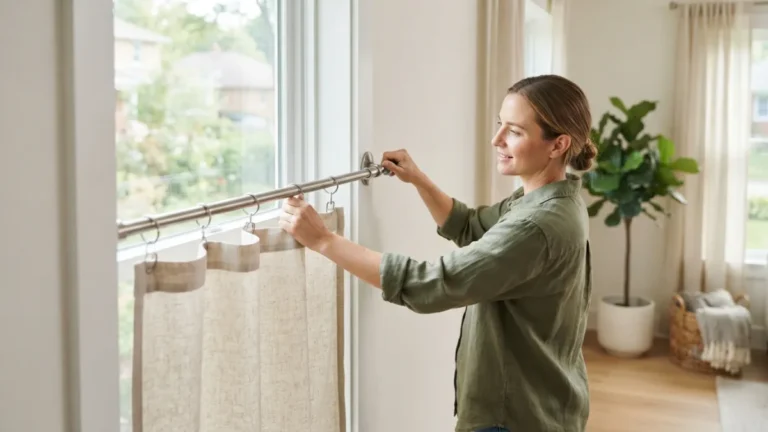
If your balcony has a ceiling, a tension rod balcony curtain may be your cleanest option. A heavy-duty rod presses between two solid surfaces, such as the ceiling and floor or two side walls, so you need no hardware at all. Check that both surfaces are sturdy and flat, and that the rod’s weight rating fits your fabric. Lightweight panels work best. Rubber ends protect paint and tile. Test the grip for a day before you hang anything heavy, and recheck it after big temperature swings, since heat and cold can loosen the pressure. This setup shines in corners where neighbors look in from the side. Pair it with a railing screen below, and you will cover most angles. This connects closely with another common issue — see Hang Curtains Without Drilling: 7 Easy No-Damage Tips for more on that.
3. Bamboo Railing Screen for a Natural Look
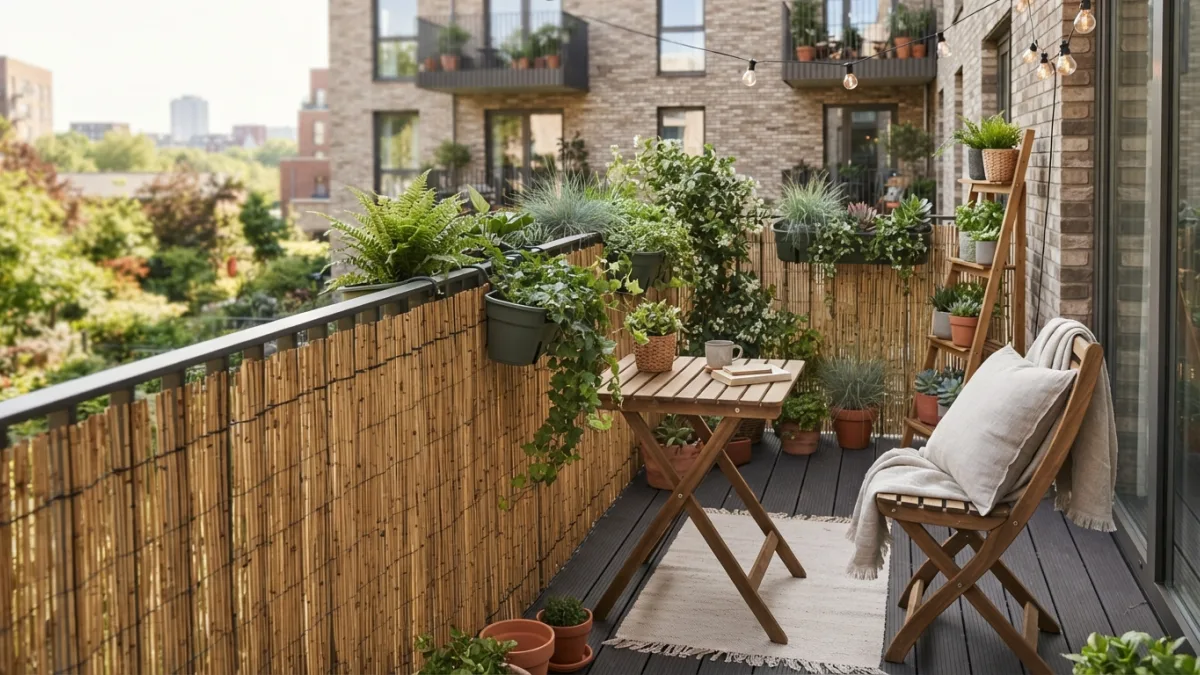
Rolls of bamboo, reed, or willow bring a warm, spa-like feel to a small balcony. A bamboo railing screen unrolls along your existing railing, and zip ties hold it in place at several points. Bamboo is a type of grass, but it is tough, and it is often sold as rolled fencing. Measure the length and height of your railing first. Wear gloves when you handle it, because cut ends can splinter. Natural screens fade in strong sun and can dry out over time, so expect the color to change. Keep them away from grills, candles, and heaters, since dry plant material burns easily. If your balcony gets strong gusts, choose a roll with small gaps so the wind can pass through.
4. Freestanding Privacy Screen for Total Flexibility
A freestanding privacy screen needs no attachment to your building at all. Folding panels, slatted screens, and trellis planters all stand on their own, so you can place them exactly where you sit. That makes them a great fit for glass railings or odd shapes that clips cannot grip. The catch is stability. Tall, solid panels catch wind like a sail, so pick a design with slats or cutouts and add weight at the base, such as sandbags or heavy planters. Keep the screen back from the railing edge so it cannot tip over the side. Folding models also store flat in winter. Best of all, they let you build one private corner for a chair and a small table instead of covering the whole balcony.
5. Balcony Privacy Plants That Build a Living Wall
Plants add privacy, shade, and a little calm. Tall planters filled with ornamental grasses, clumping bamboo, or dense evergreen shrubs can form a green wall along the railing. Climbing plants on a freestanding trellis also work well. Match each plant to your sun exposure, and choose varieties that do well in containers. The Royal Horticultural Society offers general advice on growing plants in pots. Before you buy, ask whether your building limits weight, because wet soil gets heavy fast. Use saucers so water does not drip onto the neighbors below, and remember that wind dries out pots quickly. Plants also take time to fill in, so many people pair them with a quick fix, like a curtain, while the greenery grows.
6. Balcony Shade Sail for Cover From Above
Privacy does not only come from the sides. If upstairs neighbors can see down into your space, a balcony shade sail adds cover overhead and cuts sun glare at the same time. The tricky part is the anchor points, because a sail needs tension to stay tight. Renters should use only fixtures that already exist and that the landlord allows, such as an approved ceiling hook or a strong railing. Another route is a freestanding post with a weighted base. Never guess about strength, because a sail under wind pulls hard. Take it down in storms or high winds. Sails also come in several shapes and colors, so measure your space carefully before you choose one. You might also find our article on Cover Ugly Rental Floors: 7 Easy Damage-Free Ideas helpful here.
7. Apartment Railing Cover for Instant Lower Coverage
An apartment railing cover is the simplest fix for open bars. Rolls of privacy mesh, faux hedge panels, and fabric wraps fasten to the railing with zip ties, so nothing touches the wall. They hide the zone where people see your legs, your laundry, and your clutter. Faux hedge panels look natural from the street, while mesh lets air pass through, which helps in wind. Measure your railing before you order. Make sure the cover does not stick out past the edge of the balcony, since some buildings care about how the exterior looks. When you move out, snip the ties, roll up the material, and your railing looks just as it did before.
Quick Comparison: Which Option Fits Your Balcony?
Still not sure where to start? This table sums up the best use and the main watch-out for each of the seven balcony privacy ideas.
| Option | Best for | Main watch-out |
|---|---|---|
| Outdoor curtains | Flexible, adjustable cover | Wind and rain can strain attachments |
| Tension rod curtain | Covered balconies and corners | Needs sturdy surfaces and light fabric |
| Bamboo roll | A natural look on the railing | Fades, dries out, and burns easily |
| Freestanding screen | Glass or unusual railings | Needs weight at the base |
| Plants | Shade and a softer view | Weight, watering, and slow growth |
| Shade sail | Views from above and sun glare | Needs safe, approved anchor points |
| Railing cover | Hiding open bars quickly | Building rules on exterior appearance |
How to Mix and Match for the Best Result
The best balcony privacy ideas often work as a team. Start with the biggest problem, whether that is a window across the street or a neighbor above you. Cover that angle first, then add a second layer. A railing cover below, plants in the corner, and one curtain for the side view can transform a small space without a single hole. Test each piece for a week. Watch how it handles wind, how it looks at night, and whether it blocks the light you enjoy. Keep receipts and packaging until you are sure it works. Then enjoy your balcony again, with your coffee, your music, and nobody watching.
FAQ: Balcony Privacy for Renters
Can I add privacy to my balcony without drilling?
Yes. Zip ties, curtain clips, tension rods, heavy planters, and freestanding panels all work without holes. Check your lease first, because some buildings limit what you can attach to railings. For a related walkthrough, check out Renter Friendly Lighting Ideas: 7 Easy No-Wiring Tips.
What is the easiest way to get privacy fast?
Railing covers and outdoor fabric panels are usually the quickest. You can attach both in under an hour with simple tools like zip ties and clips.
Do I need my landlord’s permission?
It depends on your lease and building rules. If the rules are unclear, ask in writing before you install anything. A short email can save you trouble later.
How do I keep screens and curtains from blowing away?
Choose mesh, slats, or fabric that lets some air through. Secure items at several points, add weight to freestanding pieces, and take everything down during storms or high winds.
Which balcony privacy ideas work best in windy spots?
Heavy planters with sturdy plants, mesh railing covers, and slatted freestanding screens usually handle wind better than solid panels or loose, lightweight fabric.

Ghani Mejber — Founder & Lead Editor
Ghani Mejber is the founder of DIY Homes Hub. After years of living in compact rentals with strict lease rules and limited storage, I started sharing practical, damage-free home upgrades and basic repair guides built for real budgets. Every project I publish focuses on simple tools, accessible materials, and reversible solutions that protect your security deposit.