Kitchen With No Pantry: 7 Easy Organizing Tips to Try
Not every home comes with a walk-in pantry, and that reality can feel overwhelming when your counters are covered in cereal boxes and canned goods with nowhere to go. But organizing a kitchen with no pantry is completely doable once you rethink the space you already have. With a bit of planning, some smart storage choices, and a system that fits your habits, you can create a kitchen that feels just as functional as one with a dedicated pantry room. This guide walks through seven practical, budget-friendly ways to make it happen.
Why a Missing Pantry Doesn’t Have to Mean Kitchen Chaos
Older homes, apartments, and smaller kitchens often skip the pantry entirely, leaving cabinets and a few drawers to do all the work. That setup can feel limiting, but it also forces you to be more intentional about what you keep and how you store it. Many people actually end up with a more efficient kitchen once they stop relying on a pantry as a catch-all space. The key is treating every inch, from cabinet doors to wall corners, as potential storage. Once you shift your mindset from “I don’t have enough space” to “I need to use my space differently,” the organizing process becomes much less stressful. If you want to dig deeper, our guide on 15 Storage Ideas for Small Apartments covers this in more detail.
1. Take Inventory Before You Buy Any Storage Bins
It’s tempting to rush out and buy matching bins the moment you decide to reorganize, but that step should come later. Start by pulling everything out of your cabinets and drawers and grouping similar items together, such as baking supplies, canned goods, snacks, and spices. This lets you see exactly how much you own and whether you’re storing duplicates or expired products you can toss. According to USDA guidance on food product dating, checking dates during this process helps you avoid keeping items past their safe use window. Only after this sorting stage should you measure your shelves and decide what containers or organizers will actually fit your space and your habits.
2. Turn Empty Wall Space Into Vertical Storage
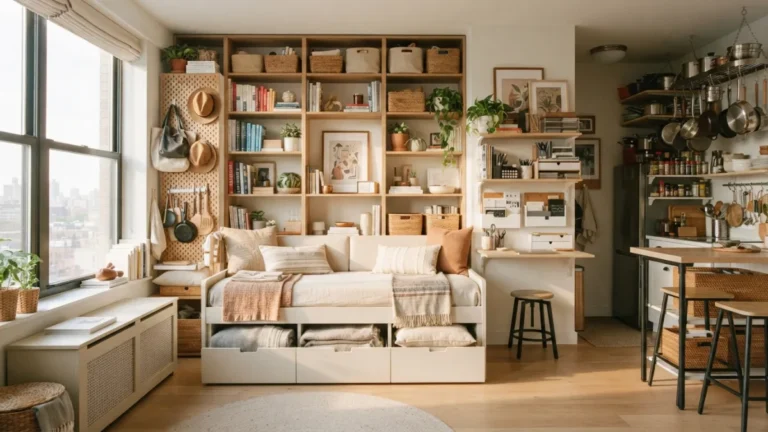
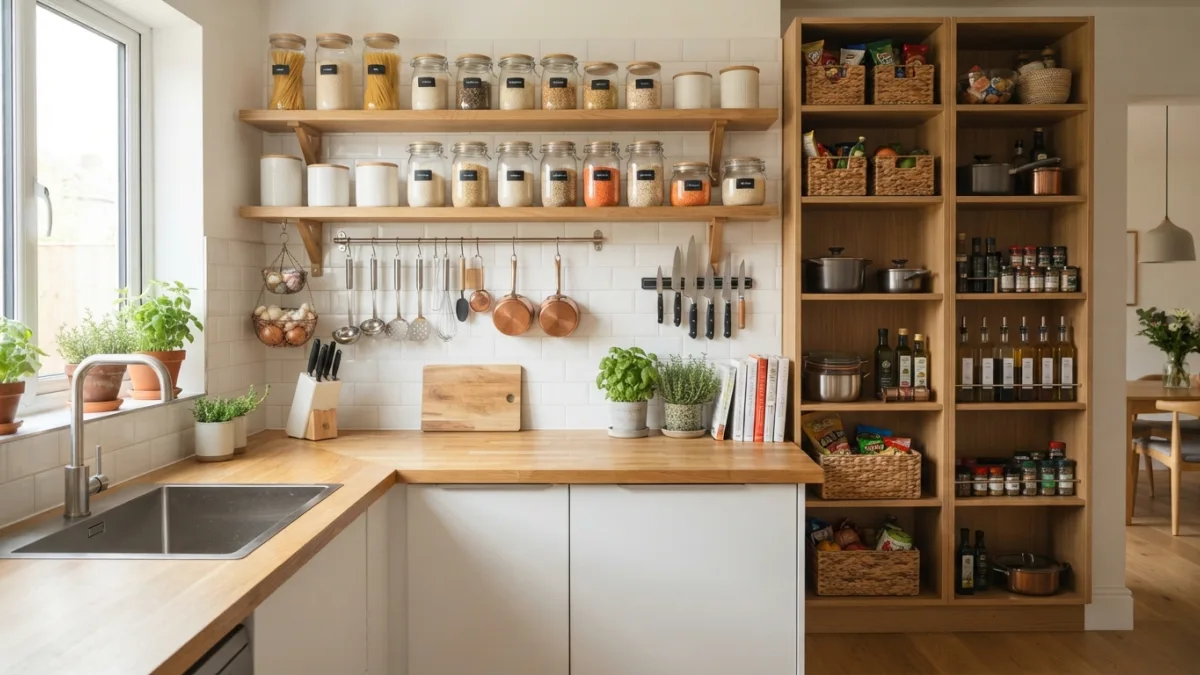
When floor and counter space run out, walls become your best friend. Installing floating shelves above counters, on an empty stretch of wall, or beside a window gives you room for jars, cookbooks, or baskets without taking up a single inch of cabinet space. A pegboard mounted on the wall can hold pots, utensils, and even small wire baskets for pantry staples like garlic or onions. This kind of vertical thinking is one of the simplest kitchen organization ideas because it uses space that would otherwise sit empty. If you rent and can’t drill holes, adjustable tension rods and adhesive hooks offer similar results without permanent changes.
3. Repurpose Cabinets With Pull-Out Shelves and Risers
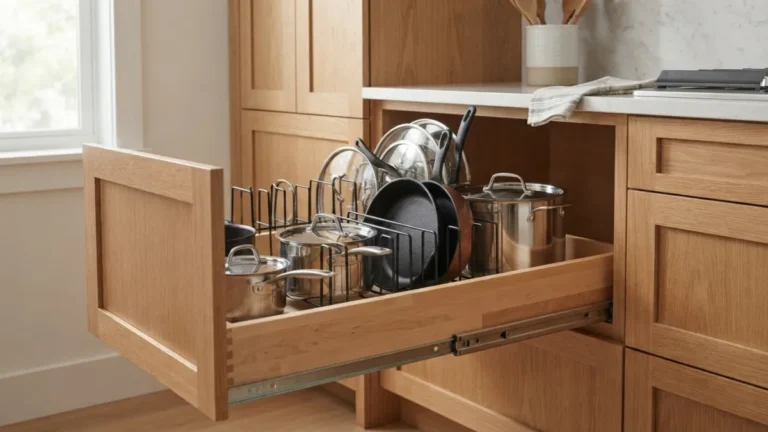
Standard cabinets waste a surprising amount of space, especially in the back where items get pushed and forgotten. Adding pull-out drawers or sliding baskets to lower cabinets means you can see and reach everything without digging. Stackable shelf risers work well in upper cabinets, letting you double your storage by creating a second level for smaller items like spice jars or snack bags. Lazy Susans are another practical option for corner cabinets that often become dead space. These small kitchen storage upgrades don’t require major renovation, and most can be installed in an afternoon with basic tools or none at all. This connects closely with another common issue — see Basic Tool Kit Every Renter Should Own for more on that.
4. Use Freestanding Furniture as Pantry Alternatives
If your cabinets simply can’t hold everything, consider bringing in a piece of furniture designed to work as one of several pantry alternatives. A slim bar cart, a vintage cabinet, or a bookshelf fitted with baskets can all function as a stand-in pantry when placed in a dining room, hallway, or even a laundry area near the kitchen. Look for furniture with doors or drawers to keep the look tidy rather than cluttered. This approach works particularly well in older homes or apartments where kitchen square footage is limited but adjacent rooms have a bit of breathing room. It’s one of the most flexible no pantry solutions because it doesn’t depend on your kitchen’s existing layout.
5. Maximize Under-Sink and Under-Cabinet Space
The area under the sink often becomes a jumbled mess of cleaning supplies, but with the right dividers, it can hold food storage containers, extra bags, or even canned goods if kept away from pipes and moisture. Stackable bins or a small rolling cart designed to fit around plumbing can make this space far more usable. Similarly, the gap under upper cabinets is perfect for hanging mug racks, wine glass holders, or a small shelf for cutting boards. These often-overlooked spots are ideal for anyone searching for kitchen storage hacks that don’t require buying new furniture or knocking down walls, just a little creativity with what’s already there.
6. Group Items by Category, Not Just by Size
One common mistake people make when organizing a kitchen with no pantry is grouping items by container size instead of by how they’re actually used. Instead, keep breakfast items together, baking supplies in one zone, and snacks in another, even if that means mixing a few container shapes on one shelf. This category-based system makes it much easier to find what you need quickly and helps you notice when you’re running low on something specific. The Wikipedia entry on pantries notes that historically pantries were organized by food type rather than size, and that same logic still makes daily cooking smoother today. You might also find our article on How to Build a Simple Platform Bed (Step-by-Step) helpful here.
7. Label Everything and Keep a Simple System
Labels aren’t just for aesthetics; they genuinely speed up how quickly you can grab what you need and put things back where they belong. Simple chalkboard labels, printed stickers, or even masking tape with a marker all work fine, so there’s no need to spend a lot of money here. Label shelves, bins, and baskets so that everyone in the household, not just the person who organized it, knows where things go. This step matters most in a kitchen with no pantry, since items are often spread across multiple cabinets instead of one central location, and a consistent labeling system keeps that spread-out storage from turning into confusion.
Keeping Your System Working Over Time
Organizing your kitchen once is only half the job; keeping it that way takes a bit of ongoing effort. Set a reminder to do a quick five-minute check every couple of weeks, tossing expired items and returning anything that’s ended up in the wrong spot. If a system stops working, whether that’s a bin that’s too small or a shelf that’s hard to reach, adjust it rather than forcing yourself to stick with something impractical. Small kitchen storage setups tend to shift as your shopping habits change, so treat your organization as something flexible rather than permanent. This mindset keeps clutter from creeping back in over the following months.
Living without a built-in pantry doesn’t mean your kitchen has to feel chaotic or cramped. By combining smart cabinet upgrades, vertical storage, category-based organizing, and a few pieces of freestanding furniture, you can build a system that works just as well as a traditional pantry, sometimes even better. The goal isn’t to copy someone else’s perfectly styled shelves but to create a setup that matches how you actually cook and shop. Start with one or two of these tips, see how they fit your routine, and adjust from there. Over time, your kitchen with no pantry can become one of the most efficient rooms in your home. For a related walkthrough, check out 10 Renter-Friendly Upgrades That Won't Cost Your Deposit.
Frequently Asked Questions
What is the cheapest way to organize a kitchen with no pantry?
Repurposing items you already own, like shoe boxes, mason jars, or an unused bookshelf, costs little to nothing and works surprisingly well. Adding shelf risers and clear labels are also low-cost ways to instantly improve organization.
Where should I store dry food without a pantry?
Upper cabinets away from the stove and sink work best for dry goods since they stay cooler and drier. A freestanding cabinet or cart in a nearby room is a solid backup option if cabinet space runs out.
Can I create a pantry in a small kitchen?
Yes, even a narrow gap between the fridge and a wall can become a slim pull-out pantry with the right cabinet insert. Corner cabinets and the space above the fridge are also often underused and easy to convert.
How do I stop my kitchen from feeling cluttered without a pantry?
Grouping similar items together, using matching bins where possible, and doing regular quick check-ins to remove expired or duplicate products all help keep things visually calm and easy to navigate.
Are pantry cabinets worth installing if I don’t have a pantry room?
A tall pantry-style cabinet can be a great investment if you have even a small amount of floor space to spare, since it mimics the storage of a walk-in pantry without needing extra square footage.

Ghani Mejber — Founder & Lead Editor
Ghani Mejber is the founder of DIY Homes Hub. After years of living in compact rentals with strict lease rules and limited storage, I started sharing practical, damage-free home upgrades and basic repair guides built for real budgets. Every project I publish focuses on simple tools, accessible materials, and reversible solutions that protect your security deposit.