Pots and Pans Storage: 9 Easy Ideas for Small Cabinets
You open the cabinet, and a skillet slides out and lands on your foot. In a small kitchen, pots and pans storage is one of the toughest puzzles, because cookware is bulky, heavy, and awkwardly shaped. Fortunately, you rarely need a remodel to fix it. A few smart add-ons and a better layout can give you more room than you expected. Below are nine practical ideas that work in rentals, tiny apartments, and older homes with shallow cabinets. Mix and match them based on your space, your budget, and the way you cook. Some cost almost nothing, while others take a weekend. All of them help you grab what you need without the clatter.
Nine Ideas for Better Pots and Pans Storage
1. Edit Your Collection Before Any Small Kitchen Cabinet Organization
Small kitchen cabinet organization starts with subtraction, not shopping. Pull every pot, pan, and lid out and put them on the table. Then sort them by how often you use them. Most home cooks reach for the same few pieces again and again, while the rest just take up space. Donate or recycle anything warped, badly scratched, or missing a lid or handle. Move rarely used items, such as a giant stockpot or a roasting pan, to a high shelf or another room. Before you buy anything new, measure your shelf height, depth, and door clearance. A tape measure and a clear counter make pots and pans storage far easier to plan, and they keep you from buying organizers that do not fit. If you want to dig deeper, our guide on Small Bathroom Storage Ideas: 7 Practical Tips (No Cabinets) covers this in more detail.
2. Use a Pan Lid Organizer to Tame the Chaos
A pan lid organizer solves the problem that drives most people crazy: lids that slide, spin, and hide. Lids come in odd sizes, so they never stack neatly. An organizer holds them upright, like files in a folder, so you can pick the one you want without moving the others. You have a few options, and each one suits a different cabinet:
- Inside-the-door racks use dead space and keep lids off the shelf.
- Shelf-top racks sit beside your pans and work well in wider cabinets.
- Adjustable holders flex to fit both small and large lids.
Check how far your door opens and whether it will clear the rack before you install anything.
3. Stand Pans Up with Vertical Pan Dividers
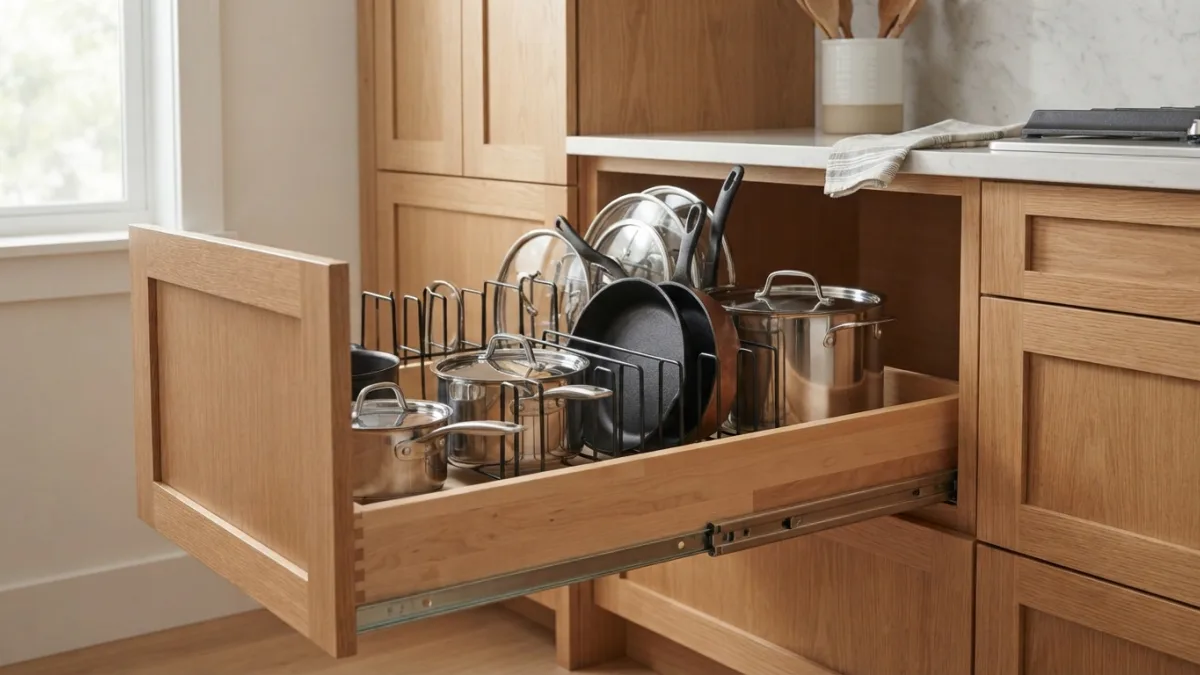
Stacking skillets feels natural, but it hides the one you want at the bottom and scrapes every surface along the way. Vertical pan dividers fix both problems. They hold pans on their edge, so each one slides out on its own. The same idea works for baking sheets, cutting boards, and cooling racks. You can buy a dedicated rack, or you can use a sturdy desktop file sorter, which does a similar job for less money. Put the dividers on a low shelf so you can lift heavy pans straight up and out. Leave a little gap between pieces, because a tight fit makes pans harder to pull free. Vertical storage also lets you see your whole collection at a glance.
4. Install Pull Out Shelves for Deep Cabinets
Pull out shelves turn a deep, dark cabinet into something you can see from above. Instead of kneeling and reaching into the back, you slide the whole tray toward you. That matters most for heavy cast iron and large stockpots, which are hard to lift from awkward angles. Some kits replace the shelf, while others attach to the cabinet floor or clamp onto an existing shelf. Many can be installed with basic tools, though you should read the instructions and check the weight rating first. Measure the opening of your cabinet door too, because the frame can be narrower than the inside. This one upgrade can make pots and pans storage feel much less like a back workout. This connects closely with another common issue — see Shoe Storage Ideas: 7 Easy Solutions for Small Entryways for more on that.
5. Make the Most of Corner Cabinet Storage
Corner cabinet storage is where cookware goes to disappear. The space is deep and oddly shaped, and the back is almost impossible to reach. A lazy Susan, which is a rotating tray, brings items to you with a simple spin. Corner pull-out systems do a similar job, swinging or sliding your pots into view. If you cannot install either, use the deepest part of the corner for heavy pieces you only need now and then. Keep daily cookware closer to the door. A tall organizer with a lip can also stop pots from sliding around when you turn the tray. Whatever you choose, test it with your heaviest pot before you load everything on.
6. Hang Cookware with Cabinet Door Hooks
Cabinet door hooks give you storage in a spot you probably ignore. The inside of the door is flat, free, and easy to reach. Small saucepans, measuring cups, and light strainers all hang well there. Pick hooks designed for doors, and check the weight limit before you hang anything heavy. Thin or older doors may not handle a full-size pan, and adhesive hooks can fail under load. Also make sure the door still closes fully without hitting the shelf. For pots and pans storage, think of door hooks as a helper for your lightest pieces, not the main solution. Used this way, they free up shelf space without any drilling into walls.
7. Go Up with a Hanging Pot Rack
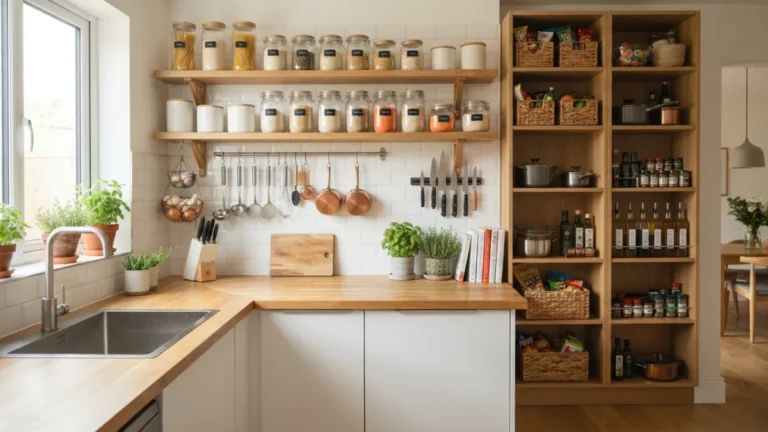
A hanging pot rack takes cookware out of the cabinets completely. That can be a lifesaver when your shelves are full and your wall or ceiling is not. Wall-mounted rails suit renters and smaller rooms, since they sit close to the wall and take up no floor space. Ceiling racks work best in kitchens with some height to spare. Safety matters here. Cookware is heavy, so anchor the rack into studs or joists and follow the maker’s weight limit. Also remember that hanging pots collect dust and cooking grease, so you will need to wipe them down from time to time. Still, a rack doubles as a decor piece, and your best pans are always one reach away.
8. Add Nonstick Cookware Protection Between Pieces
Nonstick cookware protection is easy to overlook, but it can extend the life of your pans. A nonstick surface is a coating, and coatings can scratch when metal or rough edges rub against them. Tight cabinets make that more likely, because pans bump and slide each time you open the door. Place a soft barrier between stacked pans. You can use: You might also find our article on 15 Storage Ideas for Small Apartments helpful here.
- Felt pan protectors made for this purpose
- A clean dish towel folded flat
- A paper towel or a sheet of parchment
Better still, store nonstick pans on dividers or hooks so nothing rests on the cooking surface. Always follow the care advice from the pan’s maker.
9. Nest and Stack in the Right Order
Not every piece needs its own slot. Cookware is often designed to nest, so use that to your advantage. Put smaller saucepans inside larger ones, and stack skillets by size with a soft layer between them. Keep lids separate so the stack stays stable. Heavy items belong on the lowest shelf, where you can lift them without straining. The best pots and pans storage plan puts your everyday pieces at the front and the specialty items at the back. Finally, give every item a home and put it back after washing. A tidy system only works if it takes less effort to maintain than to ignore.
Make Your Cabinets Work Harder
You do not need to try all nine ideas at once. Start with the one that fixes your biggest annoyance, whether that is runaway lids, a messy corner, or scratched pans. Edit first, measure twice, and add one change at a time so you can see what works. Small spaces reward patience. Within a weekend, most people can turn a noisy, crowded cabinet into one where everything has a clear place. Once you can find your favorite skillet without moving three other pans, cooking gets a lot more enjoyable. The best system is the one you will actually use, so keep it simple and adjust as your kitchen changes.
FAQ: Pots and Pans Storage in Small Cabinets
What is the best way to store pots and pans in a very small cabinet?
Start by removing items you rarely use. Then nest pots by size, stand skillets on edge with dividers, and keep lids in a rack. Good pots and pans storage in a tiny space comes down to using height and door space. For a related walkthrough, check out Vertical Storage Hacks: 7 Easy Ideas for Tiny Bedrooms.
How do I stop pans from scratching each other?
Put a soft layer between them, such as a felt protector, a folded cloth, or a paper towel. Even better, store pans upright so they do not touch the cooking surface.
Can renters use a pot rack?
Often, yes. Check your lease first. Some racks hang from rails fixed to the wall, and those need screws. If you cannot drill, door hooks and inside-cabinet organizers are safer options.
Where should I keep heavy cast iron pans?
Keep them on a low shelf or a sturdy slide-out tray. That way you can lift them straight out without bending awkwardly or reaching over other items.
Should pot lids be stored with the pots?
Usually it is better to store them separately. Lids make stacks unstable and take up room. An upright lid rack keeps them organized and easy to find.

Ghani Mejber — Founder & Lead Editor
Ghani Mejber is the founder of DIY Homes Hub. After years of living in compact rentals with strict lease rules and limited storage, I started sharing practical, damage-free home upgrades and basic repair guides built for real budgets. Every project I publish focuses on simple tools, accessible materials, and reversible solutions that protect your security deposit.