DIY Accent Wall Ideas: 12 Easy Budget-Friendly Designs
Staring at a plain, boring wall and wishing you had a designer’s budget to fix it? You don’t need one. DIY accent wall ideas let you transform any room for the price of a few supplies and a free weekend, no contractor required. Whether you’re renting an apartment or updating a home you own, a single standout wall can completely change how a space feels without draining your savings account.
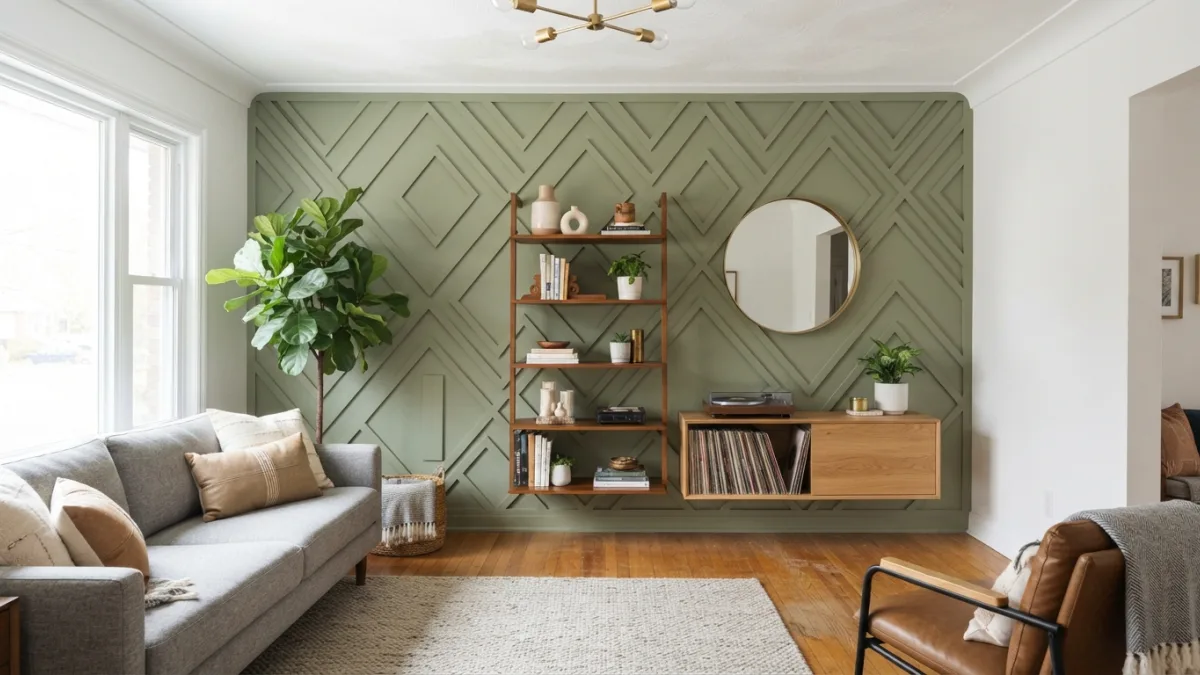
The best part about tackling this kind of project yourself is how forgiving it is. Paint can be redone, wallpaper can be repositioned, and most of these techniques use materials you can find at any hardware or craft store for under fifty dollars. Below are twelve budget-friendly ways to add personality, texture, and color to your walls, organized so you can pick the one that fits your room, your skill level, and your wallet. If you want to dig deeper, our guide on Budget Living Room Makeover: 7 Easy Ideas for a Rich Look covers this in more detail.
1. Start with Bold Accent Wall Paint Ideas: Diy accent wall ideas
Paint is still the cheapest and fastest way to make a statement. Among accent wall paint ideas, a deep navy, forest green, or terracotta shade can instantly warm up a room that feels flat or sterile. Pick one wall, usually the one behind a bed, sofa, or fireplace, and commit to a color a few shades bolder than you’d normally choose. A gallon of quality paint typically covers one wall easily and costs far less than wallpaper or paneling. If you’re nervous about commitment, buy a sample pot first and paint a large poster board to test how the color looks at different times of day before rolling it onto the actual wall.
2. Build a Wood Accent Wall on a Budget
A wood accent wall adds warmth and texture that paint alone can’t match, and it doesn’t require real hardwood to pull off. Thin plywood strips, leftover fence pickets, or even pallet wood cut down to size can be arranged in horizontal, vertical, or herringbone patterns. Sand the pieces, apply a stain or whitewash, and nail or glue them directly to the wall. Many home improvement stores sell furring strips for just a couple of dollars each, making this one of the most affordable ways to get a rustic or modern farmhouse look. Seal the finished wood with a matte polyurethane to protect it from scuffs and moisture over time.
3. Design a Living Room Accent Wall with Open Shelving
An accent wall in the living room doesn’t always need paint or wallpaper to stand out. Installing a few floating shelves against a contrasting painted background creates a functional focal point that displays books, plants, and framed photos. Choose brackets and boards from a hardware store, or repurpose an old shelf you already own. Arrange items in odd numbers and vary the heights so the eye moves naturally across the wall. This approach works especially well in apartments where you want visual interest without committing to a permanent structural change, since shelves can be removed and holes patched easily when you move.
4. Create a Cozy Bedroom Accent Wall Behind the Headboard
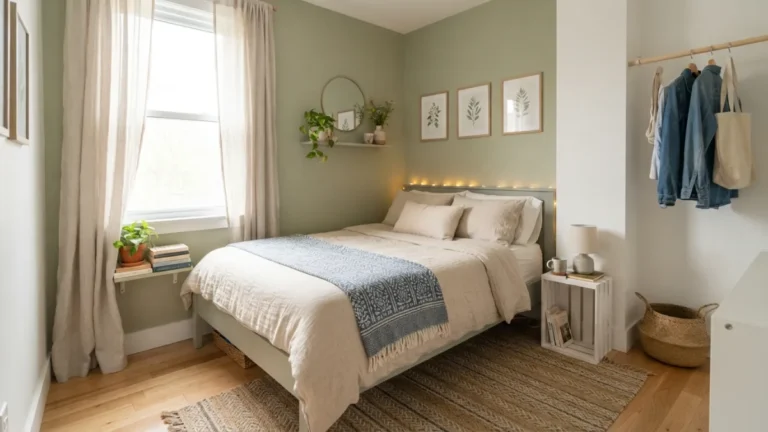
A bedroom accent wall behind the headboard turns an ordinary sleeping space into something that feels intentional and calm. Soft, muted tones like sage, dusty rose, or warm gray tend to work best here because bedrooms benefit from colors that promote rest rather than energy. If painting feels permanent, try a large fabric panel stretched over a wooden frame and mounted behind the bed instead. It’s removable, budget-friendly, and adds softness to the room. Pair the wall with simple sconce lighting on either side of the bed to highlight the color or texture without needing an electrician, using plug-in fixtures instead of hardwired ones. This connects closely with another common issue — see Small Bedroom Makeover: 7 Easy Steps to Save Under 0 for more on that.
5. Explore Budget Accent Wall Materials You Already Own
You don’t need to buy anything fancy to find budget accent wall materials that look intentional. Leftover fabric, cardboard tiles cut into geometric shapes, cork sheets, or even old maps and posters can be arranged into a patterned collage. Cardboard, in particular, can be cut into hexagons or diamonds, painted, and mounted with adhesive strips for a textured 3D effect that mimics expensive wall tiles. This is a great option for renters since nothing needs to be nailed into drywall. Before starting, check for any local housing guidelines on wall modifications, and always test adhesives on a small hidden spot first to make sure they won’t damage paint or plaster.
6. Try a Peel-and-Stick Wallpaper Accent Wall
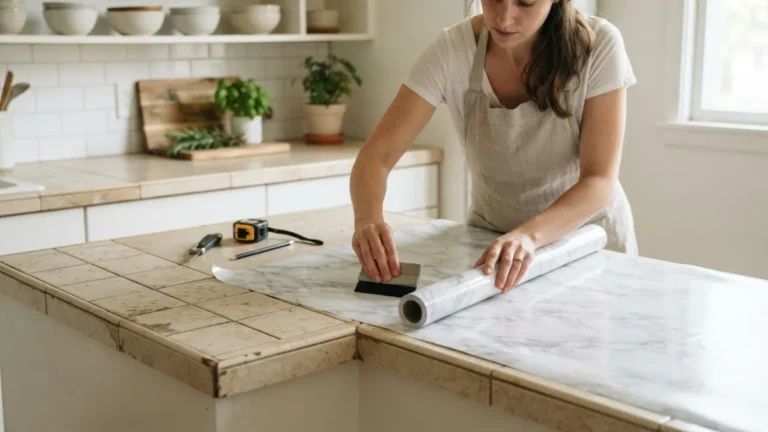
A wallpaper accent wall used to mean hours of messy paste and a steep learning curve, but peel-and-stick options have changed that completely. These removable rolls come in countless patterns, from botanical prints to geometric designs, and most can be installed in an afternoon with just a smoothing tool and a utility knife. According to general guidance from the history and evolution of wallpaper, patterned wall coverings have long been used to add depth and personality to interiors, and today’s budget versions make that same effect accessible to almost anyone. Measure twice before ordering, since running short mid-project is the most common mistake beginners make.
7. Play with Contrasting Accent Wall Colors
Choosing the right accent wall colors often comes down to contrast rather than trend. A dark wall against light furniture, or a bright wall against neutral flooring, creates the kind of visual balance that makes a room feel finished. Color blocking, where you paint two or three shapes or bands of color instead of a single solid coat, adds even more dimension for the same cost as a regular paint job. Use painter’s tape to map out clean lines before you start, and let each color dry fully before removing the tape to avoid smudging. This technique works in kitchens, hallways, and even ceilings.
8. Maximize a Small Room Accent Wall
A small room accent wall needs a slightly different approach than a large open space, since bold colors can sometimes make tight rooms feel more cramped. Lighter, warmer tones or vertical stripes tend to trick the eye into seeing more height and space. Mirrored tiles or a glossy paint finish also bounce light around, which helps small bedrooms, bathrooms, and home offices feel less closed in. If you love a darker shade, try applying it only to the upper two-thirds of the wall, leaving the bottom third white or neutral, to keep the room from feeling boxed in. You might also find our article on Update a Rental Bathroom: 7 Easy Tips for a Budget Makeover helpful here.
9. Add a Stenciled Pattern for Texture Without Wallpaper
Stencils give you the visual complexity of wallpaper for a fraction of the price. Reusable stencil kits, available at most craft stores, let you repeat a pattern like trellis, chevron, or floral motifs across a wall using just paint and a foam roller. Start in a corner and work in sections, wiping the stencil clean between uses to keep lines crisp. This method takes longer than a simple paint job, but it costs far less than most wallpaper and gives you full control over color and spacing. It’s especially satisfying in a nursery, hallway, or reading nook where a subtle repeated pattern adds charm without overwhelming the space.
10. Use Washi Tape for a No-Damage Geometric Design
If you’re renting or simply not ready to commit to paint, washi tape offers one of the most low-risk ways to experiment with pattern. This decorative tape comes in dozens of colors and widths, and it peels off cleanly without damaging paint or leaving sticky residue behind. Create triangles, diamonds, or a sunburst pattern radiating from a central point, and rearrange the design as often as you like. It’s an especially good option for kids’ rooms or dorm rooms, where the ability to redesign quickly matters more than permanence. A few rolls typically cost less than a single can of specialty paint.
11. Layer Painter’s Tape Stripes for a Modern Look
Stripes remain one of the most timeless accent wall designs, and painter’s tape makes them nearly foolproof. Measure and mark even intervals with a level, apply the tape firmly, and paint over the edges to seal them before adding your main color, which prevents bleeding underneath. Vertical stripes draw the eye upward and can make ceilings feel taller, while horizontal stripes tend to widen a narrow room. Mixing matte and glossy finishes of the same color creates subtle stripes that only show up depending on the light, a trick interior designers use often. This project usually takes a single afternoon from taping to reveal.
12. Build a Gallery or Corkboard Wall from Frames You Already Have
Not every accent wall needs paint, wallpaper, or wood. A gallery wall made from mismatched frames you already own, spray-painted a single unifying color, creates a cohesive display without new furniture purchases. Alternatively, cover a wall in large corkboard panels for a functional pinboard that doubles as a design feature in a home office or kid’s room. Both options let you rotate artwork, photos, or notes whenever you want, keeping the space fresh without repainting. Before drilling into any wall, especially in older homes, it’s worth reviewing basic safety guidance from the EPA’s information on lead-based paint hazards if the home was built before 1978. For a related walkthrough, check out How to Refresh a Room for Under 0.
Bringing It All Together
Whichever idea you choose, the goal of any accent wall is the same: draw the eye to one focal point instead of spreading attention evenly across four flat walls. This basic principle, sometimes called a feature wall in interior design circles, is why even a single painted or textured wall can make an entire room feel redesigned. Start small, test your materials on a hidden section first, and don’t be afraid to redo a section if it doesn’t turn out the way you pictured. With a little patience and under a hundred dollars in most cases, you can give any room in your home a completely new personality.
Frequently Asked Questions
What is the cheapest way to create a DIY accent wall?
Paint is generally the cheapest option, since a single gallon can cover an entire wall for well under the cost of wallpaper, wood paneling, or tile. Washi tape and painter’s tape designs are also very affordable and require no special tools.
How do I choose the right wall for an accent design?
Pick the wall your eye naturally lands on when you enter the room, often the one behind a bed, sofa, or fireplace. Avoid walls broken up by too many windows or doors, since a solid surface shows off color and pattern better.
Is peel-and-stick wallpaper actually removable without damage?
Most quality peel-and-stick wallpaper is designed to come off cleanly from smooth, painted drywall, though it’s smart to test a small corner first and remove it slowly and evenly to avoid pulling off paint underneath.
Do I need special tools to paint an accent wall myself?
No, a roller, a angled brush for edges, painter’s tape, and a drop cloth are usually enough. A level and tape measure help if you’re doing stripes or a geometric pattern rather than a solid color.
Can renters do any of these accent wall ideas?
Yes, several options like washi tape, removable wallpaper, corkboard panels, and leaning shelves work well for renters since they avoid permanent damage and can be taken down completely when it’s time to move.

Ghani Mejber — Founder & Lead Editor
Ghani Mejber is the founder of DIY Homes Hub. After years of living in compact rentals with strict lease rules and limited storage, I started sharing practical, damage-free home upgrades and basic repair guides built for real budgets. Every project I publish focuses on simple tools, accessible materials, and reversible solutions that protect your security deposit.