Small Bedroom Layout Ideas: 7 Easy Tips for Queen Beds
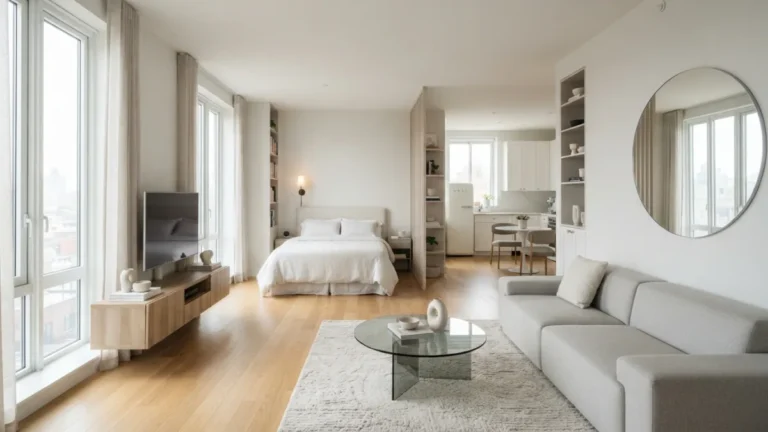
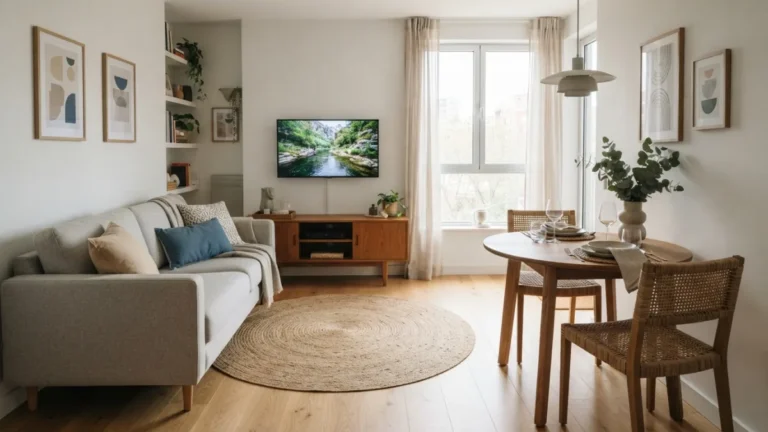
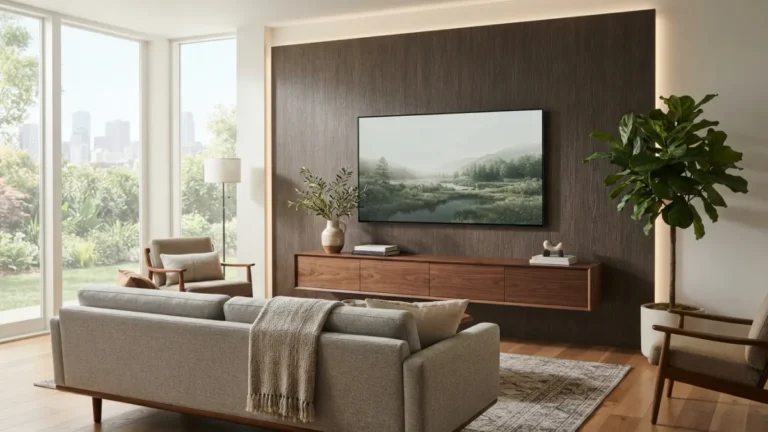
A small bedroom with a queen bed and a desk can feel like a puzzle with too many pieces and not enough table. Fortunately, a handful of small bedroom layout ideas can turn a cramped, cluttered room into a space that actually works for sleeping, studying, and everything in between. You don’t need a bigger room, just a smarter plan.
Whether you’re furnishing a studio apartment, a college dorm alternative, or a guest room that doubles as a home office, the challenge is the same: how do you fit a full-size bed and a functional workspace without the room feeling like a maze? The answer lies in thinking about traffic flow, furniture proportions, and a few clever tricks that designers use in tight spaces every day. Below are seven practical tips to help you make it happen. If you want to dig deeper, our guide on Small Apartment Layout Ideas: 7 Easy Fixes for Tight Spaces covers this in more detail.
1. Get Queen Bed Placement Right First
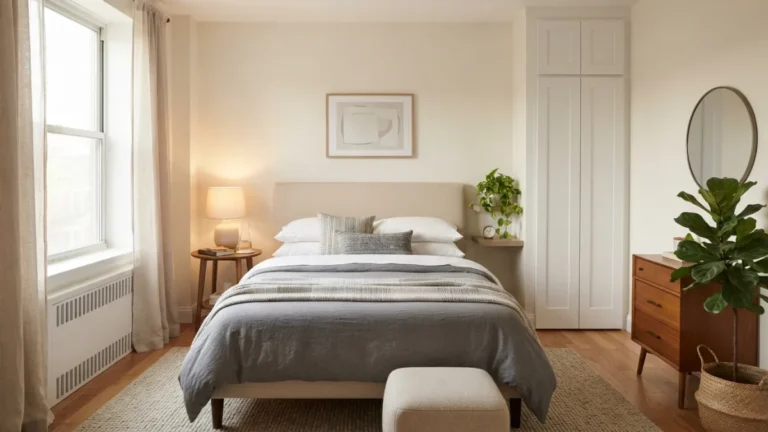
Before you even think about the desk, figure out where the bed goes. Queen bed placement sets the tone for the entire room, since it’s the largest and heaviest piece of furniture you’re working with. In most small bedrooms, pushing the bed against the longest wall, away from the door swing, frees up the most usable floor space. Avoid blocking windows or heating vents if you can help it, since airflow and natural light matter more than people expect. Once the bed has a fixed spot, everything else, including the desk, has to work around it rather than against it.
2. Pick a Smart Desk and Bed Combo
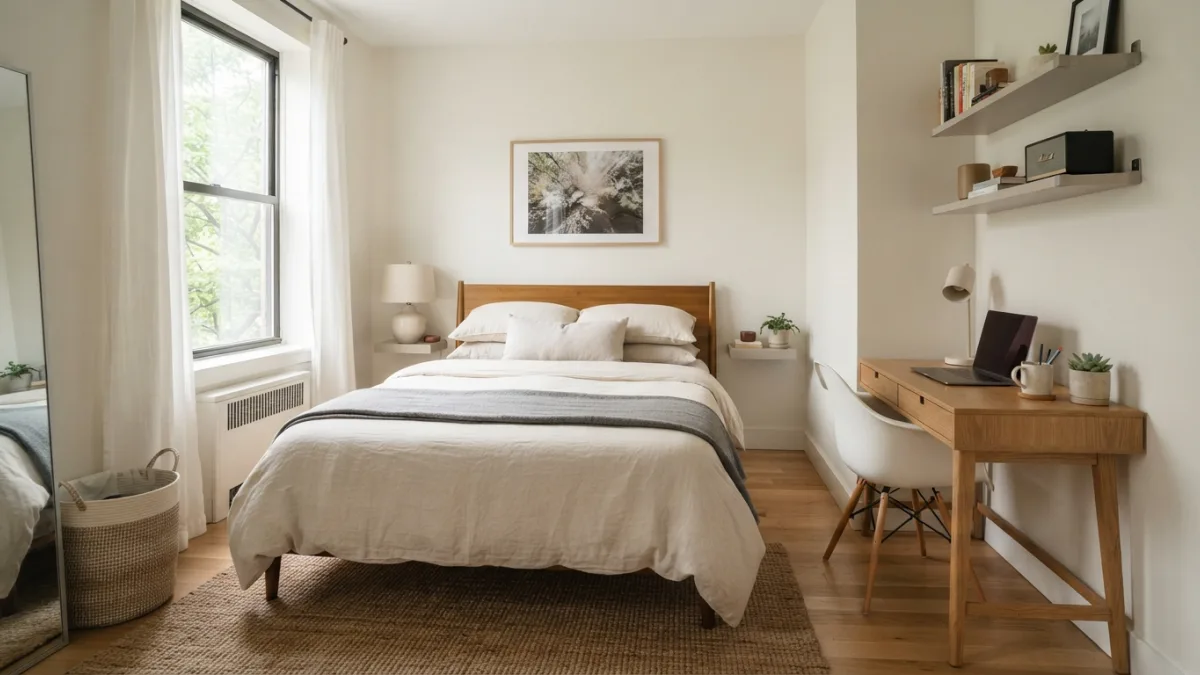
A desk and bed combo doesn’t mean squeezing two separate pieces into one corner and hoping for the best. It means choosing shapes and sizes that genuinely complement each other. If your bed sits against one wall, a narrow desk fits neatly along the opposite or adjacent wall without eating into the walking path. Some people even use a daybed-style frame with built-in shelving to blur the line between the two zones. The goal is a setup where you can roll out of bed and start working without tripping over a chair leg or bumping your knee on a drawer.
3. Plan Your Small Room Furniture Arrangement
Good small room furniture arrangement starts with measuring, not guessing. Grab a tape measure and map out your room’s dimensions, then sketch a few layout options on paper or with a free floor-planning app before moving a single box. Leave at least 24 to 30 inches of clearance around the bed for walking space, since anything tighter starts to feel like an obstacle course. This connects closely with another common issue — see DIY Floating Shelves: 7 Easy Ideas for Any Room You Love for more on that.
- Place tall furniture, like a wardrobe or bookshelf, against the shortest wall to avoid blocking sightlines.
- Angle the bed into a corner if the room is oddly shaped, rather than forcing it into a rectangle it doesn’t fit.
- Keep pathways in a straight line from the door to the closet and desk, so you’re not zigzagging every time you walk through.
Testing a layout with painter’s tape on the floor before you buy anything can save you from an expensive rearranging headache later.
4. Invest in a Space-Saving Bedroom Desk
A space saving bedroom desk is often the single biggest upgrade you can make in a tight room. Look for narrow-depth desks, around 18 to 24 inches deep, that still offer enough surface for a laptop and a notebook. Floating wall-mounted desks are another option worth considering, since they free up floor space underneath for storage bins or a small ottoman. Folding or drop-leaf desks work well too, especially if the workspace only gets used occasionally and can be tucked away the rest of the time. The point isn’t to shrink your workspace down to nothing, it’s to match the desk size to how you actually use it.
5. Design a Bedroom Layout With Desk in Mind
When you’re planning a bedroom layout with desk as a permanent fixture rather than an afterthought, think about natural light and outlet access early on. Desks placed near a window get better daylight for reading or video calls, which can make a small room feel less boxed in. If your only outlet is behind the bed, you may need an extension cord or a small power strip mounted nearby so cords don’t run across the floor where you’ll trip on them. Some of the best small bedroom layout ideas treat the desk as a corner anchor, using the space that’s usually wasted anyway, like the area beside a closet door or under a sloped ceiling. You might also find our article on Style a Studio Apartment: 7 Easy Tips to Feel Bigger helpful here.
6. Make the Most of a Queen Size Bed in a Small Room
Fitting a queen size bed small room setup is entirely doable once you know the numbers. A standard queen mattress measures about 60 by 80 inches, according to Wikipedia’s overview of standard bed sizes, so you’ll want a room at least 10 by 10 feet to keep it from feeling cramped once you add a desk. A platform bed frame without a bulky headboard can shave a few inches off the visual footprint, and choosing a bed with built-in under-storage drawers means you won’t need a separate dresser eating up floor space. Every inch you save on storage is an inch you gain for movement.
7. Embrace Multifunctional Bedroom Design
A multifunctional bedroom design treats every piece of furniture as if it has to earn its spot twice. A desk chair that also works as extra bedside seating, a bed with a bookshelf headboard, or a trunk at the foot of the bed that stores blankets and doubles as a bench are all small choices that add up. This mindset matters even more in shared or rented spaces where you can’t knock down walls or add square footage. It’s also worth keeping heavier pieces, like tall bookshelves or wall-mounted desks, properly secured to the wall, since the U.S. Consumer Product Safety Commission’s furniture-anchoring guidance notes that tip-over accidents are a real risk in rooms where furniture is packed close together.
Compact Desk Ideas for Tiny Corners
If you’re still short on floor space after arranging the bed, a few compact desk ideas can rescue an awkward corner. A corner desk shaped to fit diagonally often uses space that would otherwise sit empty. A slim ladder desk with open shelving above skips the bulky drawers entirely, which keeps the whole footprint lighter, both visually and physically. Even a simple wall shelf that folds down when needed, and tucks flat against the wall when it’s not, can give you a workspace in a room that seemed to have no room left to give. Good sleep also depends on keeping the room calm and clutter-free near the bed, a point the CDC’s sleep health resources touch on when discussing bedroom environments that support better rest. For a related walkthrough, check out How to Build a Simple Platform Bed (Step-by-Step).
Frequently Asked Questions
Can a queen bed and desk really fit in a small bedroom?
Yes, in most cases. A room around 10 by 10 feet or slightly larger can usually fit both, especially with a narrow desk and a bed frame that doesn’t have a bulky footboard.
Where is the best spot to place the desk in a small bedroom?
Near a window or in an underused corner works best. Try to keep it away from the main walking path between the door and the bed.
What size desk works best in a tight bedroom?
Look for desks that are 18 to 24 inches deep and no wider than 40 to 48 inches. Wall-mounted or folding desks are great if floor space is extremely limited.
Should the bed or the desk be placed first when planning the room?
Start with the bed, since it’s the largest piece of furniture. Once its position is fixed, plan the desk and remaining furniture around it.
How can I keep a small bedroom with a desk from feeling cluttered?
Choose furniture with built-in storage, keep cords organized, and leave clear walking paths of at least two feet around the bed and desk.

Ghani Mejber — Founder & Lead Editor
Ghani Mejber is the founder of DIY Homes Hub. After years of living in compact rentals with strict lease rules and limited storage, I started sharing practical, damage-free home upgrades and basic repair guides built for real budgets. Every project I publish focuses on simple tools, accessible materials, and reversible solutions that protect your security deposit.