TV Wall Placement Ideas: 7 Best Tips for Perfect Height
Most of us hang a TV wherever the wall looks empty, then live with a sore neck for years. Smart tv wall placement ideas start with a better question: where will you sit when you watch? Height, distance, room layout and wall type all shape the answer, and a few inches can change how comfortable movie night feels. Fortunately, you don’t need special skills to plan it well. You need a tape measure, some painter’s tape and ten minutes of honest testing on your own sofa. Once you know your ideal spot, the mount, the cables and the finishing touches fall into place much more easily.
This guide covers seven practical tips, from eye level to cable hiding. Each one works in a typical home, whether you rent a small flat or own a family house. Before you start, mark the outline of your TV on the wall with painter’s tape, then sit down and look at it. That simple step catches most mistakes before they become holes in the wall. One safety note up front: a wall-mounted TV is heavy, and a poorly fixed one can fall. Take your time, read the instructions that come with your mount, and ask a friend to help with the lifting. If you want to dig deeper, our guide on Small Bedroom Layout Ideas: 7 Easy Tips for Queen Beds covers this in more detail.
7 TV Wall Placement Ideas for a Comfortable, Good-Looking Room
1. Start With the Right TV Mounting Height
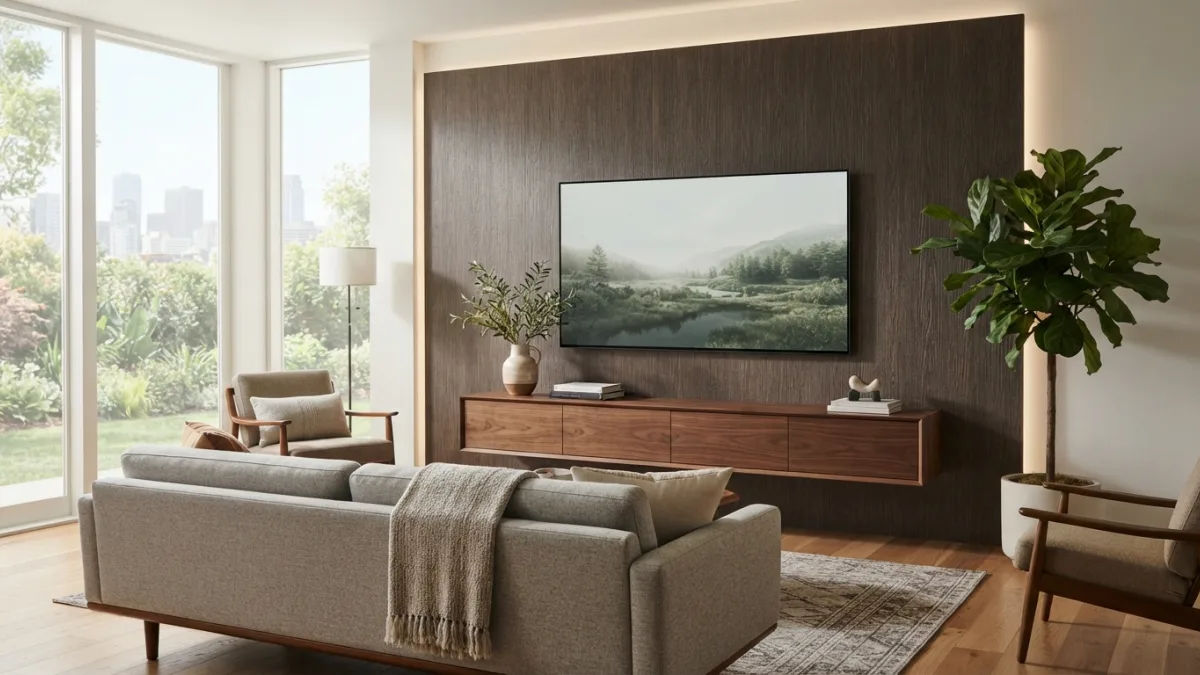
The first thing to settle is how high the screen should sit. The simple rule is to put the center of the screen at eye level when you’re seated. For many sofas, that puts the middle of the screen roughly 40 to 45 inches (about 100 to 115 cm) above the floor, but your seating may be higher or lower. Sit where you normally sit, relax, and ask someone to measure from the floor to your eyes. Use that number as the center of the TV, not the top edge. Plenty of people mount the screen too high because it feels like a piece of art. A TV is for watching, though. If you must go higher, choose a mount that tilts downward.
- Measure from the floor to your eyes while seated.
- Mark that height on the wall as the screen’s center point.
- Tape the TV’s outline around it and check the view from every seat.
2. Check Your TV Viewing Distance Before You Drill
Height is only half of the comfort equation. The gap between your seat and the screen matters just as much. A common rule of thumb is to sit about 1.5 to 2.5 times the screen’s diagonal size away. For a 55-inch TV, that works out to roughly 7 to 11 feet (about 2.1 to 3.4 meters). Higher-resolution screens, such as 4K models, let you sit a little closer without seeing individual pixels, so treat the range as flexible. Measure from your main seat to the wall and pick a screen size to match. If the sofa is very close, a giant TV makes you turn your head to follow the action. If it’s far away, small details get lost.
3. Fireplace Walls: Handle With Care
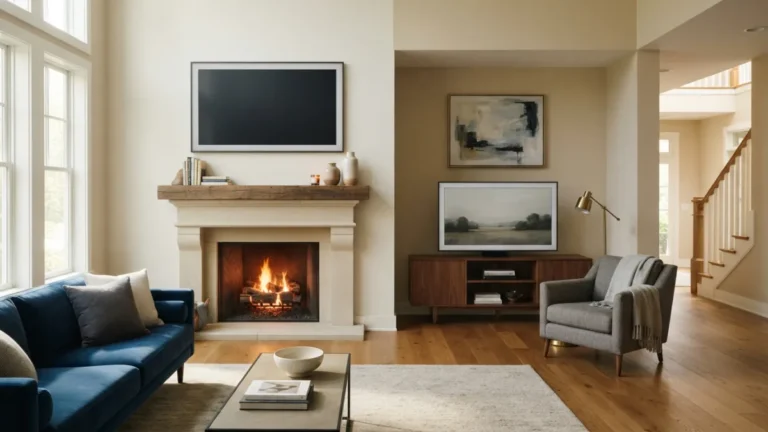
Many homeowners want to mount tv above fireplace because the chimney breast looks like the natural focal point. Sometimes it works well. Often it puts the screen far too high, which strains your neck during a long film. Heat is the other worry, since rising warmth from a working fireplace can damage electronics. Check the guidance from both the TV maker and the fireplace maker first. If the fireplace is decorative or rarely used, the risk is lower, but height still counts. A tilting or pull-down mount can bring the screen closer to eye level. Brick or stone also needs different fixings than a normal wall, so consider hiring a professional. If nothing feels right, put the TV on another wall and let the fireplace be its own feature. This connects closely with another common issue — see Studio Apartment Divider Ideas: 7 Easy No-Drill Options for more on that.
4. Plan Bedroom TV Placement Around Your Pillow
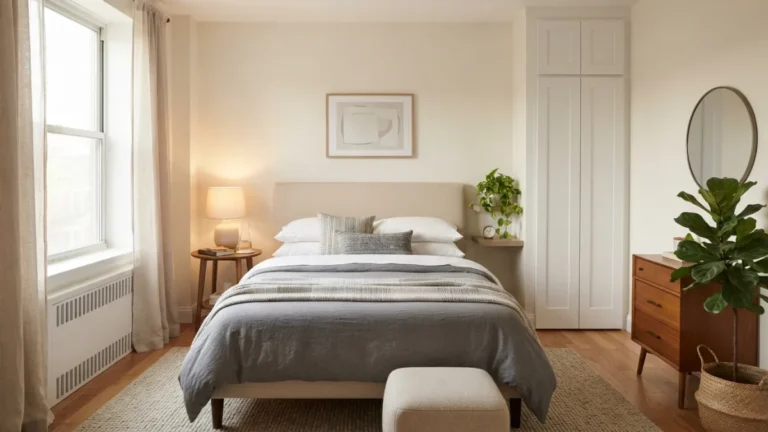
Bedroom TV placement follows a different logic, because you’re usually lying down or half sitting up. Aim the screen at the spot where your head rests against the pillows, and mount it lower than you would in a living room. Sit up in bed with the painter’s tape on the wall and check the angle for both sleeping partners. A tilt or swivel arm helps if the bed sits off to one side. Rooms for sleeping are often smaller, so a more modest screen usually feels better. Keep the TV away from windows to reduce glare. Think about cable routes too, so nothing dangles above your headboard. Good tv wall placement ideas for bedrooms put comfort first and size second.
5. Use a Corner TV Mount With a Full Motion Mount for Tricky Rooms
Sometimes the walls simply don’t offer a flat, central spot. That’s where a corner setup earns its place, especially when paired with a full motion mount, also called an articulating mount. Its arm extends, swivels and tilts, so you can angle the screen toward the sofa instead of the middle of the room. It also helps in L-shaped rooms and open-plan spaces where seats face different directions. Pull the TV out while you watch, then fold it back flat when you’re done. Check that the mount’s weight rating and hole pattern match your TV. The standard spacing of those holes is known as VESA mounting interface, and it’s printed in most TV manuals.
6. How to Mount TV on Drywall Safely
Drywall by itself is not strong enough to hold most TV mounts, so you need to mount tv on drywall by fixing into the studs behind it. The extended arm of a swivel mount puts extra strain on the wall, which makes solid fixing even more important. The U.S. Consumer Product Safety Commission has long warned about TVs tipping over and injuring people, so this step is not the place to cut corners. You might also find our article on 10×10 Bedroom Layout: 7 Easy Ideas for a Queen Bed helpful here.
- Find the studs with a stud finder and mark their centers.
- Confirm the mount’s weight rating is higher than your TV’s weight.
- Drill pilot holes and fix the bracket with the screws supplied.
- Check it with a level before lifting the TV on.
- Give the mounted TV a gentle test pull before you let anyone sit near it.
7. Hide TV Wires for a Clean Finish
You can hide tv wires and make even a budget setup look polished. The easiest option is a paintable cable cover, which runs down the wall and blends in once it matches your paint color. For a cleaner look, an in-wall kit hides the cables inside the wall. Use only kits made for that job, because ordinary power cords should not be run inside walls. Local electrical rules apply, so ask a licensed electrician if you’re unsure. The National Fire Protection Association, which publishes the National Electrical Code in the United States, offers electrical safety resources. Plan the cable path before you mount the TV, and leave a little slack so you can still reach the ports.
Put Your Plan Into Practice
The best tv wall placement ideas share one habit: test before you drill. Sit in every seat, check the tape outline, and be honest about glare, neck angle and distance. Then choose a mount that fits your room, whether that’s a simple tilting bracket, a swivel arm or a corner setup. Fix everything into studs, keep cables tidy, and give yourself time. A well-placed TV disappears into the room and lets the picture take over. If you only change one thing, lower the screen to eye level. Most people notice the difference the first night they use it.
FAQ: TV Wall Placement Ideas
What is the best TV mounting height?
Place the center of the screen at your eye level when you’re seated. For many living rooms, that means roughly 40 to 45 inches (100 to 115 cm) from the floor to the screen’s middle. Adjust it for your sofa and your own height. For a related walkthrough, check out Small Apartment Layout Ideas: 7 Easy Fixes for Tight Spaces.
Is it bad to mount a TV too high?
It can be. A screen set well above eye level makes you tilt your head back, which gets uncomfortable during long viewing. A tilting mount reduces the problem, but a lower position is better.
How far should I sit from a 65-inch TV?
Using the common 1.5 to 2.5 times diagonal rule, that’s roughly 8 to 13 feet (about 2.5 to 4 meters). With a 4K screen, you can sit toward the closer end of that range.
Can I mount a TV on drywall without studs?
It’s not recommended for most TVs. Studs give the strongest hold. Special anchors for hollow walls exist, but only use them if their weight rating clearly covers your TV and mount, and ask a professional if you’re unsure.
What are good tv wall placement ideas for a small room?
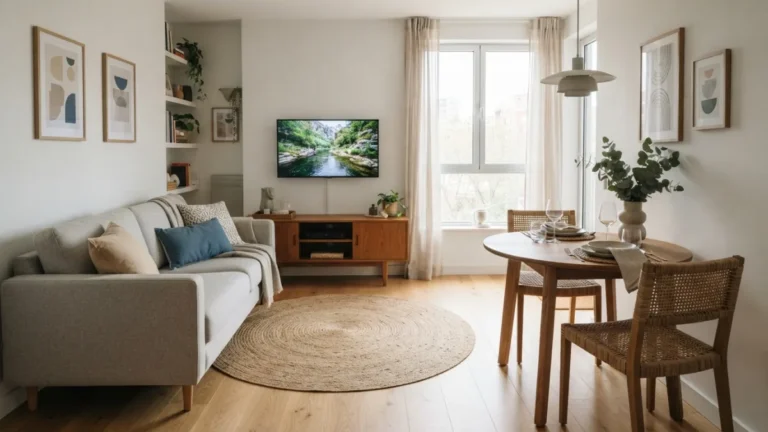
Choose a modest screen size, mount it at eye level, and consider an articulating arm that folds flat against the wall. A corner position can free up floor space, and covered cables keep the room looking tidy.

Ghani Mejber — Founder & Lead Editor
Ghani Mejber is the founder of DIY Homes Hub. After years of living in compact rentals with strict lease rules and limited storage, I started sharing practical, damage-free home upgrades and basic repair guides built for real budgets. Every project I publish focuses on simple tools, accessible materials, and reversible solutions that protect your security deposit.