Hang Curtains Without Drilling: 7 Easy No-Damage Tips
Nobody wants to lose part of a security deposit over a few extra holes in the wall. If you’re renting an apartment, staying in temporary housing, or simply don’t want to deal with a drill, you might think stylish window coverings are out of reach. Fortunately, you can hang curtains without drilling a single hole, and the results can look just as polished as a traditional installation. From tension rods to sticky hooks, there are more no-damage options available now than ever before, and most of them take less than ten minutes to set up.
Before picking a method, think about the weight of your curtains, the width of your window, and how much weight your wall surface can handle. Heavy blackout curtains need a sturdier setup than sheer linen panels, and textured walls or wallpaper may not hold adhesive products as well as smooth painted drywall. Once you know your fabric and your wall type, choosing among the options below becomes much easier. Here are seven practical, drill-free ways to hang curtains that renters, homeowners, and anyone who simply prefers to avoid wall damage can use right away. If you want to dig deeper, our guide on Command Strip Hacks: 7 Easy Tips Every Renter Should Try covers this in more detail.
How to Hang Curtains Without Drilling: 7 No-Damage Methods
1. Try Tension Rods for Curtains
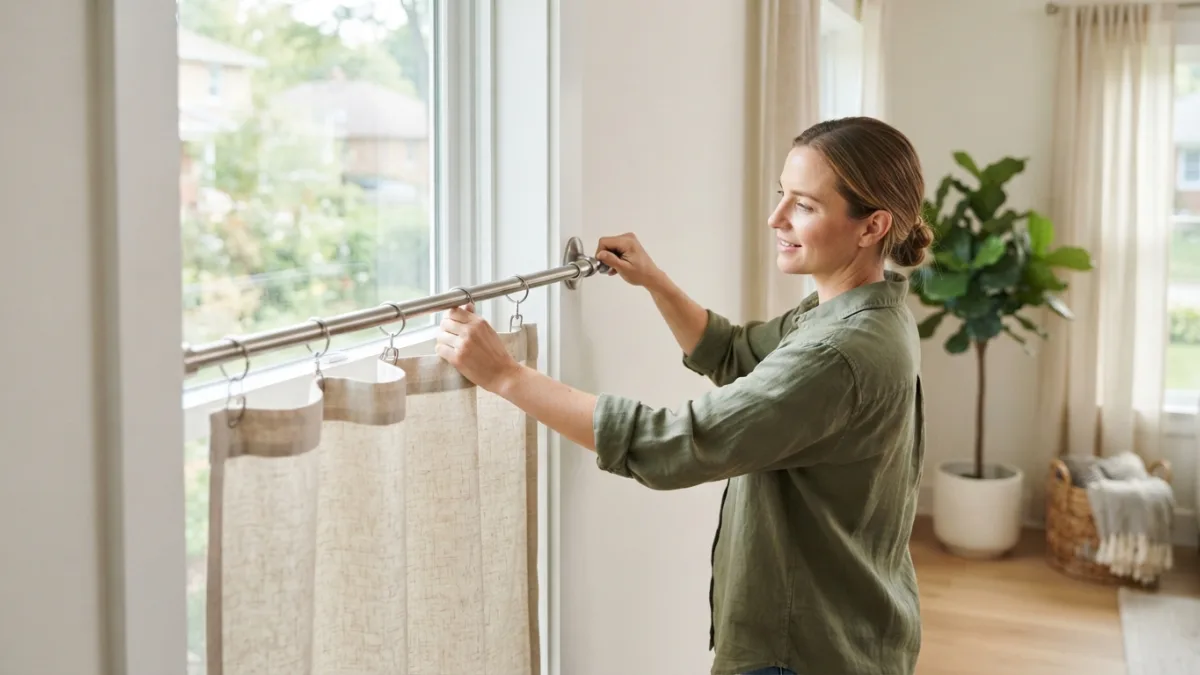
Tension rods for curtains are probably the simplest and most affordable no-drill solution on this list. These spring-loaded rods fit snugly inside a window frame or between two walls, held in place purely by pressure rather than screws or brackets. They work best for lightweight to medium-weight curtains and are ideal for smaller windows, closets, or spaces where you want a quick, temporary fix. Installation takes seconds: extend the rod to the right length, twist to lock it in place, and slide your curtain panels on. Just keep in mind that very heavy fabrics or wide windows can cause a tension rod to bow or slip over time, so it’s smart to check the weight rating before loading it up.
2. Use Adhesive Curtain Hooks
Adhesive curtain hooks offer a bit more flexibility than tension rods because they don’t rely on the rod fitting snugly inside a frame. Instead, you stick strong hooks directly onto the wall or window trim, then rest a curtain rod across them. This method works well for wider windows where a tension rod alone might sag in the middle. The key to success is surface preparation: clean the wall with rubbing alcohol, let it dry completely, and press the hook firmly for the amount of time the packaging recommends. Most adhesive hooks are rated for a specific weight limit, so pick a product designed to hold at least the combined weight of your rod and curtains, plus a bit extra for safety.
3. Rely on Command Strips for Curtains
Command strips curtains setups have become a favorite among renters because they’re inexpensive, easy to remove, and unlikely to leave marks when taken down correctly. These strips use a stretch-release adhesive, meaning you pull the tab straight down and the strip releases cleanly from the wall without peeling paint or plaster. You can find Command-brand hooks specifically rated for curtain rods, and checking the official Command product site before buying helps you choose the right size for your rod’s weight. As with adhesive hooks, wall texture matters here. Smooth, painted surfaces hold adhesive strips far better than textured, brick, or wallpapered walls, so test a strip in a hidden spot first if you’re unsure. This connects closely with another common issue — see 10 Renter-Friendly Upgrades That Won't Cost Your Deposit for more on that.
4. Consider Magnetic Curtain Rods
Magnetic curtain rods are a clever option if your window frame is metal, such as in some older apartment buildings, garages, or homes with steel window casings. These rods have strong magnets built into the ends that grip directly onto metal surfaces, skipping adhesive and pressure fittings altogether. They’re quick to install and just as quick to remove, which makes them convenient for seasonal curtains or spaces you don’t want to commit to long-term. The catch is that they only work on magnetic metal surfaces, so test with a small magnet first if you’re not sure what your window frame is made of. For wooden or vinyl frames, one of the other methods on this list will serve you better.
5. Look Into No Drill Curtain Rods
Beyond basic tension rods, several brands now make no drill curtain rods specifically engineered for renters, using tightening mechanisms, suction cups, or clamp-style brackets instead of screws. Some clamp directly onto the window frame or wall molding, gripping tightly enough to support medium-weight curtains without any hardware going into the wall at all. Others combine a spring core with rubberized end caps for extra grip against smooth surfaces. These specialized rods often cost a little more than a standard tension rod, but they tend to hold their position better over time and support wider spans, which matters if you’re covering a large picture window or sliding glass door.
6. Explore Curtain Rod Alternatives
If a traditional rod shape doesn’t fit your space, several curtain rod alternatives can achieve the same look with a different structure. Wire and cable systems, for example, stretch tautly between two adhesive-mounted anchors and work well for lightweight sheers or café-style curtains. Tension-mounted curtain wire kits are especially popular for small windows, kitchen nooks, or RVs. Clip-on curtain rings paired with an adhesive-mounted rod or dowel are another flexible option, letting you swap out fabrics seasonally without touching the mounting hardware again. For inspiration on styles and structures, the general overview of window treatments on Wikipedia is a helpful starting point if you want to see how different curtain and rod combinations typically work together. You might also find our article on Removable Wallpaper: 7 Easy Steps to Avoid Mistakes helpful here.
7. Choose Renter Friendly Window Treatments for the Long Term
Renter friendly window treatments go beyond just the rod itself; they also include the type of curtain, liner, and hardware you pick to make sure everything comes down cleanly when you move. Lightweight cotton or polyester blends put less strain on adhesive hooks and tension rods than heavy velvet or lined blackout fabric. If you’re hanging curtains on rentals where you plan to stay for a year or more, it’s worth checking your lease terms or, in the US, general guidance on how security deposits work so you understand what kind of wall marks or wear might be deducted from your deposit. Choosing removable hardware from the start protects both your deposit and your walls.
Putting It All Together
None of these seven methods require a single drill hole, yet each one serves a slightly different situation. Tension rods and adhesive hooks handle small to medium windows well, Command strips shine for their clean removal, magnetic rods solve the problem for metal frames, and specialized no-drill rods or wire systems stretch across wider spans. The right choice really comes down to your window size, your curtain weight, and how long you plan to keep the setup in place. Testing a product on a small, hidden section of wall before committing to the full installation is always a smart move, especially with adhesive-based options.
Once you’ve picked a method, take a few minutes to measure your window and curtain length before installing anything. A rod mounted too low or too high can throw off the whole look of a room, and it’s much easier to get the placement right the first time than to redo adhesive strips or reposition a tension rod. With the right no-drill hardware and a little patience, you can completely transform a room’s look without touching a hammer, a drill, or your landlord’s patience. For a related walkthrough, check out Cover Ugly Rental Floors: 7 Easy Damage-Free Ideas.
Frequently Asked Questions
Can tension rods hold heavy curtains?
Standard tension rods usually handle light to medium-weight curtains best. For heavier fabrics like blackout or lined curtains, look for a reinforced tension rod rated for higher weight limits, or choose a clamp-style no-drill rod instead.
Do adhesive hooks damage paint when removed?
Most quality adhesive hooks, including stretch-release styles, are designed to come off cleanly when removed slowly and at the recommended angle. Damage is more likely if the wall wasn’t cleaned properly before installation or if the hook is pulled off quickly instead of stretched.
What’s the best no-drill option for wide windows?
For wide windows, adhesive hooks paired with a sturdy rod or a reinforced clamp-style rod tend to work better than basic tension rods, which can bow under pressure across long spans.
Are magnetic curtain rods reliable for everyday use?
Yes, as long as your window frame is made of magnetic metal. They hold well for daily opening and closing, but they aren’t suitable for wood, vinyl, or non-magnetic metal frames.
How do I choose curtains that work well with no-drill hardware?
Pick lightweight to medium-weight fabrics whenever possible, since they put less strain on adhesive hooks and tension mechanisms. Sheer, cotton, and unlined polyester curtains are generally easier to hang without drilling than heavy velvet or triple-lined blackout panels.

Ghani Mejber — Founder & Lead Editor
Ghani Mejber is the founder of DIY Homes Hub. After years of living in compact rentals with strict lease rules and limited storage, I started sharing practical, damage-free home upgrades and basic repair guides built for real budgets. Every project I publish focuses on simple tools, accessible materials, and reversible solutions that protect your security deposit.