Window Privacy Ideas: 7 Easy Renter-Friendly Options
Nobody wants to feel watched in their own living room. Fortunately, smart window privacy ideas don’t need drills, paint, or a tense talk with your landlord. Plenty of fixes come off as easily as they go on, and most of them keep your home bright. Many renters end up with a choice between dark, heavy curtains and a street view straight into the sofa. You don’t have to pick. With a few cheap tools and some careful choices, you can block prying eyes during the day, soften harsh sun, and still enjoy a room that feels open. Here are seven options that work for rental homes, plus tips for choosing the right one.
Check Your Lease and Your Real Needs First
Before you buy anything, read your lease. Most rental agreements allow items that leave no marks, but some ban anything stuck to glass or fixed to the frame. If the wording is unclear, send your landlord a short message and keep the reply. Then spend a day noticing when you actually feel exposed. Is it morning, when you walk around in pajamas? Or evening, when the lights are on and the street is dark outside? That timing matters, because many window privacy ideas work well in daylight but do little at night. Think about these questions as you shop: If you want to dig deeper, our guide on Hang Curtains Without Drilling: 7 Easy No-Damage Tips covers this in more detail.
- Which windows face a street, a walkway, or a neighbor?
- Do you need privacy all day or only after dark?
- How much natural light do you want to keep?
- Can you use the window frame, or is it off limits?
7 Window Privacy Ideas That Keep the Light Coming In
1. Static cling window film
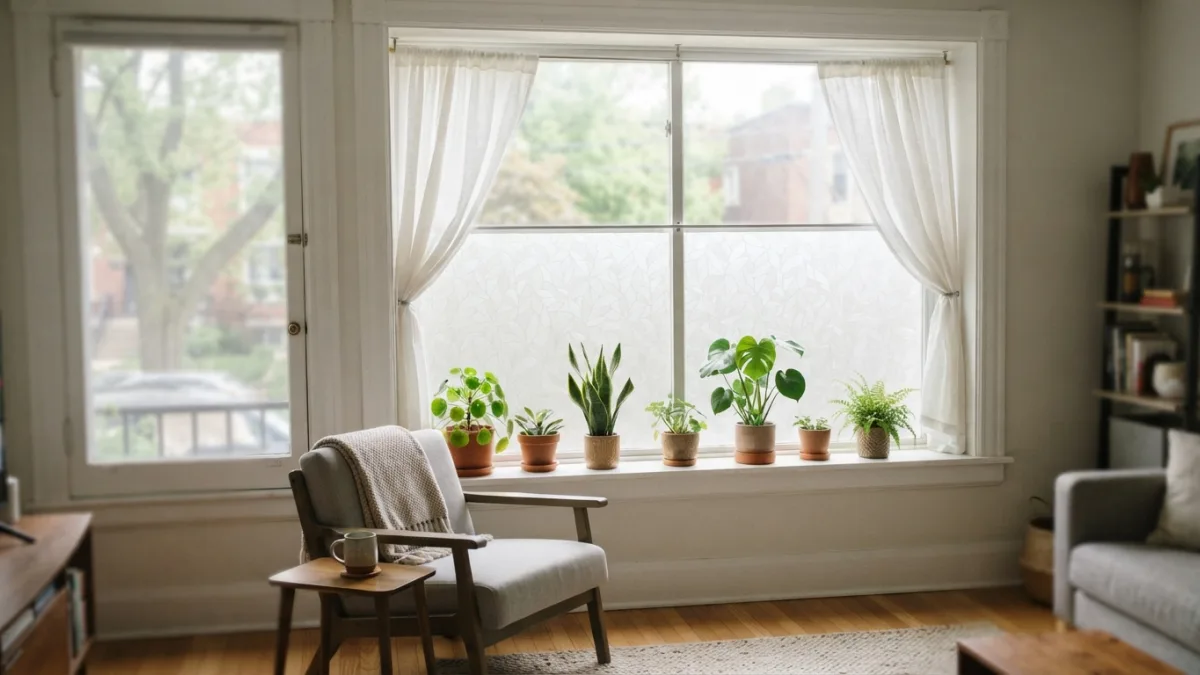
Static cling window film is often the first thing renters try, and for good reason. It sticks to glass with water instead of glue, so you can usually peel it off later without sticky residue. Frosted styles blur the view from outside while still letting daylight pour in. Patterned versions, such as faux stained glass or lace, add a bit of style to plain windows. Cut the film a little smaller than the pane, spray the glass with water, press the film on, and smooth out bubbles with a card. One limit to remember: at night, with the lights on inside, people outside may see shapes. Pair the film with a curtain for evenings. You can read more about how window film works and the different types available.
2. Sheer curtains for privacy
Sheer curtains for privacy give you a soft, airy barrier that cuts down the view in without shutting out the sun. During the day, the bright side of the glass makes it hard for passersby to see details inside. Look for tightly woven fabric, because very thin, open weaves can show more than you expect. White or light cream tones keep the room glowing, while a slightly heavier voile adds extra coverage. Hang them on the existing rod if your place has one. If not, a tension rod or a stick-on hook set can hold a lightweight panel. For night, add a second layer, such as a thicker curtain on a double rod. The sheer layer handles daytime, and the heavier one handles evenings.
3. No drill window shades
No drill window shades are made for renters. Many designs use clips, brackets that press into the window frame, or adhesive strips, so you skip the screwdriver and the holes. Cellular shades, roller shades, and pleated paper shades all come in light-filtering fabrics that glow softly instead of going dark. Measure your window carefully before you order, since a gap at the sides lets in both light and glances. Cordless styles look cleaner and are safer in homes with small children or pets. If you want to understand the different styles, this overview of the window blind gives a helpful starting point. Choose a light-filtering fabric rather than blackout if daylight is your goal. This connects closely with another common issue — see Renter Friendly Lighting Ideas: 7 Easy No-Wiring Tips for more on that.
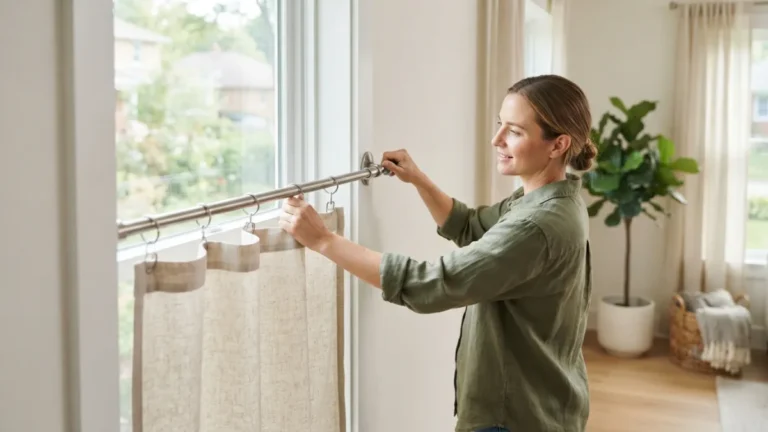
4. Tension rod cafe curtains
Tension rod cafe curtains cover only the bottom half of a window, which is exactly where most privacy problems begin. A spring-loaded rod fits inside the frame and holds itself in place by pressure, so you need no screws at all. Hang a short curtain across the lower half, and the upper glass stays clear for sunlight and sky. This works especially well in kitchens, small bedrooms, and street-level living rooms. Pick a fabric that matches your mood: crisp cotton for a fresh look, linen blend for a relaxed one. Make sure the rod fits snugly, and test it before you hang the full curtain, since a heavy fabric can pull a loose rod down.
5. A DIY window privacy screen
A DIY window privacy screen is a good project when you want something with a bit of personality. One easy version is a light wooden or fabric-covered frame that leans against the sill or sits on a stand inside the window. Another is a folding screen placed a few feet in front of the glass, which breaks the line of sight without touching the window at all. You can use lattice panels, rice paper, or fabric stretched on a simple frame. Because nothing attaches to the wall or glass, it is easy to move or take with you. Keep the material translucent so the light passes through, and pick something sturdy enough to stay upright if someone bumps it.
6. Privacy plants for windows
Privacy plants for windows turn a plain sill into a living screen. Tall, leafy plants on a shelf or stand create layers of green that hide your view in while keeping the room fresh and bright. Trailing plants in hanging pots can cover the top of a window, and bushy ones fill the lower half. Choose species that match your light level, and check the care needs before you buy. If you share your home with pets, look at the ASPCA list of toxic and non-toxic plants first, since some common houseplants can harm cats and dogs. Plants are also a nice way to make window privacy ideas feel less like a barrier and more like decor. You might also find our article on Cover Ugly Rental Floors: 7 Easy Damage-Free Ideas helpful here.
7. Bathroom window covering
A good bathroom window covering has to handle two jobs: block the view and survive steam. Frosted static film is a smart pick here, because it works on glass, resists moisture well, and lets daylight in. Moisture-friendly fabric or vinyl shades with a no-drill mount also work, as do small tension rod curtains in quick-drying material. Avoid heavy fabric that stays damp, since it can grow mildew. If the window sits above the shower, a simple frosted film on the lower pane may be all you need. Keep the top clear for light and ventilation, and wipe the glass now and then so the covering stays clean and fresh.
Ground Floor Window Privacy: Layer Your Defenses
Ground floor window privacy asks for more effort, because people walk right past at eye level. The best approach is layering. Start with frosted film or a café curtain on the lower half of the glass. Add a sheer panel for daytime softness, and keep a thicker curtain or light-filtering shade ready for evening. Placing plants or a narrow bench with tall greenery outside, if your lease allows it, can also push the line of sight away from the window. Top-down, bottom-up shades are another smart choice, since you can lower the top for light while the bottom stays closed. Because several window privacy ideas work together here, you can mix and match without any one of them feeling heavy.
How to Choose the Right Option
The best choice depends on your budget, your window, and how much you plan to move. Use this quick comparison as a starting point, then match it to your own daily routine. If you rent for a short time, the easiest pieces to take down are film, tension rods, and freestanding screens. If you want a more finished look, go for no-drill shades and layer them with sheer fabric. Whatever you choose, test one window first. Living with it for a few days will tell you whether the light, the look, and the privacy feel right before you buy for the whole home. For a related walkthrough, check out 10 Renter-Friendly Upgrades That Won't Cost Your Deposit.
| Option | Daylight Privacy | Night Privacy | Easy to Remove |
|---|---|---|---|
| Static cling film | Good | Limited | Yes |
| Sheer curtains | Good | Limited | Yes |
| No-drill shades | Good | Better when lowered | Yes |
| Café curtains | Good for lower half | Partial | Yes |
| Freestanding screen | Good | Depends on material | Yes |
| Plants | Partial | Limited | Yes |
Frequently Asked Questions
Will window film damage my rental window?
Static cling film uses water, not glue, so it usually peels off cleanly. Check your lease first, and test a small corner if you are unsure.
Can people see in at night with these options?
Often, yes. When your lights are on and it is dark outside, film and sheer fabric show shadows and shapes. Add a thicker curtain or a lowered shade for evenings.
What are the best window privacy ideas for a small budget?
Frosted static film, a tension rod with a short curtain, and a few houseplants are all low-cost choices that need no tools.
How do I keep the room bright and still feel private?
Cover only the part of the window that people can see through, usually the lower half. Leave the top clear and choose light-colored, translucent materials.
Do I need to ask my landlord before using these ideas?
If an option leaves no marks, you may not need to ask, but your lease sets the rules. When in doubt, send a quick message and keep the answer in writing.

Ghani Mejber — Founder & Lead Editor
Ghani Mejber is the founder of DIY Homes Hub. After years of living in compact rentals with strict lease rules and limited storage, I started sharing practical, damage-free home upgrades and basic repair guides built for real budgets. Every project I publish focuses on simple tools, accessible materials, and reversible solutions that protect your security deposit.