Home Office Makeover: 7 Easy Budget Ideas for Small Spaces
Your kitchen table is not a desk, and your back knows it. If you work from a bedroom corner or a slice of the living room, a home office makeover can feel out of reach, especially when money is tight. Fortunately, small rooms need smart choices more than big budgets. With a tape measure, a little patience, and a few secondhand finds, you can build a workspace that feels calm, works hard, and fits the space you already have. Here is how to do it, one affordable step at a time.
Plan Your Home Office Makeover Before You Spend a Dollar
The cheapest mistake is the one you never make. Before you shop, spend twenty minutes studying your space. Stand where you plan to work and look at what surrounds you. Where does the light come from? Which wall is empty? What can you move, and what is stuck? Then write down a few basics so you can shop with a clear head instead of guessing. If you want to dig deeper, our guide on Small Kitchen Makeover: 15 Easy No-Renovation Ideas covers this in more detail.
- Measure the area: note the width, depth, and ceiling height of your spot.
- Mark outlets and windows: power and daylight decide where your desk can go.
- List what you own: a lamp, a bookshelf, or a spare chair may already work.
- Set a firm cap: split it into must-haves and nice-to-haves.
7 Easy Ideas for a Home Office Makeover in a Small Space
1. Start With Small Space Desk Ideas That Fit Your Room
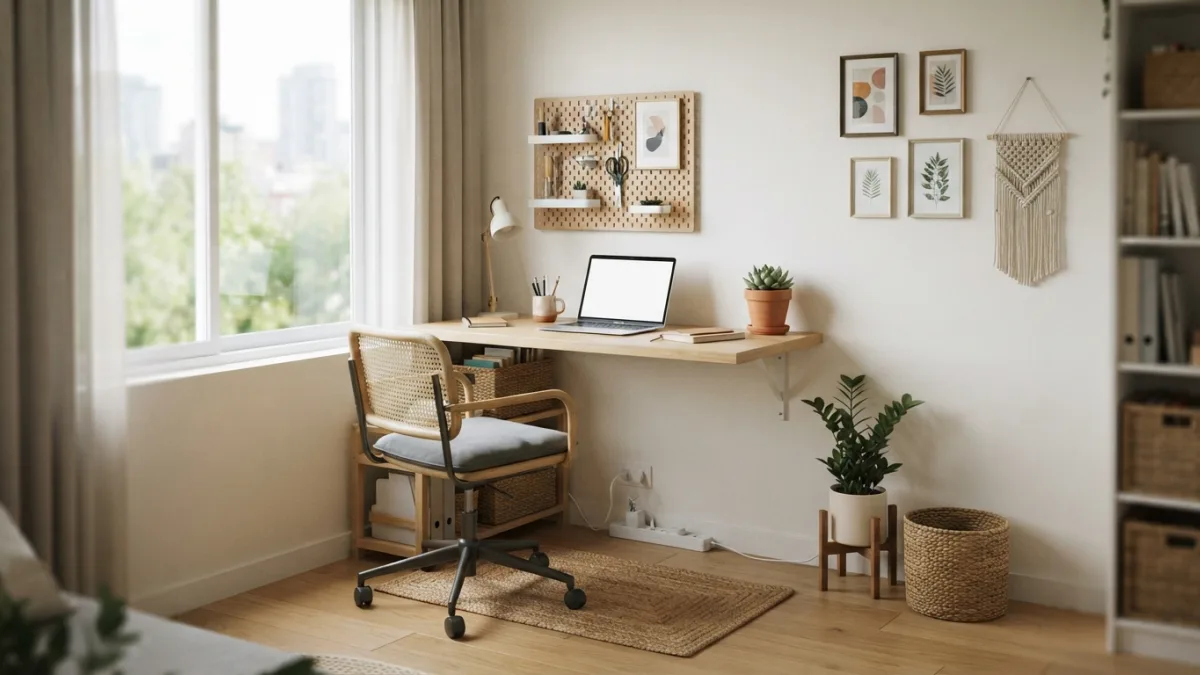
Your desk sets the tone for everything else, so choose one that respects your floor plan. A wall-mounted fold-down desk disappears when you finish work, which is a big help in a shared living area. A narrow console table can double as a desk if you only need room for a laptop. Corner desks use dead space well, and a closet with the doors removed can become a surprisingly cozy nook. Even a sturdy shelf board fixed to the wall at the right height works for light tasks. Whatever you pick, leave enough room for your elbows and your chair to move. If you can’t comfortably push the chair back, the desk is too big.
2. Hunt for Cheap Office Furniture Secondhand
You rarely need to pay full price for cheap office furniture, because plenty of good pieces are already out there. Check thrift stores, community selling groups, online marketplaces, and local office clearance sales. Ask friends and neighbors too, since people often want to give away a spare shelf or side table. Take your tape measure with you. Test every drawer, push on the desk to check for wobble, and look underneath for damage. A scratched top is easy to fix with sanding and a coat of paint or varnish, but a weak frame is not worth the trouble. Patience pays off here. The best deals tend to appear when you check often and move fast.
3. Put Your Money Into a Budget Ergonomic Chair
If you spend one part of your budget carefully, make it your seat. A budget ergonomic chair should let you adjust the height so your feet rest flat on the floor, and it should support your lower back. The U.S. Occupational Safety and Health Administration explains these basics in its computer workstations guide, including how to set up your chair, keyboard, and screen. Test chairs in person if you can, and sit for several minutes before you decide. If your feet don’t reach the floor, a stack of sturdy books works as a footrest. A small cushion can help too. No chair replaces regular breaks, so stand up and stretch often. This connects closely with another common issue — see Update a Rental Bathroom: 7 Easy Tips for a Budget Makeover for more on that.
4. Improve Your Home Office Lighting Without Rewiring
Good home office lighting protects your eyes and keeps you alert, and you can fix it without touching a single wire. Start with daylight. Place your desk beside a window, not facing it or with your back to it, so you avoid glare on the screen. Add an adjustable desk lamp for focused tasks, and aim it so it doesn’t reflect off your monitor. Swapping old bulbs for LEDs is an easy upgrade, and the U.S. Department of Energy shares lighting choices that save money if you want to compare options. Warmer bulbs feel cozy, while cooler ones feel crisp, so pick what helps you concentrate.
5. Use Vertical Wall Storage to Free Your Desk
When floor space runs out, look up. Vertical wall storage gives you room for books, supplies, and files without eating into your work surface. Floating shelves are a classic choice, and a pegboard lets you rearrange hooks, baskets, and small shelves as your needs change. Wall-mounted rails and hanging organizers work well too. Keep the items you use daily within arm’s reach and move rarely used things higher up. Check the weight limits on every hook or shelf, and use wall anchors or find a stud for heavy loads. Renters can look for removable hooks for light items, or lean a tall, narrow bookcase against the wall instead.
6. Try These Cable Management Tips and DIY Desk Organization
Tangled wires make a small desk look chaotic, and a few cheap tricks can calm them down. Reusable hook-and-loop ties bundle cords neatly, and adhesive clips keep them from sliding behind the desk. A power strip mounted under the tabletop cuts the number of plugs you see. Label each cord with tape so you never have to guess which one to unplug. For diy desk organization, raid your recycling: jars hold pens, shoe boxes become drawer dividers, and a cut-down cereal box makes a file holder. Wrap them in leftover paper or paint them for a clean look. Finish with a two-minute tidy at the end of each workday. You might also find our article on Budget Living Room Makeover: 7 Easy Ideas for a Rich Look helpful here.
7. Refresh the Walls With Productivity Paint Colors
Paint is one of the most affordable ways to change how a room feels. When people talk about productivity paint colors, they usually mean soft greens, calm blues, and warm neutrals, but your own reaction matters more than any rule. Pick a shade that makes you feel focused and relaxed. Light colors tend to make small rooms feel more open, while a deeper accent wall can add cozy depth behind your desk. Buy sample pots and test them on the wall, then check them in morning and evening light. If you rent, ask your landlord before painting. This final step often makes the biggest visual difference in a home office makeover, and it costs very little.
Keep Your Small Home Office Working for You
A good workspace doesn’t come from one big purchase. It grows from small, practical choices that match how you actually work. Start with the free steps, like measuring, decluttering, and moving your desk closer to the window. Then add the pieces that matter most, such as a supportive chair and a decent lamp. Leave the decorative touches for last. Give your new setup a couple of weeks, and notice what still annoys you. Maybe the screen sits too low, or the shelf is too far away. Adjust as you go. A thoughtful home office makeover is never really finished, and that is a good thing, because your needs will change.
Home Office Makeover FAQ
How much should a home office makeover cost?
There is no single right number. Set a cap based on your finances, then spend first on the items you touch every day, like your chair and lamp. Secondhand furniture and DIY storage can keep the total low. For a related walkthrough, check out DIY Accent Wall Ideas: 12 Easy Budget-Friendly Designs.
What is the best desk for a very small space?
A wall-mounted fold-down desk or a narrow console table usually saves the most room. If you have a spare corner, a compact corner desk can also work. Always measure first, and leave space to move your chair.
What should I buy first?
Start with a comfortable, adjustable chair and good lighting. These two items affect your body and eyes every day. You can add storage, decor, and paint later as your budget allows.
Can I give my office a makeover if I rent?
Yes. Use freestanding shelves, removable hooks, a desk lamp, and portable organizers. Ask your landlord before you paint or drill into walls, and choose changes you can undo easily.
How do I stop a small workspace from looking messy?
Give every item a home, hide cables, and use closed boxes or baskets for loose supplies. Take two minutes at the end of each day to reset your desk. Small habits keep a compact space under control.

Ghani Mejber — Founder & Lead Editor
Ghani Mejber is the founder of DIY Homes Hub. After years of living in compact rentals with strict lease rules and limited storage, I started sharing practical, damage-free home upgrades and basic repair guides built for real budgets. Every project I publish focuses on simple tools, accessible materials, and reversible solutions that protect your security deposit.