Coat Storage Ideas: 9 Easy Ways With No Closet Needed
You walk in, kick off your shoes, and your jacket lands on the nearest chair. Sound familiar? The best coat storage ideas for a tiny entryway all follow one rule: use walls, doors, and corners before you give up any floor space. No closet doesn’t have to mean a messy hallway. With a few smart pieces, you can hang coats, park bags, and still open the front door without a struggle. Some of these fixes need a drill, and many don’t. Below you’ll find nine options, from quick, low-cost hooks to furniture that hides everything behind a door. Pick the one that fits your space, your budget, and your lease, or mix two or three for even more room.
9 Coat Storage Ideas for an Entryway With No Closet
1. Mount a Wall Mounted Coat Rack
A wall mounted coat rack is the simplest way to turn a blank wall into storage. Look for a rack with four to six hooks and a slim profile, so coats hang close to the wall and don’t block foot traffic. Before you drill, use a stud finder to locate the wood framing behind the drywall. Screwing into a stud gives you the strongest hold. If you can’t hit one, choose the right wall anchor for your wall type and check the weight rating on the package. Hang the rack at about shoulder height for adults, and add a lower row if kids live in the home. Heavy winter coats add up fast, so don’t skimp on screws. If you want to dig deeper, our guide on Shoe Storage Ideas: 7 Easy Solutions for Small Entryways covers this in more detail. This is a common part of dealing with coat storage ideas, and it is worth keeping in mind.
2. Hang Over the Door Hooks
Over the door hooks give you storage without a single hole in the wall. They slip over the top of a door and hang down the back, so they work well on a hallway or bedroom door near your entry. Measure the gap between the door and the frame first, because a thick hook can stop the door from closing. Metal hooks with a slim bend usually fit better than chunky plastic ones. Keep the load light. Scarves, thin jackets, and tote bags are ideal, while a heavy wool coat may pull the door out of line. If you use the front door itself, make sure it still locks and swings smoothly. Many people run into this exact issue with coat storage ideas at some point.
3. Add a Freestanding Coat Rack in the Corner
A freestanding coat rack works well when walls are off limits or you want something you can move. Tuck it into the corner behind the door, where it uses space you probably don’t need anyway. Choose a model with a heavy, wide base, because a few wet winter coats can tip a light rack over. A tall, thin pole with hooks at different heights holds more than you’d expect, and the top hooks suit hats and bags. Keep the rack a hand’s width away from the door swing. If you rent and hate leaving marks, this option leaves your walls untouched, and it can follow you to your next home. Keeping coat storage ideas in mind here will save you time later on.
4. Pair Hooks With an Entryway Bench With Storage
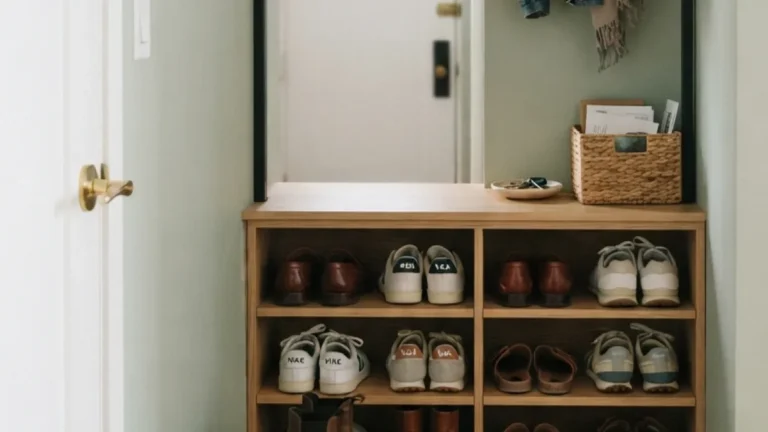
An entryway bench with storage handles three jobs in one footprint: a seat, a shoe spot, and a place to hide clutter. Sit down to pull on your boots, then slide them into the cubbies or basket underneath. Narrow benches are easy to find, and some have lift-up seats that reveal a bin for gloves, hats, and umbrellas. Add a row of hooks on the wall above, and you have a full drop zone in one small corner. Choose a shallow depth if your hallway is tight, and measure the door swing before you buy. A bench that blocks the door defeats the whole purpose. This detail matters more than it seems once coat storage ideas comes up again.
5. Try Hidden Coat Storage
Hidden coat storage suits anyone who wants a calm, tidy entry. Of all the coat storage ideas on this list, it looks the cleanest. A shallow cabinet with doors can hold coats on a short rail inside, with shoes on a shelf below. A tall, slim wardrobe works too, and the closed doors hide the jumble. Another trick is a curtain on a rod or ceiling track that covers a row of hooks. You pull it shut when guests arrive. Tall furniture can tip, so anchor it to the wall. The U.S. Consumer Product Safety Commission shares general guidance on furniture safety. And don’t shut damp coats in a sealed cabinet for days. This connects closely with another common issue — see Towel and Linen Storage: 7 Practical Ideas Without a Closet for more on that. It is one of those small things that makes coat storage ideas easier to manage overall.
6. Stick With Renter Friendly Coat Hooks
Renter friendly coat hooks let you add storage without risking your deposit. Adhesive hooks and removable strips stick to smooth, clean walls, and they peel off later if you follow the maker’s directions. Always check the weight rating, and remember that a wet puffer coat weighs more than a dry one. Clean the wall, let it dry, and press the hook firmly for as long as the package says. Textured or freshly painted walls may not hold, so test a small spot first. Read your lease, too. Some landlords allow small nail holes, and a tiny hole is often easier to patch than a ruined patch of paint. This is a common part of dealing with coat storage ideas, and it is worth keeping in mind.
7. Layer a Floating Shelf With Hooks
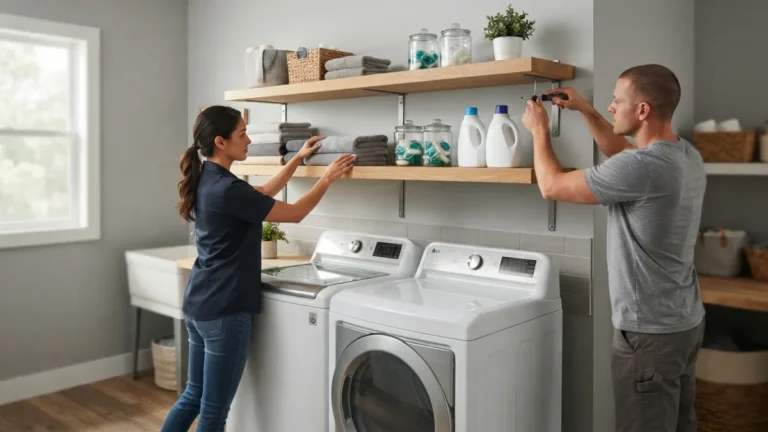
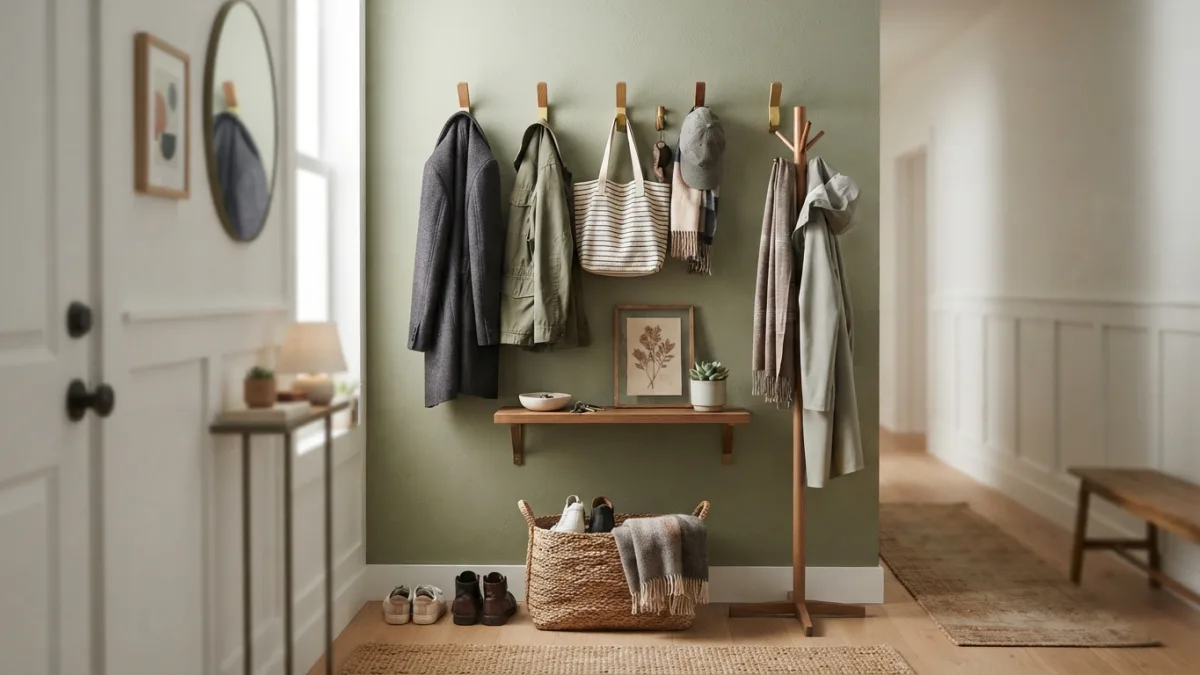
A floating shelf with hooks stacks two kinds of storage on the same stretch of wall. Coats hang from the hooks below, while the shelf on top holds hats, a basket for gloves, a bowl for keys, or a small plant. Pick a shallow shelf, so it won’t bump your head when you lean in to grab a jacket. Mount it into studs or use strong anchors, since a loaded shelf and heavy coats put real weight on the wall. Matching wood or black metal makes the whole unit look like one piece of decor instead of a pile of hardware. It also keeps small items off your floor. Many people run into this exact issue with coat storage ideas at some point.
8. Make Small Entryway Organization a Habit
Small entryway organization starts with fewer things by the door, not more furniture. Keep only the coats you wear this season near the entrance. Move the rest to a bedroom closet, a box under the bed, or a vacuum storage bag. Give each person one or two hooks, and set a simple rule: if it doesn’t fit on your hook, it doesn’t live here. Add a small tray for keys and a basket for hats and gloves. Then spend two minutes each week putting stray items back where they belong. Good habits make every other idea on this list work better, and they cost nothing. Keeping coat storage ideas in mind here will save you time later on.
9. Turn an Alcove Into a Tension Rod Coat Nook
If your entry has an alcove, a recess, or two walls close together, a tension rod can become a mini closet. Wedge the rod between the walls at about head height, then hang coats on hangers just as you would in a real wardrobe. Choose a sturdy rod rated for the load, and twist it tight. Add a curtain to hide the coats, and put a low shelf or shoe tray underneath. There are no screws and no holes, and the whole setup comes down in a minute if you move. It’s one of the few coat storage ideas that feels like a true closet, and it works best in tight spots where a bulky rack would get in the way. You might also find our article on Apartment Bike Storage: 7 Easy Ideas Without Drilling helpful here. This detail matters more than it seems once coat storage ideas comes up again.
How to Choose the Right Coat Storage Ideas for Your Space
The right coat storage ideas depend on how many coats you own, who lives with you, and what your walls can handle. Before you shop, ask yourself a few quick questions: It is one of those small things that makes coat storage ideas easier to manage overall.
- How many coats, bags, and pairs of shoes need a home by the door?
- How wide and deep is the space, and where does the door swing?
- Can you drill, or do you need a no-damage option?
- Do you want everything visible and easy to grab, or tucked out of sight?
Most small homes do best with a mix. Hooks on the wall plus a slim bench below, or a rack in the corner plus a basket for accessories, often beats a single big purchase. This is a common part of dealing with coat storage ideas, and it is worth keeping in mind.
Start Small and Build From There
A small entryway can still work hard for you, even without a closet. Start with the easiest change, such as a row of hooks or a rod in an alcove, and live with it for a week. You’ll quickly see what’s missing. Maybe you need a place to sit, a spot for keys, or a way to hide the clutter. Add one piece at a time instead of buying everything at once. Keep the floor as clear as you can, because open floor space makes any entry feel bigger. With a bit of planning, your coats will have a home, and your hallway will finally feel like a welcome instead of a pile-up. Many people run into this exact issue with coat storage ideas at some point.
FAQ: Coat Storage for a Small Entryway
What are the best coat storage ideas for a small entryway?
Vertical options usually work best. Hooks, a rack, or a shelf with hooks use wall space, while a bench or cabinet adds shoe and accessory storage. Choose based on how many coats you have and whether you can drill. For a related walkthrough, check out Pots and Pans Storage: 9 Easy Ideas for Small Cabinets. Keeping coat storage ideas in mind here will save you time later on.
How can I store coats without drilling holes?
Try adhesive hooks, hooks that hang over a door, a tension rod in an alcove, or a rack that stands on the floor. Check the weight rating on each product and follow the setup directions. This detail matters more than it seems once coat storage ideas comes up again.
How many coats should I keep near the front door?
Keep only what you wear regularly. One or two hooks per person is a good starting point. Store off-season coats in a bedroom closet or a storage bag. It is one of those small things that makes coat storage ideas easier to manage overall.
How do I keep a small entryway from looking cluttered?
Use baskets or closed storage for small items, and hang coats in an orderly row. Clear the area every week, and don’t let extra items pile up on the floor.
What height should coat hooks be?
Shoulder height works for most adults. If children live in your home, add a lower row so they can hang their own jackets. Test the height with a real coat before you screw anything in.

Ghani Mejber — Founder & Lead Editor
Ghani Mejber is the founder of DIY Homes Hub. After years of living in compact rentals with strict lease rules and limited storage, I started sharing practical, damage-free home upgrades and basic repair guides built for real budgets. Every project I publish focuses on simple tools, accessible materials, and reversible solutions that protect your security deposit.