Loose Drywall Anchor Hole: 5 Easy Fixes That Really Last
You hang a picture, give it a light nudge, and the whole thing wobbles. A loose drywall anchor hole is one of the most common small headaches in any home, and it tends to show up at the worst possible moment. The good news is that you rarely need a pro to fix it. With a few cheap supplies and about an hour, you can make that wall solid again, sometimes stronger than before. This guide walks through five easy fixes, from a quick spackle patch to a toggle that grips the back of the wall. Pick the one that matches your hole and your load, and you won’t be back here next month.
Why Your Drywall Anchor Stops Holding
Before you pick a fix, it helps to know the main drywall anchor types and how each one fails. Drywall is a layer of gypsum pressed between sheets of paper, and it is soft by design. Plastic expansion anchors squeeze against the sides of the hole. Threaded and self-drilling anchors bite into the gypsum with their own threads. Toggles and other metal anchors open up behind the panel and spread the load over a wider area. Any of them can loosen. Too much weight, a drill bit that is too big, or a screw driven in too hard can crush the gypsum around the anchor. Once that happens, the anchor spins freely, and you have a loose drywall anchor hole that grips nothing. If you want to dig deeper, our guide on Patch a Wall Hole: 5 Easy Steps to Perfect Results covers this in more detail. This is a common part of dealing with loose drywall anchor hole, and it is worth keeping in mind.
How to Remove Old Drywall Anchor Pieces Without Wrecking the Wall
Whatever fix you choose, the failed hardware has to come out first. Learning to remove old drywall anchor parts gently matters, because yanking hard tears the paper face and chips the gypsum. A bigger hole means fewer repair options. Take your time, and keep a small putty knife and a pair of needle-nose pliers within reach. Here is a simple routine that works for most plastic and light metal anchors: Many people run into this exact issue with loose drywall anchor hole at some point.
- Back the screw out completely and set it aside.
- If the anchor spins, grip its lip with the pliers and pull while turning it slowly.
- If it won’t budge, cut off the protruding lip with a utility knife and tap the rest just below the surface.
- Brush away the dust, then press around the hole. If the edges feel crumbly, jump to Fix 5.
5 Easy Fixes for a Loose Drywall Anchor Hole
Each fix below suits a different hole size and a different amount of weight. Start with the lightest option that fits your job, and move down the list only if you need more strength. Keeping loose drywall anchor hole in mind here will save you time later on.
Fix 1: Move Up to a Larger Drywall Anchor Size
If your loose drywall anchor hole is only slightly oversized, a bigger anchor often solves the problem. Choose one a step up from the original, and check the package for the drill bit and screw size it needs. Drill a clean pilot hole if the instructions call for one. Tap the anchor in until its lip sits flush, then drive the screw until it feels snug. Stop there. Cranking the screw any further crushes the gypsum again, and you’re back where you started. One caution: each jump in size removes more of the wall’s grip. If the new anchor still spins, don’t keep drilling wider. Try a different fix instead. This connects closely with another common issue — see Remove a Stripped Screw: 8 Easy Methods That Really Work for more on that. This detail matters more than it seems once loose drywall anchor hole comes up again.
Fix 2: Try the Fill Drywall Hole Spackle Method
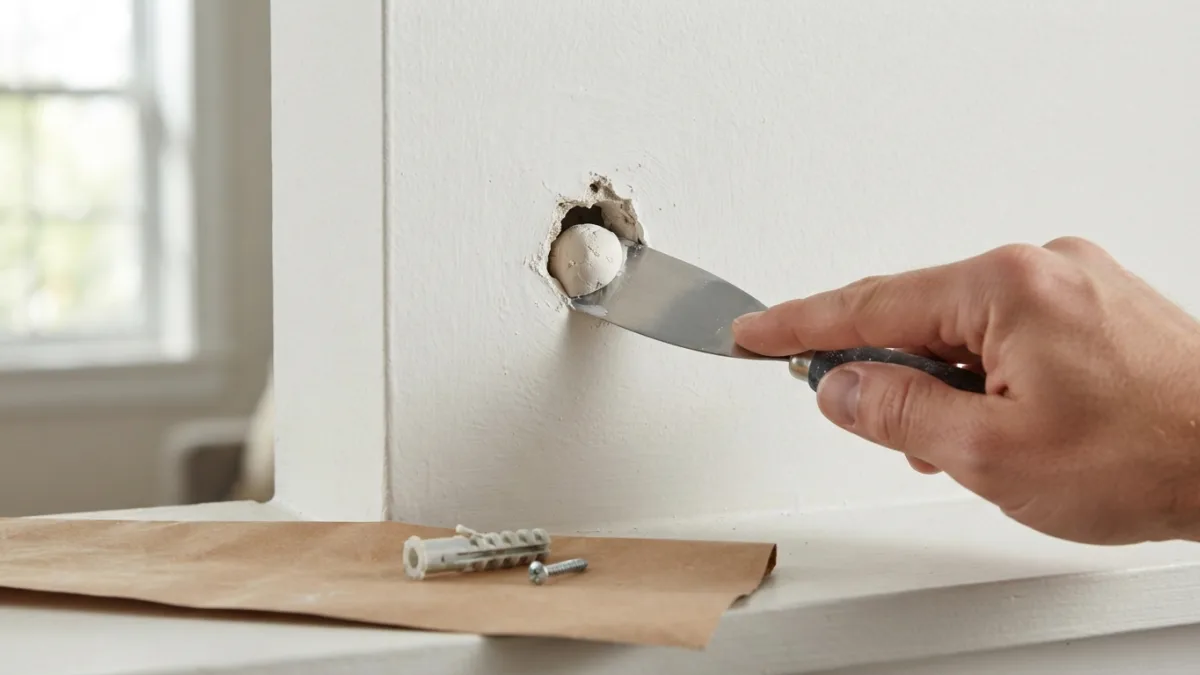
Spackle doesn’t add strength, so think of this fix as a cleanup job, not a way to carry weight. Press lightweight spackle into the hole with a putty knife, scrape it flat, and let it dry for the time listed on the label. Sand it smooth, and the old hole disappears under a dab of paint. Then drill a fresh pilot hole a few inches away and set a new anchor in solid wall. This approach works well for picture frames, small mirrors, and other light décor. It is the cheapest fix on the list, and it takes only a few minutes of actual work. It is one of those small things that makes loose drywall anchor hole easier to manage overall.
Fix 3: Toggle Bolt Installation for Extra Grip
A toggle bolt works differently from a plastic anchor. Its spring-loaded wings open behind the wall and pull against the back of the panel, so a worn hole matters less. For a classic toggle bolt installation, thread the bolt through the item you are hanging first, then screw on the wings. Fold the wings flat, push them through a hole sized to the package instructions, and let them spring open. Pull the bolt gently toward you as you tighten it, so the wings stay snug against the drywall. Holes for toggles are larger than for other anchors, which is normal. Read more about the design in this overview of toggle bolts. This is a common part of dealing with loose drywall anchor hole, and it is worth keeping in mind.
Fix 4: Heavy Duty Wall Anchors for Real Weight
When you’re hanging something serious, such as a large mirror or a wall-mounted cabinet, it’s time for heavy duty wall anchors. Many are metal, and they use a sleeve, a threaded body, or a strong toggle to spread weight across more of the panel. Each product carries its own weight rating, and that rating depends on the drywall thickness, so read the package before you buy. Pick an anchor rated well above the load you plan to hang. Follow the drill size exactly, and don’t improvise. For a quick look at how these fasteners work in general, see this page on the wall plug and anchor family. You might also find our article on Find a Wall Stud: 7 Easy Tricks Without a Stud Finder helpful here. Many people run into this exact issue with loose drywall anchor hole at some point.
Fix 5: Stripped Drywall Hole Repair With a Patch
Sometimes the damage is too big for an anchor or a dab of spackle. The edges crumble, the paper is torn, and the hole keeps growing. That calls for a proper stripped drywall hole repair. Cut away any loose bits, then cover the hole with a self-adhesive mesh patch or a small drywall patch kit. Spread joint compound over it in thin coats, letting each one dry before the next. Sand the surface smooth, prime it, and paint. Once the patch has fully cured, you can drill a new pilot hole and install a fresh anchor, or simply move the hanging spot a few inches to the side for a cleaner result. Keeping loose drywall anchor hole in mind here will save you time later on.
Hanging Shelves on Drywall: Match the Fix to the Load
Hanging shelves on drywall asks far more from your anchors than a picture frame ever will, because the weight pulls outward and downward at the same time. Books, plants, and dishes add up fast. Whenever you can, drive at least some of the screws into a wall stud, and use a stud finder to locate it. For the screws that land between studs, choose anchors rated well above the expected load. If you’re stuck with a worn hole in a spot that must carry weight, step up to heavy duty wall anchors or a toggle rather than gambling on a plastic one. The table below sums up where each fix fits. This detail matters more than it seems once loose drywall anchor hole comes up again.
| Fix | Best for | Effort |
|---|---|---|
| Larger anchor | Slightly oversized holes, light to medium items | Low |
| Spackle and relocate | Small damage, picture frames, light décor | Low |
| Toggle bolt | Medium to heavy items on worn holes | Medium |
| Heavy duty anchor | Mirrors, cabinets, and loaded shelves | Medium |
| Patch and re-drill | Crumbling or torn holes | Higher |
How to Keep Anchors From Loosening Again
Most anchor failures come from small mistakes you can avoid. Match the anchor to the weight you plan to hang, and always check the rating on the package. Use the drill bit size the manufacturer recommends, because a bit that is even slightly too big starts the damage before the screw goes in. Drive screws by hand for the last few turns so you feel when they get snug. Spread the load across several anchors instead of one. A few habits make a real difference: For a related walkthrough, check out Fix a Running Toilet: 5 Easy Causes and Simple Repairs. It is one of those small things that makes loose drywall anchor hole easier to manage overall.
- Check the package rating before you buy.
- Drill straight and clean, without wobbling the bit.
- Stop tightening the moment the screw feels firm.
- Use studs for anything heavy.
The Bottom Line on a Loose Drywall Anchor Hole
A loose drywall anchor hole looks like a big problem, but it almost always has a simple answer. Remove the old hardware carefully, judge how much damage you have, and choose the fix that matches. A bigger anchor or a spackle patch handles light jobs. A toggle or a heavy-duty anchor takes care of the heavy ones. A patch rescues the badly damaged spots. Take your time with each step, follow the package directions, and let spackle and joint compound dry fully. Do that, and the wall will hold whatever you hang on it for years. Next time, the extra five minutes of planning will save you the repair. This is a common part of dealing with loose drywall anchor hole, and it is worth keeping in mind.
FAQ: Loose Drywall Anchor Hole Questions
Can I reuse the same hole after an anchor comes loose?
Sometimes. If the hole is only slightly widened, a bigger anchor or a toggle can grip it again. If the edges are crumbling, patch the area first or move to a fresh spot a few inches away. Many people run into this exact issue with loose drywall anchor hole at some point.
Will a longer or thicker screw fix a loose anchor?
Usually not. The problem is crushed gypsum around the anchor, not the screw. A thicker screw may spin in the same way. Replace the anchor with one that suits the hole and the load. Keeping loose drywall anchor hole in mind here will save you time later on.
How long should spackle dry before I drill?
It depends on the product and how deep the hole is. Follow the drying time on the label, and wait longer for deep fills. When in doubt, give it extra time. This detail matters more than it seems once loose drywall anchor hole comes up again.
When should I choose a toggle bolt over a plastic anchor?
Choose a toggle when the item is heavy, when the old hole is worn, or when the load pulls outward, as with shelves. Toggles grip the back of the drywall, so they hold better in weak spots. It is one of those small things that makes loose drywall anchor hole easier to manage overall.
Is a wall stud always better than an anchor?
For heavy items, yes. Screwing into a solid wood or metal stud gives a stronger hold than any anchor in plain drywall. Use a stud finder, and use anchors only where studs aren’t available.

Ghani Mejber — Founder & Lead Editor
Ghani Mejber is the founder of DIY Homes Hub. After years of living in compact rentals with strict lease rules and limited storage, I started sharing practical, damage-free home upgrades and basic repair guides built for real budgets. Every project I publish focuses on simple tools, accessible materials, and reversible solutions that protect your security deposit.