Fireplace and TV Placement: 7 Mistakes to Avoid in 2026
You love your fireplace, and you love movie night. Fireplace and TV placement is where those two loves collide. Hang the screen above the mantle and the room looks tidy, but your neck, your eyes and even your TV may pay the price. Put it somewhere else and you can lose the cozy focal point you paid for. Screens keep getting thinner and lighter, which makes wall mounting easier than ever. Easier is not the same as smarter, though. Below are seven common mistakes, plus simple fixes you can try before you pick up a drill. Read them first, and you can save yourself a lot of stress, money and wall repair.
Why Fireplace and TV Placement Is Harder Than It Looks
A fireplace pulls the eye. A TV does too. When you put both on one wall, they compete, and the room often feels tense instead of relaxed. The wall also has special problems that a plain living room wall does not. There may be heat, soot, brick or stone, a chimney in the way, and a mantle that was built for looks long before anyone thought about a 55-inch screen. Seating matters as well, because the best spot on paper may sit too far above where you actually rest your eyes. Fortunately, most problems follow clear patterns. Once you know the seven mistakes below, you can test your own room against them and choose with confidence. If you want to dig deeper, our guide on Studio Apartment Divider Ideas: 7 Easy No-Drill Options covers this in more detail.
Mistake 1: Mounting the TV Too High
Let’s start with tv above fireplace height, because it causes the most regret. Fireplaces were designed to be looked at, not to hold a screen. In many homes the mantle already sits well above eye level when you are on the sofa, and the TV then climbs even higher. The result is a picture you must look up at all evening. Before you commit, run a simple test. Cut a piece of cardboard to the size of your TV, tape it to the wall, then sit where you normally sit. Check where the middle of the screen lands. As a general rule, you want it close to eye level while seated. If the cardboard feels too high, the TV probably will too, and another wall may be the better choice.
Mistake 2: Ignoring Neck Strain
Neck strain tv viewing sneaks up on you. A quick news clip feels fine, but a two-hour film with your chin tilted upward can leave your neck stiff and sore. Many people blame their pillow or their desk job and never connect the ache to the TV. Tilting mounts can help, since they angle the screen down toward you. They do not fix everything, though, and some screens lose contrast and color when you watch from a steep angle. Think about how you really use the room. If you recline, lie on the sofa or watch for long stretches, a lower screen will serve you better. Comfort should come before style. A beautiful wall you cannot enjoy is not a good design.
Mistake 3: Skipping the Heat Check
Think about tv heat damage mantle risks before you drill a single hole. A working wood fire sends warm air upward, and smoke and soot can travel with it. A mantle shelf may block some of that heat, but not all of it. Electronics do not like hot, dusty conditions, and your TV maker sets limits for the temperature it can handle. Read the manual and the warranty terms. If you burn fires often, try this test: after the fire has been going for a while, hold your hand where the screen would sit, or use a simple thermometer. A deeper mantle can help. So can a different wall. For safety guidance on heating equipment, check the National Fire Protection Association. This connects closely with another common issue — see Small Living Room Layout: 7 Easy Ideas for TV & Dining Table for more on that.
Mistake 4: Leaving Cables on Display
Brick makes it hard to hide tv wires, and that is why so many people give up and let cables dangle down the front of the fireplace. Plan this part early. You cannot simply cut a channel into masonry, and drilling through a chimney breast is a job for a professional. Instead, look at your options. A paintable cable cover can follow the edge of the fireplace and blend in with the wall color. You can route cables through a nearby stud wall or a side cabinet. If you want a power outlet behind the screen, ask a licensed electrician, and use only in-wall kits made for that purpose. Wireless speakers and a soundbar on a shelf also cut the number of cables you must hide.
Mistake 5: Choosing a Fixed Mount Without Thinking
An articulating tv mount gives you something a fixed bracket never can: choice. The arm pulls the screen away from the wall, tilts it down and swivels it toward your seat. That helps when your fireplace sits high, and it makes reaching ports much easier. There are trade-offs. These mounts stick out further, put more strain on the wall and cost more. Check that the mount matches your TV’s weight and its VESA hole pattern, the standard used for mounting screens. Brick and stone need the right masonry anchors, so follow the mount maker’s instructions or hire a pro. A mount that looks strong in the box still needs a wall that can carry it.
Mistake 6: Forgetting About the Side Wall
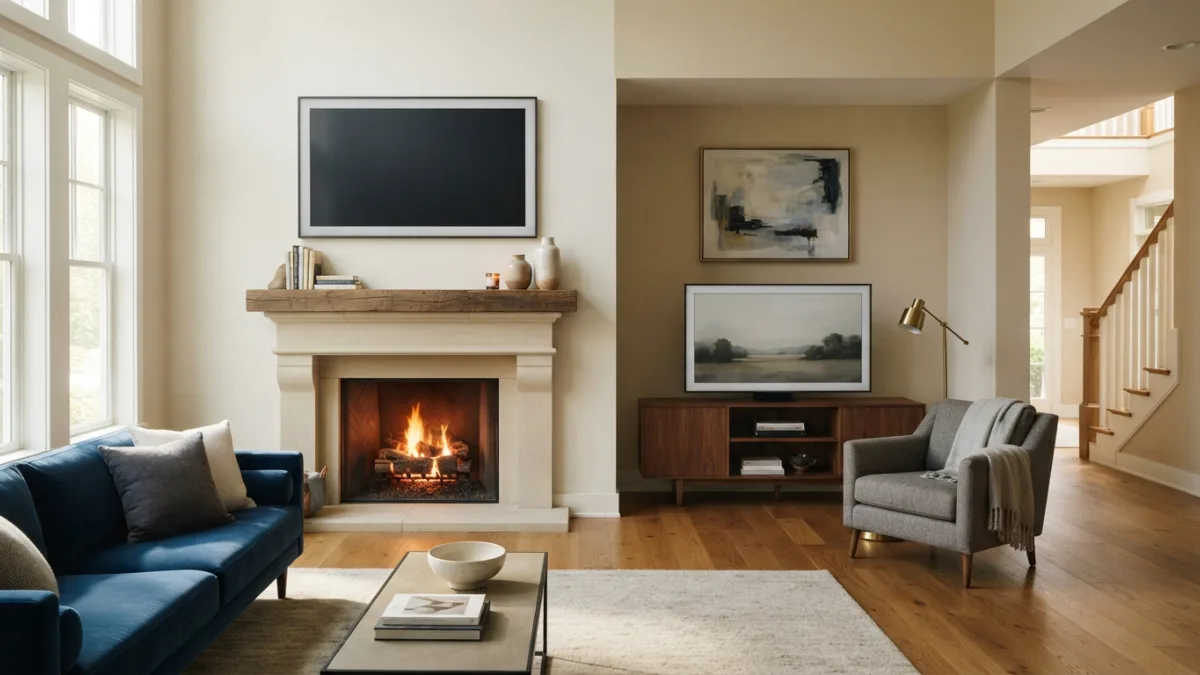
Tv beside fireplace ideas deserve more attention than they get. Many rooms work better when the fireplace owns one wall and the TV takes the next. You can use an alcove next to the chimney, a built-in cabinet, or the adjacent wall with seating angled between the two. Each focal point then gets room to breathe, and the screen sits at a more natural height. Watch for window glare, because daytime reflections can ruin the picture. Then there is the electric fireplace tv stand, a media console with a built-in electric fireplace. It keeps the screen low, adds a warm glow and removes the problem of real flames. Some units still blow warm air, so check the manual, and anchor the furniture to the wall using advice from the U.S. Consumer Product Safety Commission. You might also find our article on Small Bedroom Layout Ideas: 7 Easy Tips for Queen Beds helpful here.
Mistake 7: Treating the Mantle as an Afterthought
You can decorate mantle with tv above it, but keep the look simple. Crowded shelves under a large black screen make the wall feel heavy. Choose a few pieces instead: a small plant, a framed photo, a candle holder you do not light. Vary the heights, but keep tall items low enough that they never block the bottom of the picture or the sound from a soundbar. Leave space between decorations and any heat source. When the TV is off, the wall should still look good, so think about the whole composition and not just the shelf. Some TVs show artwork in standby mode, which can help. A calm, balanced mantle makes the screen look planned instead of squeezed in.
Quick Comparison: Which Spot Suits Your Room?
Use this table as a starting point, then test your room with the cardboard trick.
| Option | Best for | Main benefit | Watch out for |
|---|---|---|---|
| Above the mantle | Low mantles, rarely used fireplaces | Saves floor space, one clean wall | Height, heat, hidden cables |
| Beside the fireplace | Rooms with a spare wall or alcove | Comfortable eye level | Window glare, seating angles |
| Electric fireplace stand | Rooms without a working chimney | Low screen, warm look | Anchoring, warm air from heater |
| Different wall | Tall chimney breasts, frequent fires | Frees the fireplace as a focal point | Furniture layout |
Final Thoughts on Fireplace and TV Placement
There is no single perfect answer to fireplace and TV placement, because every room, fireplace and household is different. A low mantle and a gas fire that you rarely light can make the classic setup work well. A tall chimney, a wood fire and a family that watches long films point toward the side wall or a stand. Whatever you choose, measure first, test with cardboard, check the heat, plan the cables and match the mount to the wall. Those small steps cost almost nothing and avoid the big mistakes. In 2026, the best living room is not the one that copies a trend. It is the one where you can sit back, look straight ahead and enjoy both the fire and the film. For a related walkthrough, check out 10×10 Bedroom Layout: 7 Easy Ideas for a Queen Bed.
FAQ: Fireplace and TV Placement
Is it a bad idea to put a TV above a fireplace?
Not always. It works best when the mantle is low and you rarely burn wood. It becomes a problem when the screen sits far above eye level or gets hot.
How can I tell if my fireplace is too hot for a TV?
Read your TV manual for its temperature limits. Then check the heat at the screen’s spot after a fire has burned for a while. If it feels warm or soot reaches the wall, pick another location.
What is the best mount for a TV on a fireplace wall?
An articulating mount is often the most flexible choice, since it tilts and pulls the screen toward you. Make sure it fits your TV’s weight and VESA pattern, and use masonry anchors on brick or stone.
Can I hide TV cables on a brick fireplace?
Yes, but not by cutting into the brick yourself. Use paintable cable covers, route wires through a nearby wall or cabinet, or ask an electrician about a safe in-wall power option.
What are good alternatives to mounting the TV over the fireplace?
Try the wall beside the fireplace, a built-in alcove, or an electric fireplace TV stand. These options usually keep the screen lower and away from heat.

Ghani Mejber — Founder & Lead Editor
Ghani Mejber is the founder of DIY Homes Hub. After years of living in compact rentals with strict lease rules and limited storage, I started sharing practical, damage-free home upgrades and basic repair guides built for real budgets. Every project I publish focuses on simple tools, accessible materials, and reversible solutions that protect your security deposit.