Fix a Running Toilet: 5 Easy Causes and Simple Repairs
That constant hissing sound coming from your bathroom at 2 a.m. isn’t just annoying—it’s costing you real money. A single running toilet can waste hundreds of gallons of water a day, and if you don’t fix a running toilet quickly, your next water bill might give you a shock. Fortunately, most of the causes behind this problem are simple to diagnose and even simpler to repair, often without calling a plumber or spending more than a few dollars on parts.
Toilets are mechanically simple devices, which is exactly why homeowners can usually handle running toilet repair on their own. Inside the tank sits a handful of components that work together to fill the bowl, flush waste, and shut off the water once the tank reaches the right level. When any one of these parts wears out, gets knocked out of alignment, or degrades from mineral buildup, water keeps flowing when it shouldn’t. Below are the five most common culprits, along with clear, step-by-step fixes you can try today using basic household tools. If you want to dig deeper, our guide on Squeaky Door or Cabinet: 5 Easy Fixes to Try Today covers this in more detail.
1. A Worn-Out or Misaligned Flapper
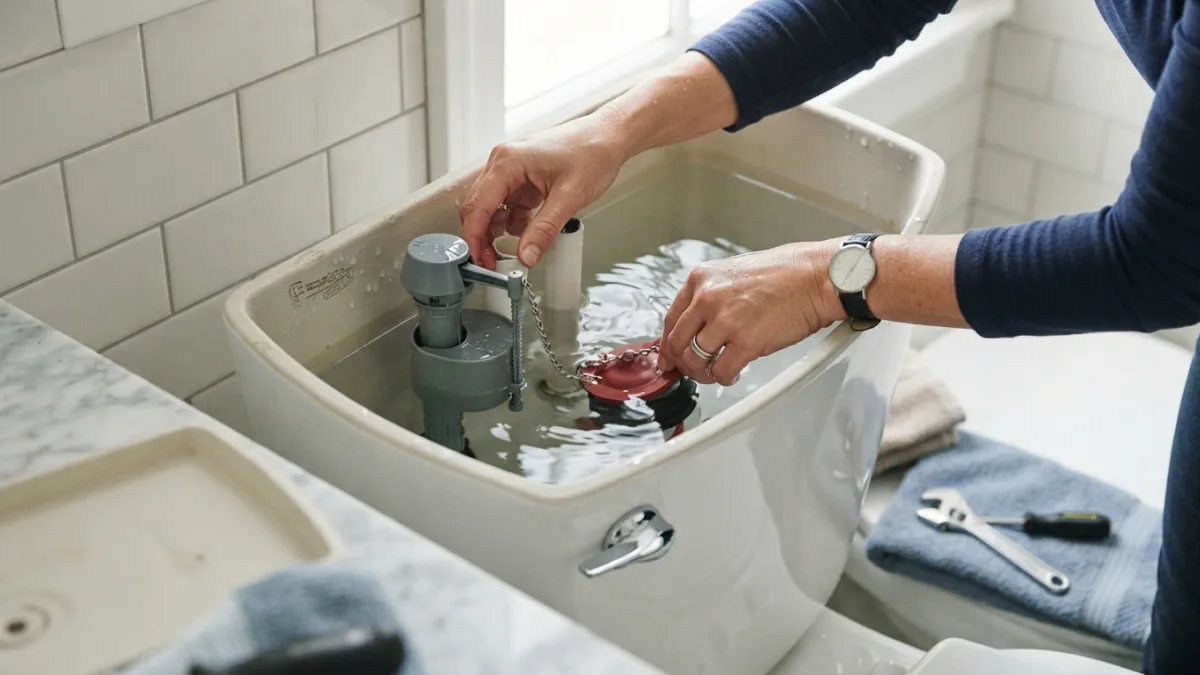
The flapper is a rubber or plastic seal at the bottom of the tank that lifts when you push the flush handle, letting water rush into the bowl. Once the tank empties, the flapper is supposed to drop back down and seal the opening. Over time, rubber flappers dry out, crack, or warp, which prevents them from forming a tight seal. When that happens, water slowly leaks from the tank into the bowl, triggering the fill valve to keep topping off the tank, and you hear that familiar running sound.
Toilet flapper replacement is one of the easiest and cheapest fixes in home plumbing. Turn off the water supply valve behind the toilet, flush to drain the tank, and unhook the old flapper from the pegs or the overflow tube. Bring the old part to a hardware store to match the size, since flappers come in different diameters and styles. Snap the new one into place, reconnect the chain to the flush handle with a little slack, and turn the water back on. This single swap resolves a huge percentage of running toilet complaints.
2. A Faulty Fill Valve
The toilet fill valve, sometimes called a ballcock, controls how much water enters the tank after each flush. It’s usually a tall cylindrical part sitting on the left side of the tank, connected to a float that rises and falls with the water level. When the fill valve wears out or gets clogged with sediment, it may not shut off properly, causing water to trickle continuously or overflow into the tank’s overflow tube. You might also hear a faint whistling or humming noise if the valve is struggling to seal.
Replacing a fill valve typically takes less than thirty minutes and costs under twenty dollars for a universal kit. After shutting off the water and draining the tank, disconnect the supply line and unscrew the old valve from underneath the tank. Install the new valve according to the package instructions, making sure the height is adjusted correctly so the float shuts off water at the right level. The EPA’s WaterSense program notes that fixing common household leaks like this can save thousands of gallons annually, which matters both for your wallet and for conserving water. This connects closely with another common issue — see Unclog a Drain: 7 Easy Steps Without Calling a Plumber for more on that.
3. A Damaged Flush Valve or Seal
The toilet flush valve is the entire assembly that includes the flapper, the overflow tube, and the seal that connects the tank to the bowl. Sometimes the problem isn’t the flapper itself but the valve seat it rests on, which can develop mineral deposits, rough spots, or cracks over years of use. Even a brand-new flapper won’t seal properly against a damaged or corroded valve seat, so the running continues no matter how many times you replace the flapper alone.
If you’ve already swapped the flapper and the toilet still runs, inspect the valve seat closely for grime, calcium buildup, or an uneven surface. Gently scrubbing it with a soft cloth and a mild descaling solution sometimes restores a smooth seal. In cases where the seat itself is cracked or badly corroded, replacing the entire flush valve assembly is the more reliable fix. This job is slightly more involved since it requires removing the tank from the bowl, so if you’re not comfortable with that step, this is a reasonable moment to bring in a licensed plumber.
4. An Improperly Adjusted Float
The float—whether it’s an old-style ball on an arm or a modern cup-style float on the fill valve—tells the fill valve when to stop letting water into the tank. If the float is set too high, water rises above the overflow tube and constantly drains into it, mimicking a leak even when every other part is working fine. This is one of the simplest issues to fix and one of the most overlooked, since people assume something is broken when it’s really just a matter of adjustment.
Take the tank lid off and watch what happens during a flush cycle. If water is spilling into the overflow tube after the tank should have stopped filling, you’ve found your answer. For ball-style floats, gently bend the metal arm downward to lower the shut-off point. For cup-style floats, look for a small adjustment screw or clip and turn or slide it to lower the water level. Aim for a level about an inch below the top of the overflow tube, then flush again to confirm the water stops rising at the right point. You might also find our article on Patch a Wall Hole: 5 Easy Steps to Perfect Results helpful here.
5. A Cracked Overflow Tube or Hidden Toilet Water Leak
Less common but still worth checking is a crack in the overflow tube itself, which sits in the center of the tank and directs excess water into the bowl if the fill valve fails to shut off. A hairline crack here can allow water to seep through continuously, and since the damage isn’t always visible without close inspection, many people overlook it entirely. Mineral buildup, age, or a manufacturing defect can all contribute to this kind of toilet water leak.
To check for this, dry the tube completely with a cloth, then watch closely during a fill cycle to see if water seeps out anywhere along its length rather than just at the top opening. If you spot a crack, the tube usually needs to be replaced along with the flush valve assembly, since the two parts are often connected. This is a good time to also check the tank-to-bowl bolts and the wax ring at the base of the toilet, since those areas can develop leaks that are sometimes mistaken for a running toilet. For general guidance on toilet mechanics and water-saving fixtures, the Wikipedia overview of flush toilets offers a helpful breakdown of how these systems are designed.
When to Call a Professional
Most causes of a running toilet fall well within the reach of a confident DIYer armed with an adjustable wrench, a new flapper or fill valve, and about thirty minutes of patience. But if you’ve tried all five fixes above and the toilet is still running, or if you notice water pooling around the base of the toilet, that may point to a more serious issue like a failing wax ring or a crack in the porcelain tank itself. In those situations, it makes sense to call a licensed plumber rather than risk water damage to your bathroom floor. According to the U.S. government’s consumer resources page, checking for licensed and reputable contractors in your area is a smart step before hiring anyone for larger plumbing repairs.
Frequently Asked Questions
How do I know if my toilet is running even when I can’t hear it?
Add a few drops of food coloring to the tank water and wait about fifteen minutes without flushing. If color appears in the bowl, water is leaking through the flapper or flush valve seal, even if you can’t hear anything. For a related walkthrough, check out Basic Tool Kit Every Renter Should Own.
How much water does a running toilet actually waste?
Depending on the severity of the leak, a running toilet can waste anywhere from a few gallons to several hundred gallons per day. Over a month, that adds up to a noticeable jump in your water bill and a real amount of wasted water.
Can I fix a running toilet without turning off the water supply?
It’s best to always shut off the water supply valve behind the toilet before working on any internal parts. This prevents flooding and makes it much easier to remove and replace components like the flapper or fill valve safely.
How often should toilet flapper replacement be done?
Most rubber flappers last around four to five years before they start to degrade, though water quality and chemical tank cleaners can shorten that lifespan. If your toilet runs intermittently or you notice the flapper looks warped or brittle, it’s time for a replacement.
Is a running toilet always caused by a broken part?
Not always. Sometimes the issue is as simple as a chain that’s too long or tangled, a float set at the wrong height, or mineral buildup on the valve seat. Checking these simple adjustments first can save you the cost of unnecessary replacement parts.

Ghani Mejber — Founder & Lead Editor
Ghani Mejber is the founder of DIY Homes Hub. After years of living in compact rentals with strict lease rules and limited storage, I started sharing practical, damage-free home upgrades and basic repair guides built for real budgets. Every project I publish focuses on simple tools, accessible materials, and reversible solutions that protect your security deposit.