Squeaky Door or Cabinet: 5 Easy Fixes to Try Today
That high-pitched creak every time you open the pantry or push open your bedroom door isn’t just annoying, it’s usually a five-minute fix. A squeaky door or cabinet is one of the most common household nuisances, and yet most people live with it for months, sometimes years, before finally doing something about it. Fortunately, you almost never need a repair technician or a trip to the hardware store to make that noise disappear. With a few household items and a little patience, you can get your hinges working quietly again this afternoon.
Why Do Doors and Cabinets Squeak in the First Place?
Before jumping into fixes, it helps to understand what’s actually happening inside that hinge. Metal hinges rely on a thin layer of lubricant to let two metal surfaces slide past each other smoothly. Over time, that lubricant dries out, collects dust, or simply wears away from repeated use. What’s left is metal grinding against metal, which produces that familiar squeal. Humidity, temperature swings, and rust can speed up this process too, especially in older homes or in rooms like bathrooms and kitchens where moisture is common. Once you understand that friction is the root cause, the solution becomes obvious: reduce the friction, and the squeaky hinges go quiet. If you want to dig deeper, our guide on Small Apartment Layout Ideas: 7 Easy Fixes for Tight Spaces covers this in more detail.
5 Easy Fixes for a Squeaky Door or Cabinet
You don’t need to replace an entire door or buy a new set of cabinet hardware to solve this problem. Most squeaks come down to a handful of predictable causes, and each one has a simple, affordable solution. Below are five fixes worth trying, starting with the easiest and moving toward slightly more involved repairs. Try them in order, since many squeaks disappear after the very first step.
1. Apply a Door Hinge Lubricant
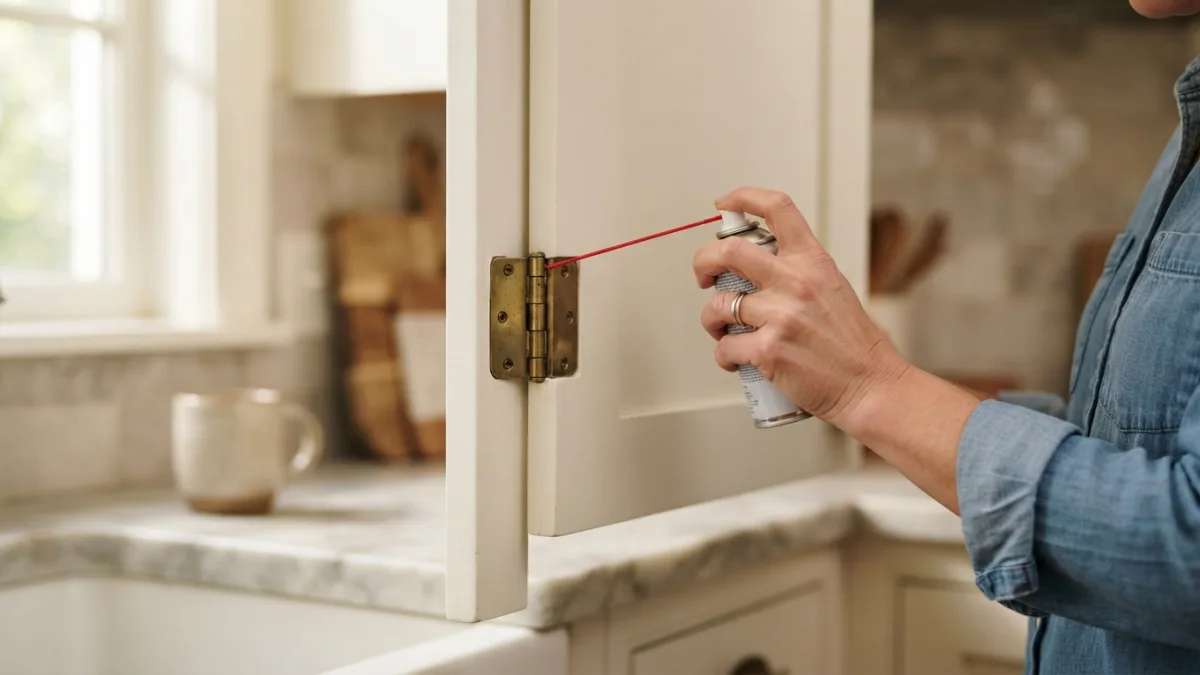
The fastest and most reliable fix is also the simplest: lubricate the hinge pin. Remove the pin if possible, or simply spray the lubricant directly onto the hinge while the door is open. Work the door back and forth several times so the product spreads evenly across the moving parts. A popular option is WD-40, a water-displacing spray originally designed to prevent corrosion, though it works well as a temporary lubricant too. Silicone spray or a dedicated lithium grease will last longer since they don’t evaporate as quickly. Whatever product you choose, wipe away any excess so it doesn’t drip onto flooring or cabinet finishes.
2. Tighten Loose Screws and Hinge Plates
Sometimes the squeak has nothing to do with lubrication at all. If the screws holding the hinge to the door frame or cabinet have loosened over time, the hinge plate can shift slightly with every movement, creating a rattling or squeaking sound. Grab a screwdriver and check each screw on both the door and frame side of the hinge. If a screw spins without tightening, the hole has likely stripped. In that case, insert a wooden toothpick or matchstick coated in wood glue into the hole, snap off the excess, let it dry, then reinsert the screw. This gives the screw fresh material to grip. This connects closely with another common issue — see How to Build a Simple Platform Bed (Step-by-Step) for more on that.
3. Clean the Hinge Before You Lubricate
Dust, grime, and old dried lubricant can build up inside a hinge and actually cause more noise than a completely dry one. Before applying anything new, remove the hinge pin and wipe it down with a rag. For stubborn grime, a bit of rubbing alcohol or a degreaser works well, followed by a dry cloth to remove any residue. Skipping this step is one of the most common reasons people find that spraying oil on a squeaky door only offers temporary relief. A clean surface allows lubricant to actually penetrate the metal instead of sitting on top of built-up debris, giving you a longer-lasting fix.
4. Try a Household Substitute Like Soap or Petroleum Jelly
If you don’t have a spray lubricant on hand, several kitchen and bathroom items work in a pinch. Rubbing a bar of soap along the hinge pin, or coating it with petroleum jelly, can quiet things down almost instantly. Cooking oil and even hair conditioner have been used as short-term fixes, though they tend to attract dust faster than purpose-made lubricants. These household substitutes are especially handy for a squeaky cabinet hinge in the kitchen, where you might not want to spray chemical products near food storage areas. Just remember these are temporary solutions, so plan to follow up with a proper lubricant once you have one available.
5. Replace or Repair a Worn-Out Hinge
If lubrication and tightening don’t solve the problem, the hinge itself may simply be worn out. Years of swinging open and shut can wear down the metal barrel inside a hinge, creating a gap that no amount of oil will fix. Cabinet hinge repair is often as easy as unscrewing the old hardware and installing a new hinge of the same size, available cheaply at any hardware store. For door hinges, check whether the pin is bent or corroded before replacing the whole unit. According to general guidance from the U.S. Environmental Protection Agency on indoor humidity control, keeping moisture levels balanced in your home can also slow down the rust and corrosion that shorten hinge lifespan. You might also find our article on Unclog a Drain: 7 Easy Steps Without Calling a Plumber helpful here.
Comparing Common Lubricant Options
Not every lubricant performs the same way, and choosing the right one can mean the difference between a fix that lasts a week and one that lasts a year. The table below compares some of the most common options people reach for when trying to silence squeaky doors and cabinets around the house.
| Lubricant | Best For | Durability | Notes |
|---|---|---|---|
| WD-40 or similar spray | Quick, temporary fixes | Short to medium | Evaporates faster, may need reapplying |
| Silicone spray | Long-term hinge care | Long | Doesn’t attract dust as much |
| Lithium grease | Heavy-use doors | Long | Thicker, ideal for older hinges |
| Petroleum jelly or soap | Emergency, household fix | Very short | Good backup when nothing else is available |
Preventing Squeaks Before They Start
Once you’ve solved the noise, a little maintenance keeps it from coming back. Doing a quick lubrication check every six months, especially before seasonal humidity changes, helps hinges stay quiet year-round. Pay attention to doors that get frequent use, like the front entry or kitchen cabinets, since these wear out faster than a rarely opened closet door. Keeping hinges clean and dust-free also reduces the grinding that causes squeaks in the first place. If you live somewhere humid, consider a rust-resistant hinge lubricant, since moisture is one of the biggest culprits behind hinge corrosion. A small habit like this saves you from repeating the same repair every few months.
When It’s Time to Call a Professional
Most squeaky hinges are a do-it-yourself job, but there are situations where it makes sense to bring in help. If a door is sagging, misaligned, or won’t close properly no matter how much you adjust the hinges, the frame itself may have shifted, which is a bigger structural issue. Similarly, if cabinet doors are pulling away from the box or the wood around the hinge has started to split, a carpenter can reinforce the area properly instead of masking the problem with lubricant. For most households, though, a can of lubricant and a screwdriver will solve the vast majority of squeaks without any outside help at all. For a related walkthrough, check out Patch a Wall Hole: 5 Easy Steps to Perfect Results.
A squeaky door or cabinet might seem like a minor annoyance, but it’s also one of the easiest home repairs you can knock out in under fifteen minutes. Whether the fix is a quick spray of lubricant, a tightened screw, or a brand-new hinge, you now have five reliable options to try before assuming you need a professional. Keep a small bottle of lubricant in a kitchen drawer so you’re never caught off guard the next time a hinge starts complaining. A little routine maintenance goes a long way toward keeping your home quiet and your doors moving the way they should.
Frequently Asked Questions
What is the best lubricant for a squeaky door hinge?
Silicone spray and lithium grease tend to last the longest, while WD-40 works well for a quick, short-term fix. Choose based on how often the door gets used and how long you want the fix to last.
Can I use cooking oil on a squeaky cabinet hinge?
Yes, in a pinch cooking oil can quiet a hinge, but it attracts dust and grime faster than purpose-made lubricants. It’s best used as a temporary solution until you can apply something more durable.
Why does my door squeak only in certain weather?
Humidity and temperature changes cause wood and metal to expand or contract, which can dry out lubricant or shift hinge alignment. This is common in older homes without climate control.
Do I need to remove the hinge pin to fix a squeak?
Not always. You can often spray lubricant directly onto a closed hinge and work the door back and forth. Removing the pin allows for a deeper clean if the squeak persists after a quick spray.
How often should I lubricate my door and cabinet hinges?
Checking hinges every six months is a reasonable routine for most homes, though high-traffic doors may need attention more often. Regular maintenance prevents squeaks from returning and extends the life of the hinge.

Ghani Mejber — Founder & Lead Editor
Ghani Mejber is the founder of DIY Homes Hub. After years of living in compact rentals with strict lease rules and limited storage, I started sharing practical, damage-free home upgrades and basic repair guides built for real budgets. Every project I publish focuses on simple tools, accessible materials, and reversible solutions that protect your security deposit.